SC Seeks Answers On CEC Kumar’s Alleged Unilateral Decisions
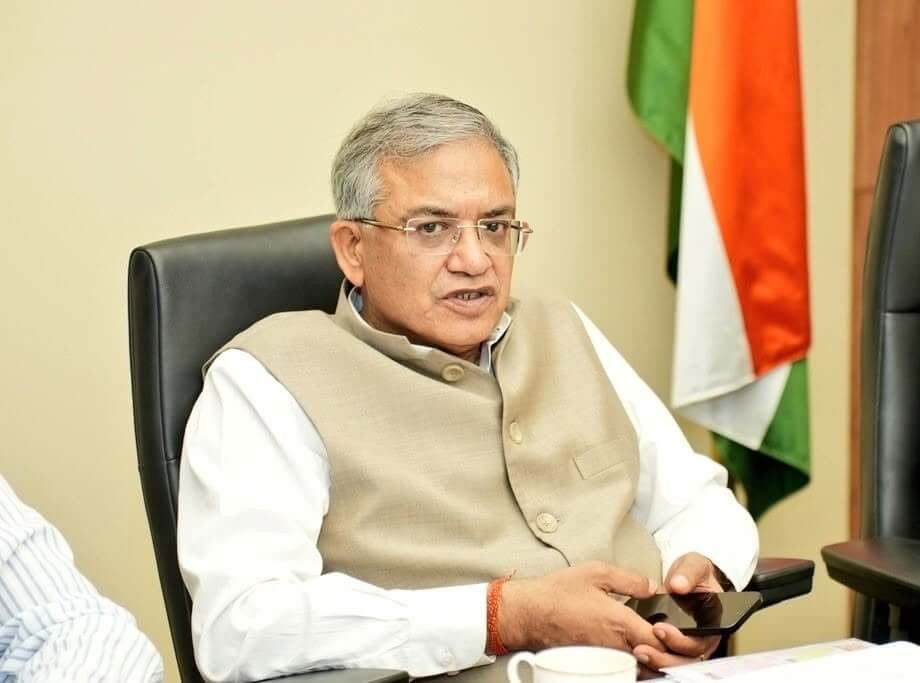
Chief Election Commissioner Gyanesh Kumar is seen above. The central question before the Supreme Court is whether decisions attributed to the Election Commission were made through the constitutional and statutory process governing a multi-member poll panel
The Supreme Court on Monday, October 5, sought responses from the Centre, the Election Commission of India (ECI) and Chief Election Commissioner (CEC) Gyanesh Kumar over allegations that decisions of the poll panel were taken without the approval of its other two members. The court, however, declined to immediately suspend Kumar or impose interim restrictions on the functioning of the ECI.
A bench headed by Chief Justice of India Surya Kant, along with Justices Joymalya Bagchi and V Mohana, was hearing petitions challenging the manner in which the multi-member Election Commission has functioned under Kumar, particularly in relation to the Special Intensive Revision (SIR) of electoral rolls.
The petitions allege that Kumar exercised powers vested in the Commission collectively and that several decisions were taken without the concurrence of Election Commissioners Sukhbir Singh Sandhu and Vivek Joshi.
SC wants ECI’s version before acting
The court made clear that it would not pass an order solely on the basis of media reports that had highlighted disagreements within the Commission.
“The newspaper report may be 100 per cent correct, partially correct or partially incorrect. We cannot pass an order on that basis today,” Chief Justice Surya Kant observed, according to court reporting. He added that the court wanted the ECI’s response before deciding what procedural steps were necessary.
The court also indicated that it would examine whether decisions attributed to the Commission were taken according to the legally prescribed process.
“We have to issue notice,” the bench said, adding that if the material showed that an ECI decision was taken “neither by majority nor by unanimity”, those responsible would have to explain how the decision was arrived at.
The court has given the respondents time to respond rather than granting the petitioners’ request for immediate interim relief.
What the petitions allege
The principal petition, filed by Rakesh Kumar Singh, questions whether the CEC can exercise powers belonging to the Election Commission as a constitutional body without the participation of the other Election Commissioners.
It seeks a writ of quo warranto requiring Kumar to explain the authority under which he allegedly exercised such powers. It also challenges decisions and actions associated with the SIR process and seeks to have decisions taken outside the prescribed procedure declared invalid.
The petition relies on allegations that the two other Election Commissioners recorded objections to decisions taken in the name of the Commission. According to the petition, Sandhu and Joshi formally objected on at least 14 occasions between October 2025 and August 2026.
The allegations include changes to electoral-roll procedures, delays or absence of agendas and minutes, decisions concerning the SIR and actions involving the ECI’s technology systems.
Dispute over Form 6
One issue that received particular attention in court was the modification of Form 6, which is used by people seeking inclusion in electoral rolls.
The petition alleges that changes were made to the form to introduce additional requirements relating to links with previous electoral-roll revisions without corresponding changes to the relevant rules.
The Chief Justice said the court would want to examine the records to establish who authorised the changes. “When the record is produced, we would like to see who has modified it,” he said, according to reports of the hearing.
The controversy is significant because the SIR exercise involves verification and revision of electoral rolls, potentially affecting whether individuals remain registered as voters.
Court leaves open possibility of invalidating decisions
While refusing immediate interim relief, the Supreme Court did not close the door on challenging individual decisions.
Chief Justice Surya Kant indicated that if the court subsequently finds that decisions were not taken in accordance with the prescribed procedure, they could be reconsidered or annulled.
“If there is anything wrong with the decisions, we can always annul them,” the court observed.
The court also referred to the legal framework governing the Commission’s decision-making. Under the existing framework, the Commission is a multi-member body; where there is no unanimity, decisions can be taken by majority.
What happens next
The immediate outcome is therefore procedural rather than a final ruling on Kumar’s functioning. The Centre, the ECI, Kumar and the other officials named in the petitions have been asked to respond.
The Supreme Court has indicated that it wants “authentic information” before deciding whether any interim or corrective measures are necessary.
For now, the court has not suspended Gyanesh Kumar, nor has it declared any ECI decision invalid. The central question before it is whether decisions attributed to the Election Commission were made through the constitutional and statutory process governing a multi-member poll panel.
The proceedings could consequently become an important test of how collective authority within the Election Commission is to be exercised—and what happens when allegations arise that those procedures have not been followed.