Researchers Rediscover An Endemic Plant In Assam After 180 Years
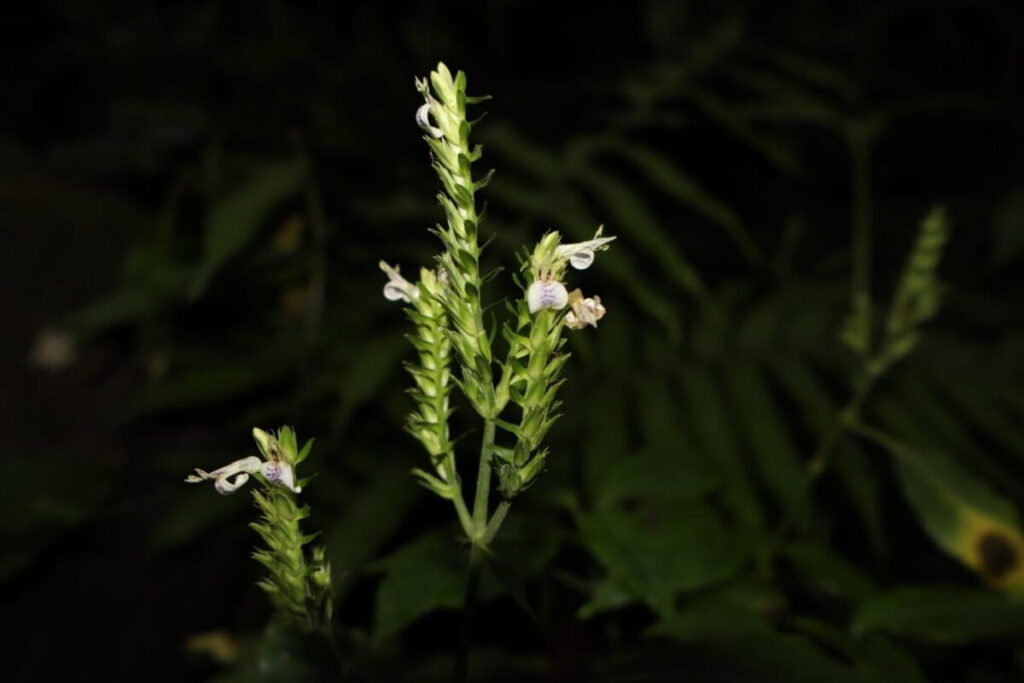
Researchers say they only found a few dozen individuals of the endemic R. mastersii in the wild, all in the same spot (Image by Kangkan Kumar Das)
- Researchers have rediscovered an endemic plant species Rungia mastersii, in Assam, after 180 years.
- British botanist J W Masters had discovered the plant in 1845 and it was named Rungia mastersii after him.
- The researchers call for intensive surveys to locate extant populations and evaluate potential threats to plan appropriate management methods.
An endemic plant species Rungia mastersii was rediscovered in Assam, 180 years after its first discovery. The plant was not seen anywhere during this period.
Kangkan Kumar Das, a doctoral researcher, and professor Debjyoti Bhattacharyya from the Department of Life Science and Bioinformatics at Assam University, Silchar, identified the species from Jatinga Hills in the Dima Hasao district of Assam.
In 1845, British botanist J.W. Masters first discovered the plant from an unidentified location along Assam’s Sundar river and the plant was named after Masters.
Speaking to Mongabay-India, Das said, “I was pursuing my doctoral research on the Acanthaceae family of plants and was travelling through Assam for my research. In Jatinga hills in Dima Hasao, I found this plant Rungia mastersii which is also a member of the family Acanthaceae. After I discovered this plant, I consulted with the renowned Chinese botanist Prof. Yunfei Deng from South China Botanical Garden who confirmed it.”
He informed that for almost two centuries, there was no trace of this plant anywhere in the world. “Only one herbarium sheet has been kept at Central National Herbarium (CNH), Howrah,” he said.
Characteristics of the plant
The study published by Das and Bhattacharyya in July 2026 describes Rungia mastersii as 60 to 110 cm tall, thriving in moist forests at elevations of 900 to 1,250 metres, and featuring pale green to whitish flowers marked with delicate purple streaks. The paper describes it as ‘a rare shrubby herb growing in moist, shaded rock crevices beside a stream during field surveys.’
The study notes, “The herbaceous genus Rungia Nees (Acanthaceae) comprises 88 accepted species in the world and is distributed mainly in tropical Africa, tropical to subtropical Asia and the southern Arabian Peninsula. The genus belongs to the subtribe Justicinae Nees within the tribe Justicieae Dumort of the sub-family Acanthoideae.”
Das collected specimens of the genus Rungia in shady, rocky crevices along a stream side in Jatinga hills of Dima Hasao district. Following a detailed morphological investigation of the collected specimens, in consultation with relevant literature, along with examination of the original material housed at CAL, the plant was identified as R. mastersii, an endemic species to Assam.
Only a handful left
Even though the plant was discovered after so many years, only a handful of them are left in the wild.
Das told Mongabay-India, “During my field visit, I found only 40-42 individuals in the wild. What worries me is that the population is very concentrated. All the specimens I found are exactly located in the same place.”
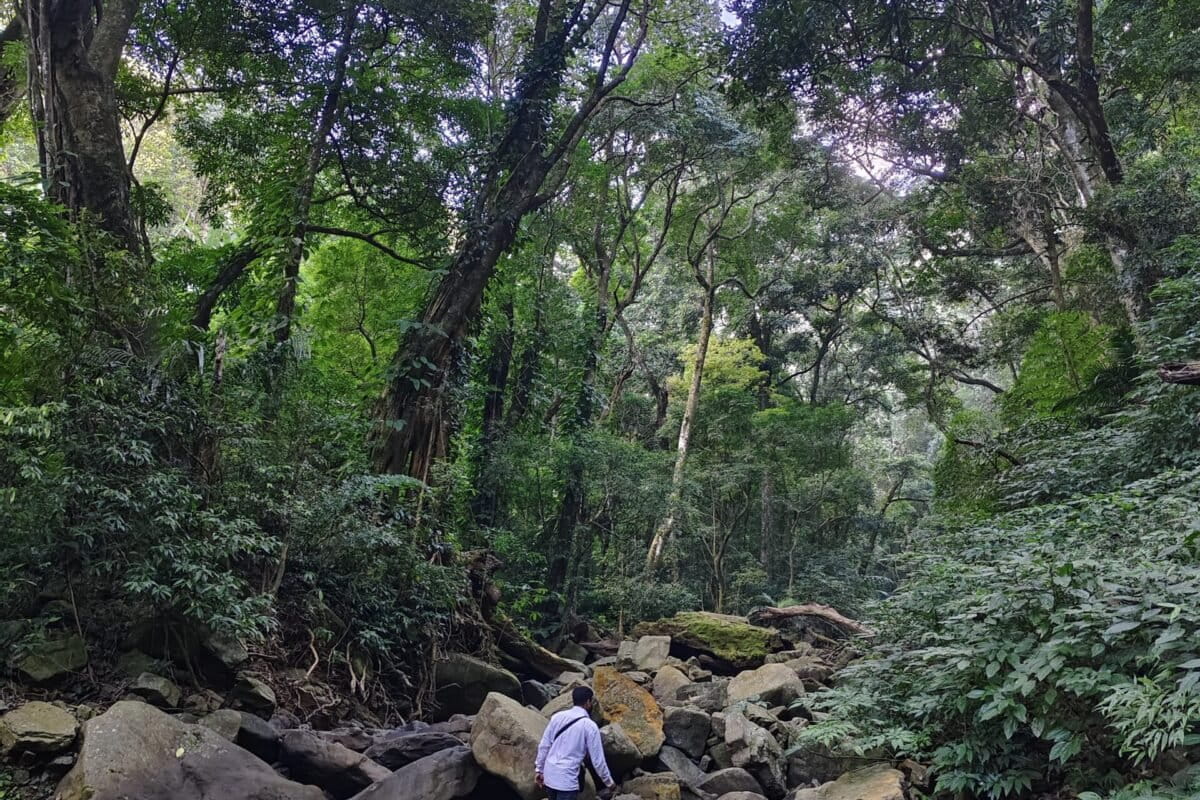
Although the species remains officially listed as ‘not evaluated’ under International Union for Conservation of Nature (IUCN) Red List criteria, its extremely restricted population leaves it highly vulnerable to extinction, prompting the team to call for active monitoring.
Describing the location he said, “The place is not accessible by vehicles and one has to trek for five hours to reach there. The place is near Barail Wildlife Sanctuary and has rich biodiversity like deer, leopard and black bears. There is not much human settlement there though some local Khasi people carry out cultivation there.”
“The worrisome thing is that the place is landslide prone and if something untoward happens, like a landslide or forest fire, the entire population might get decimated at once,” said Das.
“The plant is very rare and also endemic, so it is important to protect its habitat. The location where I found the plant is not even a reserve forest at the moment,” he said.
He added that there is also a possibility that more suitable locations should be scouted for planting Rungia mastersii, so that their entire number is not wiped off for being concentrated in a specific location.
Das said he is planning to study the fruit morphology and dispersal technique of the plant. “After the monsoon, I plan to visit the place. Also, the flowering season starts from around September-October. I think it will be better for my research if I visit the place then,” he said.
“The species remains isolated in distribution and poorly known, and hence, intensive surveys are urgently needed to locate extant populations and evaluate potential threats. These will facilitate evidence-based planning and the implementation of appropriate management measures,” the paper concludes.
(Published under Creative Commons from Mongabay-India)