Snow Leopards And Their Survival In Changing Times [Book Review]
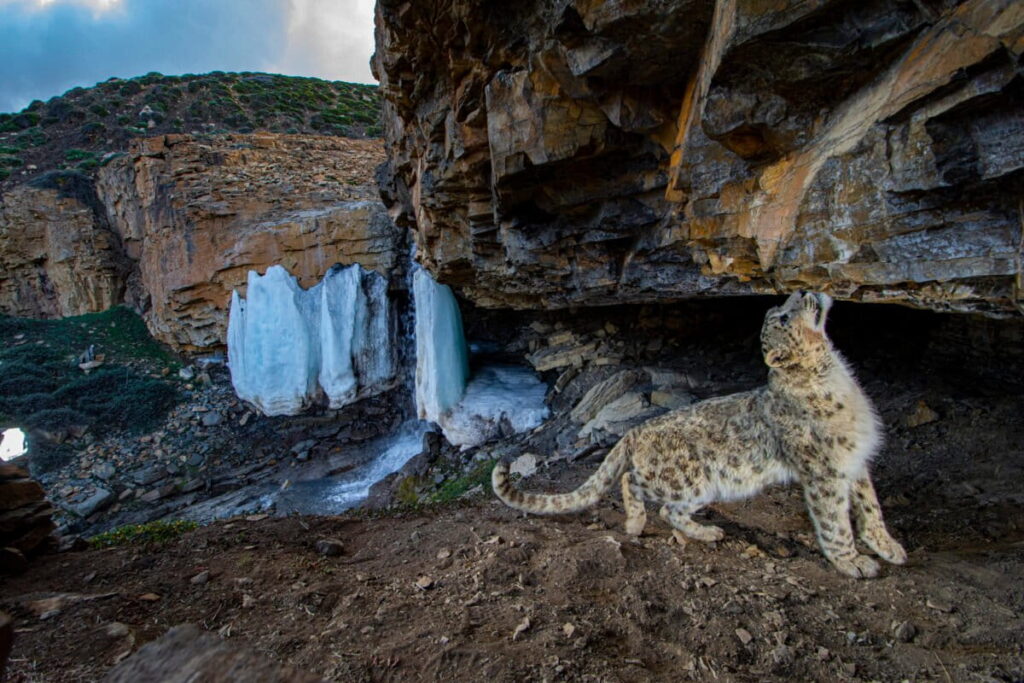
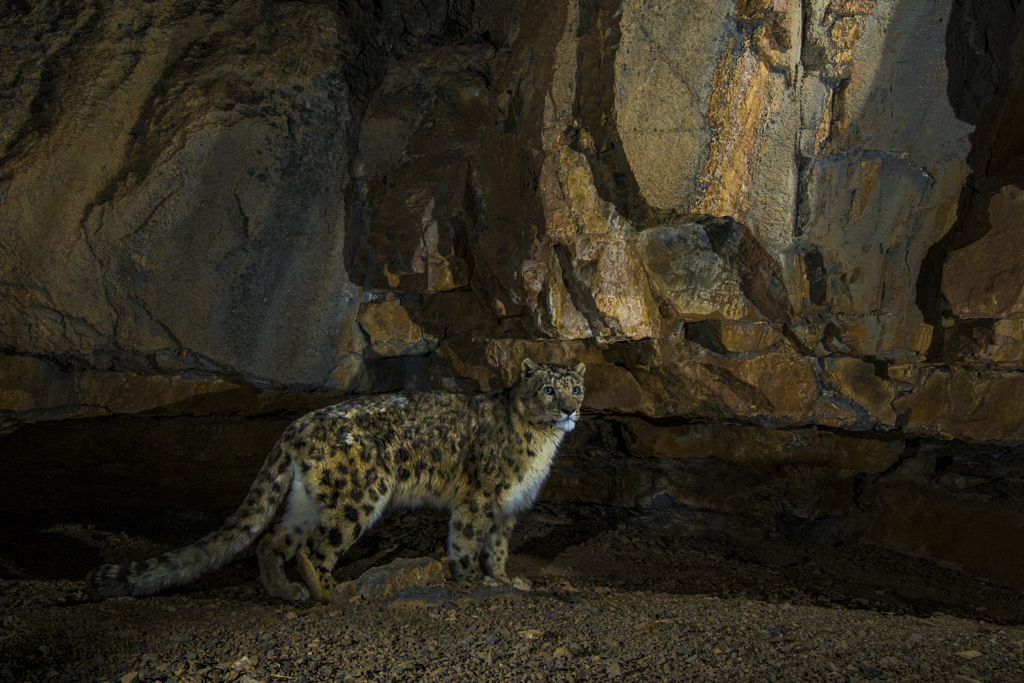
A snow leopard in the Himalayas (Image by Prasenjeet Yadav)
- Drawing on two decades of field research and extraordinary encounters, scientist Kulbhushansingh Suryawanshi’s book The Ghost of the Mountains is a fascinating look into the world of snow leopards.
- It is a vivid account of the author’s painstaking efforts to track snow leopard populations and understand their prey, while examining the impact of livestock, hunting, mining and climate change on the fragile mountain ecosystem.
- The book is ultimately a story of survival and hope, showing how protecting wild prey, involving local communities and creating sustainable livelihoods can help secure a future for the elusive “ghost of the mountains.”
If you want to know all about snow leopards, their range, food, love life, fight for survival in the fast changing high mountain landscape, impact of climate change and the struggle of scientists to get accurate figures on their population and spread, Kulbhushansingh Suryawanshi’s The Ghost of the Mountains is a must read. It is a fascinating, extremely well written book that blends research with graphic description of the landscape and allows us to witness a creature few have been privileged to see.
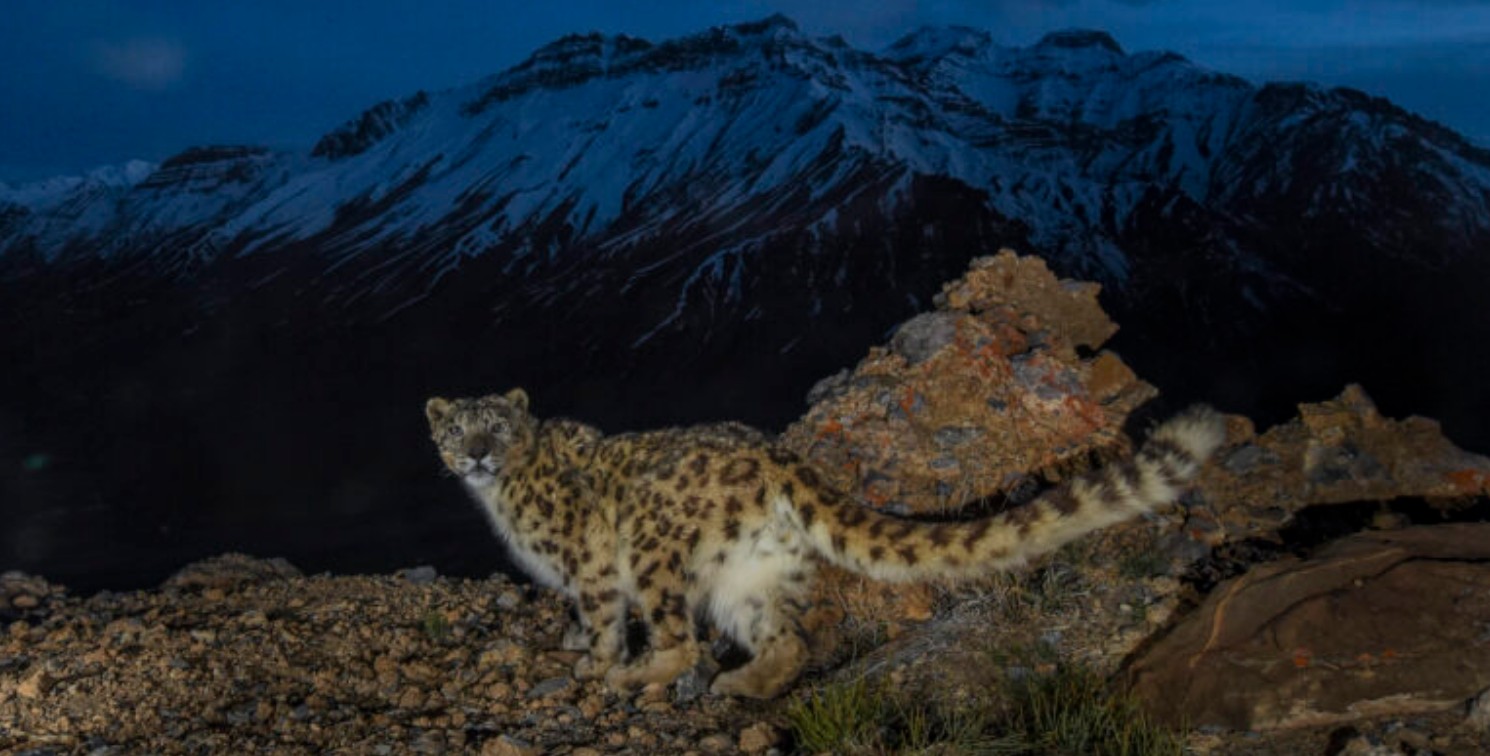
“A flagship species of Himalayan conservation, snow leopards are key to preserving an austere, delicate ecosystem,” the book says. It has taken Suryawanshi 20 years to study the ‘ghost of the mountains,’ distributed in mountainous terrain of 12 countries that straddle the Himalayas and Central Asia. Despite the fast changing pace of development, the story of the snow leopard is one of hope.
Snow leopards “are shy and their silvery-brown and white coats, marked with dark rosettes, work like magic cloaks offering good camouflage that enable them to disappear like smoke. They have furry tails, the longest of any cats, which they wrap around their bodies like mufflers on cold nights.
The tails also work like the balancing pole of a tight rope walker as they manoeuvre around exposed cliffs. Their thick, wide paws, lined with fur, act like snow shoes and their unusually large nostrils help them warm the cold air they breathe and their small rounded ears minimise heat loss”.
The author, who travelled across the snow leopard landscape of the world for his doctoral dissertation, is a scientist at the Nature Conservation Foundation (NCF) Bengaluru, and director of the India programme of the Snow Leopard Trust. As threats to the elusive cat became more apparent over the last decade, countries began estimating their numbers over their 3 million sq kms habitat. They studied their prey base, which includes the blue sheep, goats, Ibex, argali (mountain sheep) and yaks, as well as the snow leopard’s scat and pug marks and later used camera traps to record their numbers. In 2021, Mongolia reported 953 snow leopards, Bhutan in 2022 estimated 134, India in 2024 estimated 718 and in 2025, the Sanjiang region of the Tibet-Qinghai plateau put their snow leopard population at a thousand.
After 2006, having learnt mountaineering, Suryawanshi joined the Wildlife Biology and Conservation course at NCF and moved to Spiti Valley in Himachal Pradesh to study blue sheep, their browsing habits and survival in three locations. At Kibber village, at a height of 3500 metres, he spotted not one but three snow leopards through his spotting scope, which is a small and portable telescope meant to spot objects from a long distance.
The mother leopard, named Sunshine by Suryawanshi’s supervisor, was accompanied by her cub, who Suryawanshi named Shadow. Watching them from another ledge was a large male leopard. Human presence did not seem to disturb the mother and cub and they stayed where they were till it became cold and dark. Since no one in the village had seen a snow leopard before, there was celebration as they gaped at the photos clicked. During the remaining five months of his stay in Spiti, Suryawanshi saw two more. Camera trap images showed six snow leopards in the small area around Tashigang and Kibber villages.
Later, the author’s proposal to study snow leopards in multiple locations across different ranges was accepted for a Ph.D. programme at NCF. The challenge was to find what was on the snow leopard menu at different sites. Nobody had estimated the population of wild herbivores in the Himalayas before and the method to do this — the double observer survey, which includes two observers to reduce over-estimates and false positives — used by scientists in New Zealand to estimate its Tahr population in 1997, was tried out in a few hundred square kilometres of snow leopard habitat.
It entailed collecting their scats and extracting their DNA in laboratories. In the Himalayas and the mountains of Central Asia, where the prey species differ, they identified sites (each measuring about 300 square kilometres) that had large livestock populations and few wild herbivores and those with less livestock and more herbivores.
A complex web of interaction between different species
Seven sites were identified as part of the author’s study — five in Spiti Valley, one each in the Zanskar mountains of Ladakh and the Tost mountains of the Himalayas. Across all sites, the same types of livestock were being herded. But there were different types of wild herbivores, the blue sheep and ibex being the most widespread. In the Tost Mountain in the Gobi desert region of Mongolia, there is palpable excitement when a fresh heap of scat is seen and then Suryawanshi almost bumps into a snow leopard. It looked smaller and its tail longer but it glided away “like a wave of seawater retreating from a rocky shore.”
 Two months later at the lab in Mongolia’s capital Ulaanbaatar, it was identified as a female that had eaten an ibex. Four more samples of her scat were studied and each time she had gorged on an ibex. The region supported five snow leopards. After two years of wandering across the seven sites, he concluded that the site with the smallest number of wild herbivores had the fewest snow leopards and those with the largest number of wild herbivores had the most snow leopards.
At the seven sites, he had observed and tracked 33 different snow leopards. Their preferred food was wild ibex though it was tougher hunting them than livestock. Could it also mean that if the wild herbivore population increased, there would be less killing of livestock? There was also the possibility of ibex and blue sheep from neighbouring regions moving to areas which had more grass to feed on. “Ecology is a complex web of interactions between different species including humans,” Suryawanshi writes. More ibex meant more snow leopards. But heavy loss of livestock called for better management and compensation for herders.
To build a harmonious atmosphere for snow leopard survival, a Snow Leopard Enterprise called Shen, which is also the local name for snow leopards, was set up in Spiti and two self-help groups of women involved in making handicrafts to increase their earnings and learn about conservation. The handicrafts programme enabled 20 women to earn $3000 in a year. “Understanding local peoples’ attitudes towards carnivores is fundamental to the resilience of conservation,” says Suryawanshi. If a livestock was killed by the snow leopard in the field, it was acceptable but not the slaughter of sheep at night in their corrals.
There has not yet been a documented case of a snow leopard attacking a human being in the wild. Though weighing just 35 to 40 kg, snow leopards are capable of taking down horses, yaks and even the 500 kg Bactrian camels of Mongolia. The bulk of their prey species weigh more than them. Though snow leopards do not have the strong bite of other big cats, they use the landscape to catch their prey and can tumble down hundreds of feet in pursuit.
Jostling for space and survival
Research work in the mountainous regions of the Gobi Desert showed it was an ideal landscape for wild goats, the ibex, argali and snow leopards. However, it was the domestic goats, raised by semi-nomadic pastorals for their warm undercoat made into shawls and scarfs, which outnumbered the wild species by hundred to one! One section has interesting details on the origin of the toosh or fur of the Chiru of western Himalayas and their near extinction; of royalties across the world with their collection of warm shawls and the role of the Kashmiri people of India in creating them.
Mongolia alone had 60 million cashmere goats in 2012, a primary source of livelihood for thousands of herders. But at the turn of the century, a resurgent Mongolia earmarked 10,000 sq kms of the landscape for mining. To counter this, the Snow Leopard Trust of Mongolia, with support of the herders, sought 7,500 sq km for the Tost-Tosonbumba Nature Reserve. It was a struggle all over again and finally, 37 mining licences were cancelled.
In Kyrgyzstan, while the 15,000 sq km of Sarychat-Ertash Nature Reserve supports the largest and most magnificent argali and ibex, in the adjacent Koiluu Reserve, both cattle grazing and hunting were allowed. In 2017, a licence to shoot an ibex was available for over $2000 and an argali over $20,000. A large part of the Kyrgyz countryside is parcelled out to hunting reserves. Sarychat had close to a thousand argali, Koiluu Hunting Concession had none. It was overrun with cattle. The ibex density in Sarychat was four times higher than in Koiluu. Cumulatively, the herbivore density in Sarychat was three to eight times higher than in most places in the Western Himalayas, the Altai mountains of the Gobi and Tian Shan mountains. There was enough wild prey and land in Sarychat to support about 25 snow leopards.
More sheep, more leopards
Scientist Robert Paine had coined the term ‘keystone’ to describe animals that have a disproportionate impact on their environment and help maintain biodiversity. Since this could not be done by radio collaring the snow leopards, it was decided instead to study their prey and how they affected the snow leopard.
Three scientific heads came together — Dr. Manvi Sharma, Munib Khanyari and the author — and found that “it was the nondescript blue sheep that was the mover and shaker of the mountain steppe eco-system of the Himalayas — perhaps even a keystone species. Snow leopards ride on the success of the blue sheep. No blue sheep meant no snow leopard, and more blue sheep meant more snow leopards!”
The book reads like a fairy tale that you cannot put down. The science and the research work are woven into the fabric of The Ghost of the Mountains, and that beauty is captured in the wooing and mating of snow leopards. Peak winter is when the urge to find a partner overtakes these solitary creatures.
Though they cannot roar like the big cats, their courting moans travel far. In 2010, when Suryawanshi was at the base camp at Kibber village in Spiti, he came across a pair of snow leopards, courting. “They sat there, 70 metres from me across a deep gorge, nonchalantly throwing caution to the wind in the way only a first love permits,” he writes.
“He entered the gully and got closer to his partner and then they both leapt up, meeting each other mid-air and crashing and rolling with the powdery snow lighting up their surroundings in a million glittering crystals. They played with the delight and tentativeness of young lovers. Between bouts of tumbling and rolling over each other, they would stop and stare at each other longingly, then look around shyly or scan the surroundings for intruders before resuming their frolicking.”
(Published under Creative Commons from Mongabay-India)