7 Years On, Bihar’s Green Budget Falls Short Of Expectations
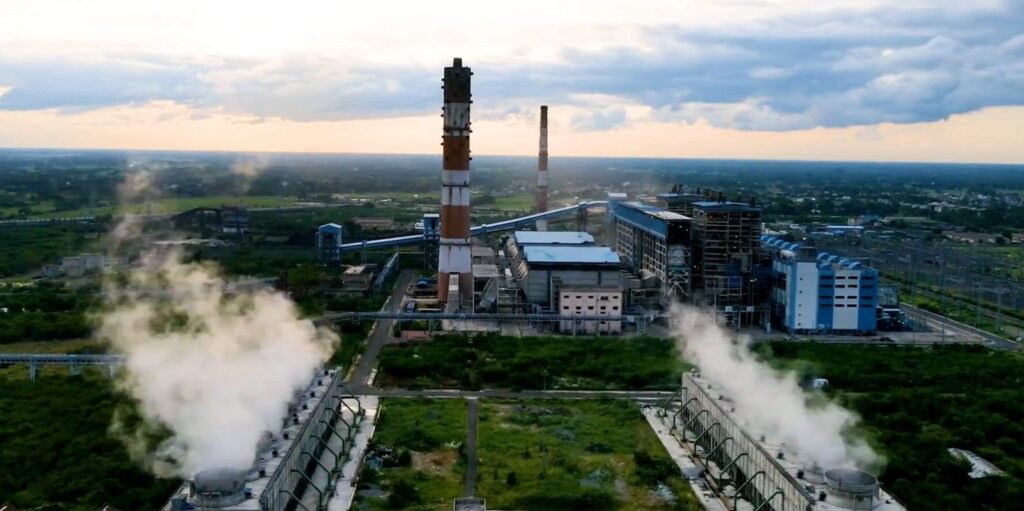
Kanti thermal power station, Bihar (Image by Muzaffarpur1947 via Wikimedia Commons)
- Seven years after Bihar launched its green budget, the state has not made much progress on the climate and environment front.
- Bihar is one of the early movers that started presenting a green budget, but data suggests that progress has been slow on climate change mitigation and action on pollution, biodiversity conservation and waste management.
- Nationally, around eight states are currently presenting green budgets, and almost all the budgets follow the same pattern. Experts highlight the need to evaluate such green initiatives.
Bihar was among the first Indian states to introduce a green budget, positioning it as a tool to integrate environmental priorities into public spending. Seven years later, however, key indicators suggest that progress on climate action, renewable energy, pollution control, biodiversity conservation and waste management has remained limited, raising questions about whether the initiative has translated into measurable environmental outcomes.
The Bihar government presented its first green budget in the 2020-21 financial year with the stated objective of proactively addressing the state’s ecological vulnerabilities. Since then, the size of the green budget has grown significantly. In 2026-27, the state allocated around ₹158 billion to green initiatives—nearly three times the ₹56 billion earmarked in its inaugural budget.
Despite the increased allocation, environmental indicators show only modest improvements.
The energy sector, which contributes nearly 65% of Bihar’s greenhouse gas emissions through coal-based power generation, has witnessed only gradual progress in renewable energy adoption. Renewable energy capacity has increased from 376 MW in 2020 to 651 MW in 2025-26. However, this remains well below the Bihar State Pollution Control Board’s (BSPCB) target of 10,000 MW by 2030 and 28,000 MW by 2050 under the state’s net-zero pathway. At the current pace, Bihar is projected to achieve only around 900 MW by 2030.
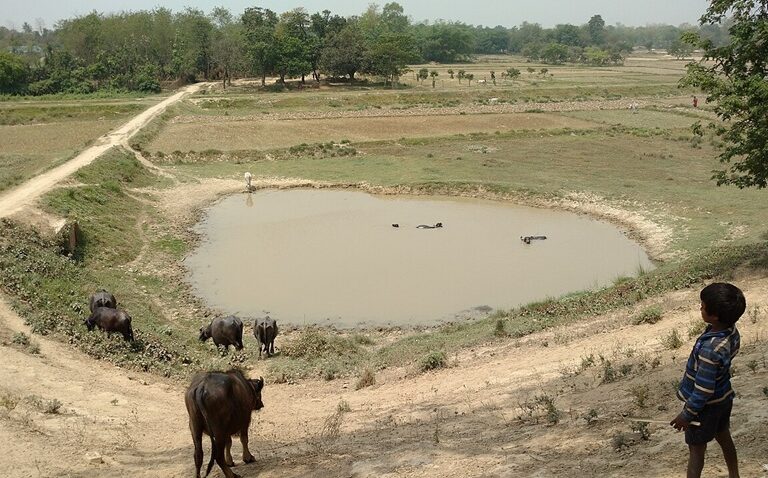
The picture is similarly concerning for biodiversity. Government data shows Bihar had 4,550 wetlands covering 389,713 hectares in 2019. By 2025, the number had declined to 4,526, while the area under natural water bodies had shrunk by 16,843 hectares—an area equivalent to roughly 70% of Patna.
Waste management has also shown uneven progress. Before the green budget was introduced, Bihar generated about 2,272 tonnes of municipal waste every day, with nearly 51% being processed. Although processing rates briefly improved to 58% in 2021, they subsequently declined, falling to around 30% in 2025.
Air pollution continues to remain a major concern. A 2025 report by the Centre for Research on Energy and Clean Air (CREA) found PM2.5 levels exceeded prescribed limits in 20 of Bihar’s 23 monitored cities. While BSPCB data shows PM2.5 and PM10 concentrations declined between 2020 and 2025, sulphur dioxide levels increased from 8.6 micrograms per cubic metre to 11.4 micrograms during the same period.
The CREA report also found that Bihar utilised only about 60% of the ₹3.28 billion allocated under the National Clean Air Programme.
Experts seek independent evaluation
Experts say these figures underline the need to evaluate not just spending but also the effectiveness of the green budget.
“It is important to conduct an impact evaluation to assess the actual effect of the green budget and the associated annual expenditure,” Ashmita Gupta, economist and member-secretary at the Asian Development Research Institute (ADRI), told Mongabay India.
“Merely spending funds is insufficient; the budget should also reflect the outcomes of that expenditure, yet this is currently missing in the green budget,” she added.
ADRI was among the institutions that helped the Bihar government prepare its first green budget.
Shailly Kedia, senior fellow at The Energy and Resources Institute (TERI), echoed similar concerns, saying Bihar should strengthen the connection between the green budget and its Output-Outcome Monitoring Framework.
“This would help move beyond expenditure tracking towards measuring environmental outcomes and implementation effectiveness,” Kedia said.
A research paper published in the International Research Journal on Advanced Engineering and Management in March 2025 also recommended independent monitoring of green projects.
“Taking help of third-party audits of important green projects can help to know the status of progress. This also helps ensure accountability and transparency both,” the study noted.
Bihar’s green budgeting framework follows the internationally recognised Rio Marker methodology, which classifies government schemes according to their contribution to environmental and climate objectives. Since its introduction, the number of schemes included in the green budget has increased from 96 to 298.
However, Gupta believes simply increasing the number of schemes is not enough.
“While many elements of the green budget may appear green, a thorough evaluation by green audit agencies is required to verify if these schemes truly constitute green practices,” she said.
The state’s budget allocations also reveal inconsistencies.
The green budget accounted for around 7% of Bihar’s total expenditure when first introduced. Its share increased to more than 9.6% in 2021-22, peaked at 12.5% in 2023-24 and has now fallen back to approximately 7.5% in 2026-27.
Expenditure data indicates that Bihar has consistently spent less than what it allocated under the green budget. During 2021-22, expenditure stood at 6.48% against an allocation of 9.68%. In 2022-23, spending fell to 6.18% compared with an allocation of 9.73%. Utilisation improved during the following two financial years, although complete expenditure data for all years remains unavailable.
According to economist Runa Sarkar, professor at the Indian Institute of Management Calcutta, such gaps point towards broader implementation challenges.
“This is not unusual. Nevertheless, the gap between allocation and expenditure probably signals both a limitation in implementation capacity, both administrative and technical, and inadequate planning in allocation of the resources to begin with,” Sarkar told Mongabay India.
Bihar is among at least eight Indian states and Union Territories that now present green or climate budgets. Odisha pioneered climate budgeting in 2019-20 through Climate Budget Tagging, while Assam, Meghalaya, Uttar Pradesh, Kerala, Puducherry and Rajasthan have since introduced similar frameworks.
Among them, experts believe Bihar’s framework is one of the most comprehensive because it links expenditure not only with environmental themes but also with Sustainable Development Goals.
“Because it not only categorises expenditures based on environmental relevance, but also maps them against themes, activities, and SDGs,” Kedia said.
She added that climate budgeting generally focuses on climate mitigation and adaptation, whereas green budgeting takes a broader view by incorporating biodiversity conservation, pollution control, water conservation and waste management.
Experts agree that Bihar deserves credit for institutionalising green budgeting. However, they stress that the next phase should focus on measuring outcomes rather than allocations alone.
“It would be good to initiate a comprehensive assessment, which among other things, should check alignment of the budget allocations and expenditures with the State Action Plan for Climate Change,” Sarkar said.
Seven years after Bihar embraced green budgeting, experts say the state’s biggest challenge is no longer increasing allocations but demonstrating that the money is producing measurable environmental improvements.
(Published under Creative Commons from Mongabay India)