India Has A Railway Noise Problem That Remains Poorly Understood
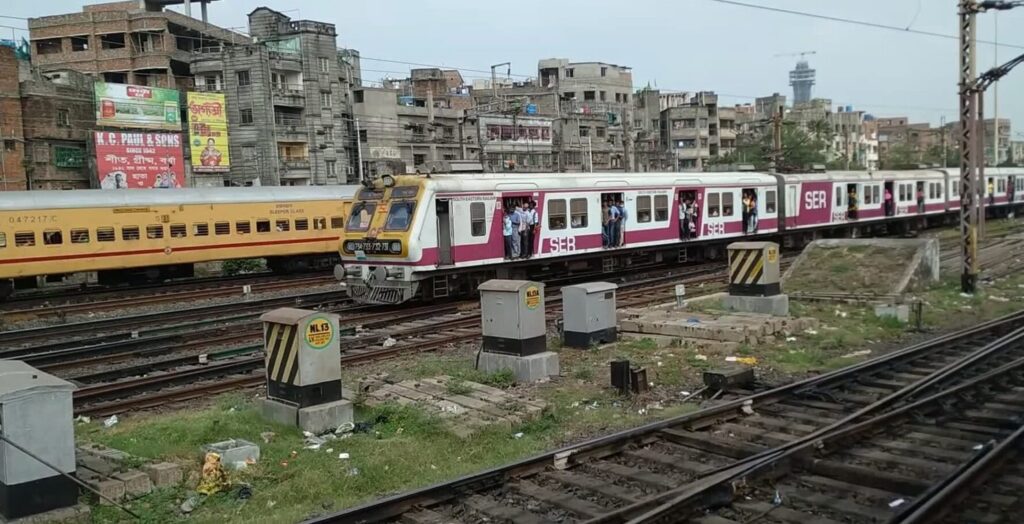
Residential settlements near Howrah railway station in West Bengal (Image by Ravi Dwivedi via Wikimedia Commons)
- Millions living along railway corridors face constant noise and vibration exposure, often late into the night.
- Indian studies can measure this exposure, but long-term health impacts remain largely unstudied.
- Experts say gaps in data, monitoring and policy prevent a clear understanding of the public-health burden.
Every day, thousands of trains pass through India’s cities, towns, and densely populated settlements. For millions of Indians living alongside railway corridors, the sound of passing trains — often accompanied by ground vibrations — is part of daily life. Most days, it continues late into the night. Yet, railway noise remains a poorly understood environmental health risk.
Recent studies have begun documenting elevated noise levels around railway tracks, with some communities experiencing exposures that exceed recommended residential limits. Yet, while researchers can increasingly measure railway noise, far less is known about what years of repeated exposure may mean for sleep, cardiovascular health, stress physiology, or quality of life.
As evidence slowly emerges, researchers say India lacks a clear understanding of the cumulative human burden of railway-noise exposure, leaving important questions about health impacts unanswered.
Measuring decibels, missing health evidence
Studies in recent years are beginning to reveal what life near railway corridors may mean for communities around.
A 2024 study led by Rajeev Kumar Mishra, an associate professor at the Department of Environmental Science and Engineering at Delhi Technological University (DTU), found that residents living near railway corridors reported physiological and psychological effects associated with repeated exposure to railway noise and vibration.

The research team measured noise at 10 sites near railway stations in Delhi and found that the noise exceeded Central Pollution Control Board (CPCB) limits. Sleep disturbance was one of the most frequently reported concerns among surveyed residents. However, Mishra emphasises that these findings primarily document exposure to potentially harmful railway-noise levels rather than measurable public health impacts. He notes that long-term epidemiological evidence linking such exposure to clinically measurable health outcomes in India remains limited.
A follow-up study, published in 2025 and also led by Mishra at DTU, shifted the focus from perceptions to exposure.
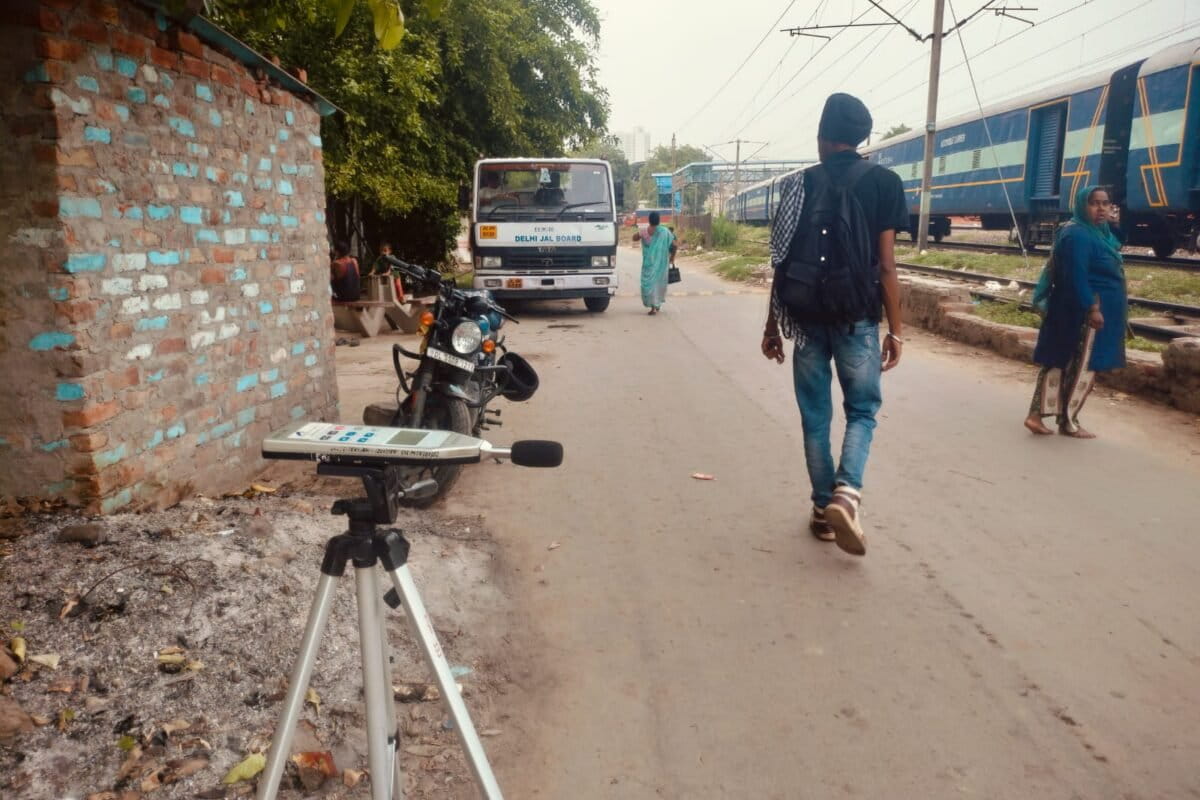
Monitoring 1,057 instances of trains passing by 14 informal settlements in Delhi, the researchers found that railway noise levels exceeded residential standards at every site. Freight trains generated the highest noise levels, while diesel locomotives consistently proved louder than electric ones.
Across all monitored locations, average railway-noise levels remained well above CPCB residential limits, underscoring the intensity of exposure along railway corridors. Mishra said establishing India’s own exposure-response relationship between long-term railway-noise exposure and chronic health outcomes under Indian conditions, needs further scientific investigation and is something that will require long-term epidemiological research.
Measuring exposure, missing experience
India’s current monitoring framework may not entirely reflect how communities experience life alongside railway corridors over time.
Mahavir Singh, a former chief scientist at CSIR-National Physical Laboratory (CSIR-NPL) Delhi, says, “Current railway-noise assessment practices are generally effective for engineering evaluation and regulatory compliance, but they do not always fully represent actual human exposure conditions.”
According to Singh, conventional monitoring may overlook health-relevant dimensions, including repeated train pass-bys, night-time disturbance, cumulative long-term exposure and ground-borne vibration.
He adds that communities living alongside railway corridors are rarely exposed to noise in isolation. Over the years, they often experience both railway-generated noise and ground-borne vibration. “If the objective is to understand public-health impacts, long-term assessment should consider both together, as an integrated assessment provides a more realistic understanding of community conditions.”
Singh also says that India’s monitoring framework should be more exposure-oriented and community-centric, focusing on creating healthier acoustic environments for communities.
From an institutional perspective, K.P.S. Verma, former executive director at the Research Designs and Standards Organisation (RDSO), Lucknow, says, “Railway noise was historically viewed primarily as an engineering and operational issue rather than a public-health concern.” During his tenure, he adds, noise from moving trains was generally regarded as transient, and therefore received relatively limited attention.
Verma notes that Indian Railways has introduced engineering measures to reduce noise, including long-welded rails, rail grinding and improved brake materials to minimise wheel-rail and braking noise.
He adds that people living immediately alongside railway tracks deserve independent health studies. “Future policy should be guided by independently collected, reproducible evidence from railway coaches, station platforms and homes alongside busy railway corridors.”
The missing models
Brind Kumar, Department of Civil Engineering at IIT Banaras Hindu University, says that communities living alongside railway corridors are exposed not only to railway noise but also to ground-borne vibration, with the balance between the two varying across railway environments. “While noise tends to dominate at enclosed station platforms because of reverberation, vibration becomes more significant along open railway lines where residential settlements lie close to the tracks.”
He adds, India still lacks railway-noise propagation and mitigation models suited to Indian conditions, limiting scientific intervention. “This limits not only scientific understanding but also the ability to design evidence-based mitigation strategies.”
Kumar also says that Indian Railways does not yet have a dedicated protocol for assessing and mitigating railway noise and vibration in exposed residential communities. “Addressing these gaps will require coordinated efforts spanning transportation engineering, environmental health and land-use planning.”
Manish Purshottam Manohare, an assistant professor, Transportation Research and Injury Prevention Centre (TRIP-C), Indian Institute of Technology, Delhi, cautions that the absence of long-term health evidence should not be interpreted as evidence of safety. “While more Indian research is needed, the existing evidence of widespread exposure is sufficient to justify preventive measures alongside continued scientific investigation.”
The evidence suggests that India is beginning to understand where railway-noise exposure occurs and how communities experience it. Yet experts say measuring decibels alone cannot reveal the long-term public-health burden. Answering these questions will require sustained epidemiological research, improved exposure assessments, stronger engineering models and closer integration of environmental science with public health research.