Banks Are Sitting On A Heat Risk They Have Barely Begun To Price
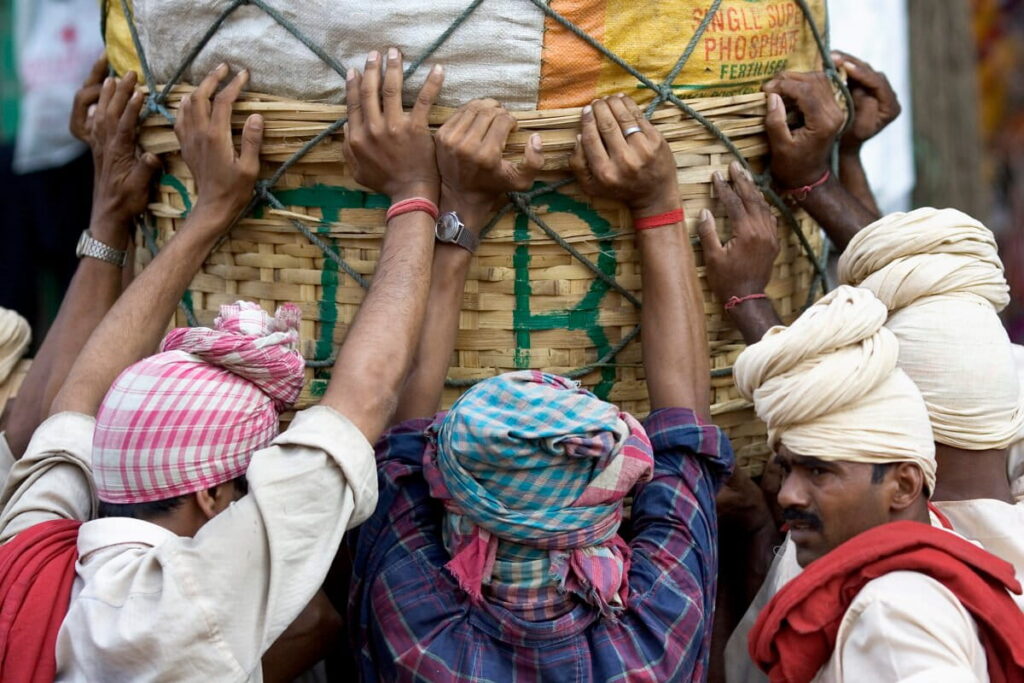
Extreme heat is emerging as a material and measurable risk category for India’s banking and financial sector. Daily wage workers face repayment delays when their incomes fall as extreme heat forces them to work fewer hours (Representative image by Jorge Royan via Wikimedia Commons)
- Extreme heat is disrupting loan repayments across India’s banking and microfinance sector, squeezing lenders’ cash flows and raising operating costs.
- Regulators are beginning to respond, but compliance remains voluntary.
- Scaling heat resilience finance will require a mix of parametric insurance, blended finance, and green bonds, supported by standardised heat risk data and city-level financing platforms to attract private capital.
Extreme heat is emerging as a material and measurable risk category for India’s banking and financial sector. Heatwaves in 2025 reduced lender collection efficiency in the June quarter across field-dependent loan portfolios. There are similar projections for 2026 that suggest a further decline due to extreme heat across northern and central India.
Extreme heat cuts working hours and labour productivity, disrupts supply chains, raises operating costs for borrowers and ultimately, impacts repayment capacity.
When collection slows, lenders themselves face a cash crunch. It forces banks to seek costlier short-term funding to meet their own obligations. Branch closures, staff limitations in high-heat zones and increased pressure on physical assets add an operational layer to a substantive credit and liquidity problem.
The borrower segments most exposed to heat stress include microfinance clients, agricultural households, gold-loan borrowers and self-employed workers in the informal economy. They also happen to be the most financially vulnerable, given that their incomes depend heavily on physical mobility and outdoor labour, both of which are significantly constrained during periods of extreme heat.
Reduced interaction between borrowers and field agents, fewer site visits, and disruptions across local demand and supply chains together contribute to repayment delays, constrained access to credit, and rising borrowing costs across rural and informal markets. One happens at the household level where daily wage workers and farmers see their incomes fall when extreme heat forces them to work fewer hours or damages their crops, making it harder to keep up with loan repayments. Second, at the enterprise level, extreme heat damages physical infrastructure, increases operating costs, and can push already stretched enterprises closer to the edge.
Together, these effects elevate credit risk across lending portfolios, particularly in sectors with high exposure to agriculture, informal labour, and small enterprises.
Evidence from emerging-market banking systems increasingly demonstrates the scale of this relationship. Approximately 60% of India’s ₹3.81 trillion microfinance portfolio is concentrated in agriculture and allied activities, sectors whose incomes are directly vulnerable to rising temperatures. Eastern India, among the country’s most climate-vulnerable regions, accounts for roughly one-third of the total portfolio. The borrowers most exposed to climate risk are at the core of India’s microfinance system.
Additionally, emerging-market evidence shows that exposure to physical climate risks systematically constrains bank lending and weakens borrowers’ ability to repay, while adaptive capacity only partially offsets these effects.
The consequences are already becoming visible across India’s financial system. When borrower repayments slow, microfinance institutions experience liquidity pressures because they rely heavily on collections to service their own obligations to banks and other lenders. As repayment cycles become less predictable, funding costs rise, refinancing becomes more difficult, and pressure builds across lending networks.
Banks are also beginning to face a second-order set of costs associated with climate adaptation. Investments in digital collection systems, heat-adjusted operating models, staff training, and enhanced climate-risk assessment frameworks are becoming increasingly necessary to maintain the quality of their loan books.
Taken together, extreme heat is now affecting how well banks recover loans, how easily they manage cash, how much it costs to run their operations, and how much they need to set aside for bad debts. As heatwaves become more frequent and severe, these pressures are likely to grow into a serious concern for the health of India’s financial system.
Regulators are shifting, but not fast enough
India’s financial regulators increasingly recognise extreme heat as a significant financial risk. The Reserve Bank of India (RBI) now views heatwaves as a prudential concern because they affect borrowers’ repayment capacity and banks’ financial stability.
The Draft Climate Risk Disclosure directions require banks to assess and stress-test heat exposure across credit, liquidity, and operations, though implementation remains uneven.
To strengthen resilience, regulators should make climate-risk reporting and heat stress testing mandatory and integrate the findings into supervisory and capital planning frameworks.
Banks must incorporate heat exposure into lending decisions by evaluating borrower vulnerability across locations, sectors, and business models.
For example, Union Bank of India is expanding its climate risk framework to include heat alongside other hazards. Operational resilience can be enhanced through digital collections, AI-based monitoring, and UPI-enabled payments that reduce reliance on field operations during heatwaves.
In the long term, finance should prioritise resilient infrastructure, climate-smart agriculture, adaptive urban systems, and green financing mechanisms.
The instruments that work
No single financing instrument can address the growing economic risks of extreme heat. Instead, a combination of concessional finance, guarantees, green bonds, credit lines, and public-private partnerships is needed to fund resilience at scale. Within this mix, three instruments stand out.
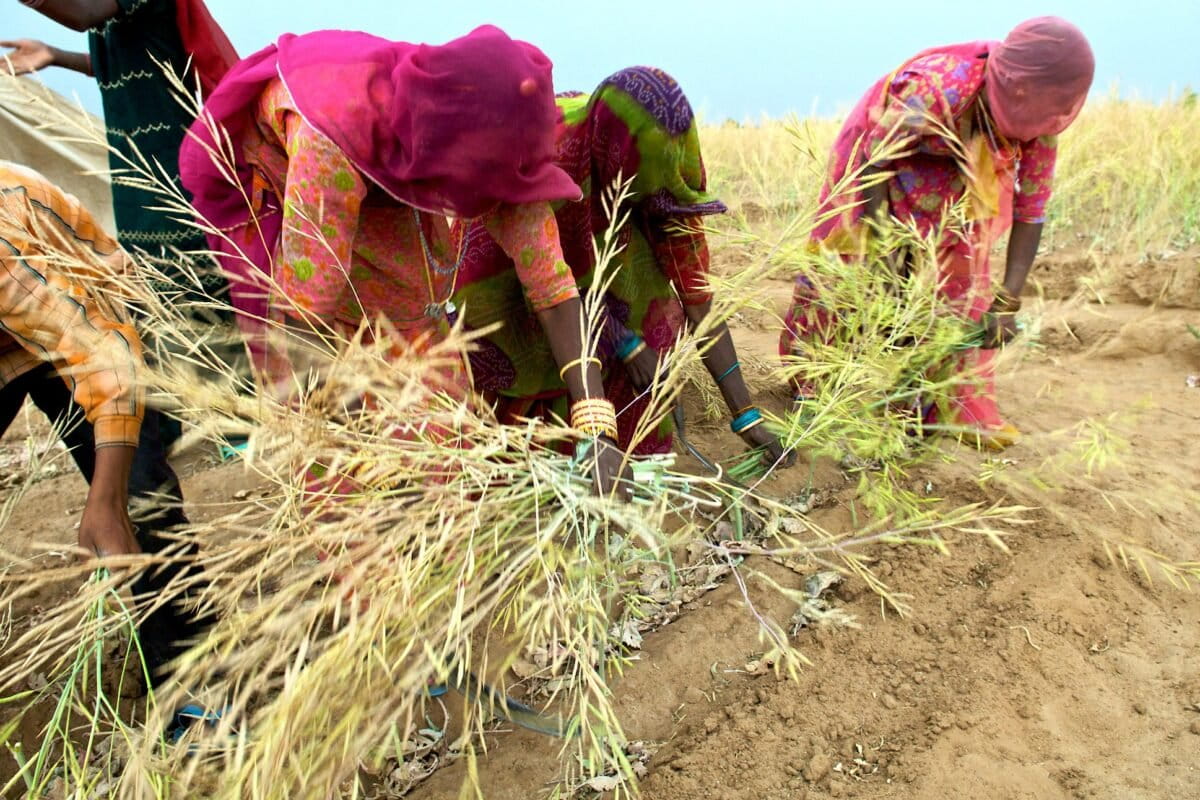
First, parametric insurance provides rapid financial relief to vulnerable groups such as informal workers and smallholder farmers. SEWA’s heat insurance, launched in 2023, automatically pays beneficiaries when temperatures exceed 40°C and covered 50,000 women across 22 districts by 2024. Scaling such products requires reliable heat-risk data, standardised temperature triggers, and formal recognition of heatwaves as notified disasters.
Second, blended finance helps mobilise private investment for climate-resilient infrastructure. The International Finance Corporation’s investment in Arya.ag, alongside development finance partners, supported storage, logistics, and market access for farmers.
These investments reduce heat-related post-harvest losses, improve price realisation, and strengthen agricultural resilience while attracting commercial capital.
Third, green and resilience bonds, often combined with public-private partnerships, can finance long-term adaptation. Indonesia’s Green Sukuk programme demonstrates how institutional capital can support resilient infrastructure, including cooling-oriented public buildings, water systems, and urban infrastructure that reduce heat-related risks while delivering broader development benefits.
The enabling infrastructure
Scaling heat-resilience finance requires stronger data systems, better financial incentives, and effective project delivery. First, lenders need standardised heat-risk data. The RBI’s Climate Risk Information System (RBI-CRIS), which provides meteorological, geospatial, and climate-risk information, can support location-specific heat-risk assessments, reduce due diligence costs, and improve the bankability of resilience investments.
Second, sustainability-linked finance should move beyond broad ESG metrics to measurable heat-resilience outcomes. Loan terms can be linked to indicators such as reduced indoor temperatures, lower cooling-energy demand, or expanded cool-roof coverage, using certification frameworks like LEED, IGBC, and GRIHA for verification.
Third, city-level financing platforms can aggregate resilience projects such as cool roofs, energy-efficient buildings, and district cooling. Development Finance Institutions can provide concessional finance and guarantees, while banks and institutional investors finance project portfolios through green bonds or pooled lending. Similar aggregation models have already improved financing for municipal rooftop solar projects.
Together, these measures can build a stronger pipeline of investable heat-resilience projects, mobilise private capital, and strengthen India’s long-term financial and economic resilience to rising heat risks.