Congress Slams Modi’s Longest PM Tenure Milestone
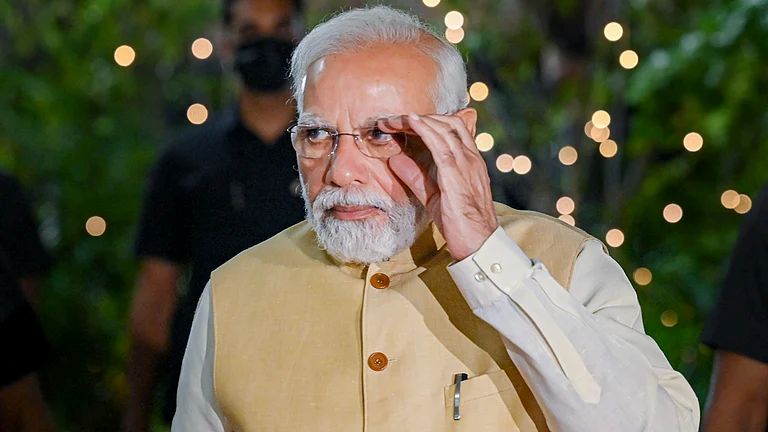
The Congress maintains that comparisons between Modi and Nehru cannot be reduced to a numerical calculation of days spent in office
Prime Minister Narendra Modi’s achievement of becoming India’s longest continuously serving elected prime minister has triggered a sharp political confrontation, with the Indian National Congress dismissing the development as an artificially constructed record and accusing the government of attempting to diminish the historical legacy of India’s first prime minister, Jawaharlal Nehru.
The criticism came after Modi crossed 4,399 consecutive days in office as an elected prime minister, surpassing the uninterrupted tenure record previously held by Nehru. While the Bharatiya Janata Party (BJP) celebrated the milestone as a landmark moment in Indian democracy, the Congress argued that the distinction was misleading and ignored the crucial years during which Nehru led the nation immediately after independence.
Congress general secretary for communications Jairam Ramesh launched a scathing attack on the prime minister, asserting that the celebration of the record was politically motivated and historically selective.
“He may have passed a self-proclaimed and dubiously invented milestone today, but he is a millstone around India’s neck, presiding as he is over the Murder of Democracy in India,” Ramesh said in a post on X.
The Congress leader maintained that the milestone was being used to divert attention from what he described as a systematic effort to undermine democratic institutions and erase the contributions of India’s founding leadership.
Congress defends Nehru’s historical role
According to the Congress, comparisons between Modi and Nehru cannot be reduced to a numerical calculation of days spent in office. Ramesh argued that the years between 1947 and 1952, when Nehru served as prime minister before India’s first general election, represented one of the most transformative periods in the country’s history.
He pointed out that those formative years witnessed the integration of more than 560 princely states into the Indian Union, the framing and adoption of the Constitution, major land reforms including the abolition of the zamindari system, and the implementation of constitutional safeguards and reservations for Scheduled Castes and Scheduled Tribes.
Ramesh also credited Nehru’s government with laying the foundation for India’s scientific and technological advancement through the establishment of key national institutions that later became pillars of the country’s development.
“The 1947-52 record of achievements of India with Nehru as PM — political, social, economic, scientific and technological — is now sought to be erased by Mr Modi, who has a pathological fixation on Nehru,” Ramesh alleged.
The Congress has repeatedly accused the BJP-led government of attempting to rewrite historical narratives by downplaying the role of Nehru and other leaders associated with the freedom movement and the nation-building process that followed Independence.
For the opposition party, the latest celebration surrounding Modi’s tenure reflects what it views as a broader political campaign to elevate contemporary achievements while overlooking the contributions made during the early years of the Republic.
Ramesh contended that Nehru’s legacy should be assessed not merely by the length of his tenure but by the scale of the challenges he faced and the institutions he helped create in the aftermath of colonial rule and Partition.
BJP celebrates record as Congress targets government
While questioning the significance of the record, the Congress simultaneously renewed its criticism of the Modi government’s performance over the past decade. Ramesh claimed that democratic institutions had weakened during the BJP’s tenure and alleged that several constitutional bodies were no longer functioning with the degree of independence expected in a parliamentary democracy.
Among the concerns raised by the Congress leader were the functioning of the Election Commission, the integrity of electoral rolls, and what he described as an erosion of scientific temper in public life. He further alleged that reservation policies had been weakened through privatization and other policy measures adopted by the government.
The Congress also sought to contrast Modi’s electoral journey with that of Nehru. Ramesh noted that Nehru secured decisive victories in the general elections of 1952, 1957 and 1962, winning clear parliamentary majorities and establishing the Congress as the dominant political force of the era.
In contrast, he argued that Modi’s third term in office depended on support from allies within the National Democratic Alliance (NDA) after the BJP failed to secure an outright majority on its own in the 2024 Lok Sabha elections.
The contrasting reactions from the BJP and Congress underscore the continuing battle over political legacy, governance and historical memory. While the ruling party views the milestone as a testament to Modi’s enduring popularity and electoral success, the opposition insists that numerical records should not overshadow the foundational achievements of India’s first prime minister or the broader questions surrounding the health of the country’s democratic institutions.