Why Strong Monsoon Rains Are Not Necessarily Good News For Indian Farmers
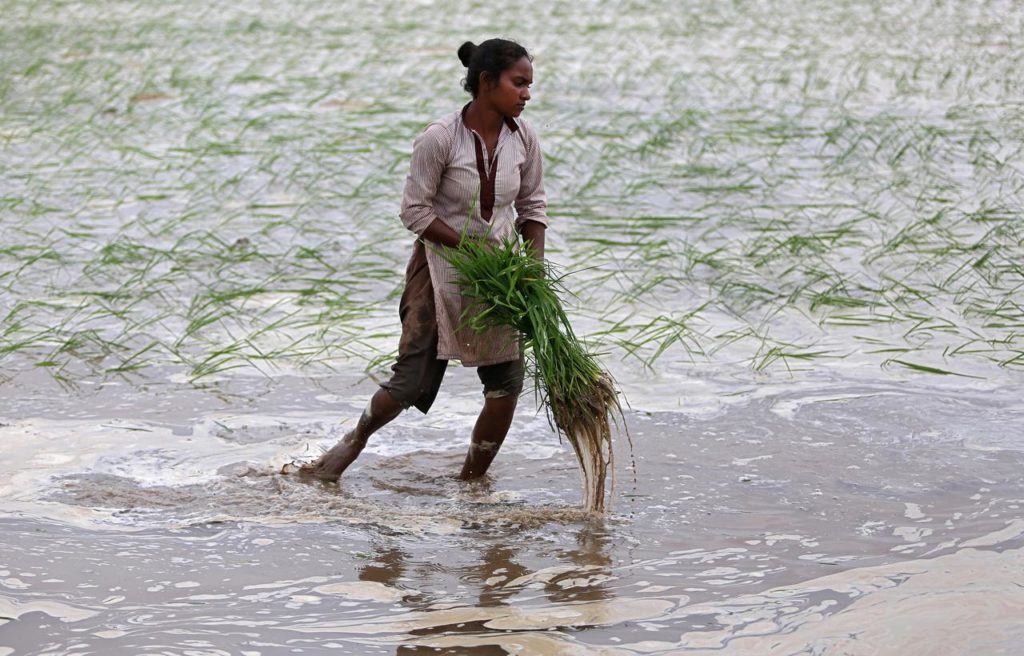
FILE PHOTO: A farmer carries saplings to plant in a rice field on the outskirts of Ahmedabad on July 5, 2019
India, one of the world’s biggest agricultural producers, experienced its heaviest monsoon rains in 25 years this year.
While rain would normally cheer the agricultural heartland, the monsoon was erratic and has left many crops damaged.
WHY IS THE MONSOON IMPORTANT?
India is the world’s biggest producer of sugar, cotton and pulses and the second-biggest producer of wheat and rice. The success of these crops is largely determined by the June-September monsoon, which delivers about 70% of the country’s annual rainfall.
The monsoon is also critical for the wider economy. Farming makes up about 15% of the $2.5 trillion economy and employs more than half of the country’s 1.3 billion people.
While crops in the ground have been damaged by the monsoon, the rains have replenished reservoirs and ground water reserves, which augurs well for India’s rural economy in 2020.
WHAT WENT WRONG WITH THIS MONSOON?
A prolonged dry spell resulted in significantly below-average rainfall at the start of the season, prompting farmers to delay the sowing of summer crops and leaving others wilting.
By the end of July, rainfall was so heavy that rivers flooded and crops were damaged.
The combination of a prolonged dry spell followed by heavy rainfall increased pest infestation and disease, forcing farmers to spend more on pesticides.
WHICH CROPS ARE AFFECTED?
Soybean, rice, cotton, sugarcane, pulses and vegetables have been hardest hit.
Soybean, India’s main summer-sown oilseed, was particularly damaged as Madhya Pradesh — India’s top grower of the crop — received rainfall 44% above average. The heavy rains stunted the flowering of the plant, which in turn reduced the pods it yielded.
Sugarcane in many districts of Maharashtra and Karnataka — the second- and third-biggest producers in India, respectively — were flooded in the first week of August. This is expected to result in India’s lowest sugar output in three years, industry officials say.
Maturing cotton in Gujarat and Maharashtra, the country’s top producers, was damaged by heavy rains in September.
Rice was affected by excessive rains in southern and western India, as well as low rainfall in the top producing eastern state of West Bengal.
Vegetables such as tomatoes and onions went rotten due to heavy rainfall in Maharashtra, Karnataka and Madhya Pradesh.
HOW COULD ERRATIC RAINFALL AFFECT INDIA’S TRADE OF FARM COMMODITIES?
Given the damage to the soybean crop, the world’s biggest importer of edible oils could be forced to increase imports of palm oil, soy oil and sunflower oil in 2019/20 marketing year starting from Nov. 1.
Cotton supplies from new season crops are likely to be delayed by two to three weeks, in turn delaying exports.
Imports of pulses, especially pigeon peas, green and black gram, are likely to rise due to lower production.
The dry spell helped the spread of the fall armyworm pest, which damaged corn and will potentially push New Delhi to import the grain to contain pressure on local prices.
India, the world’s biggest onion exporter, has banned overseas sales, forcing prices in Bangladesh, Nepal and Sri Lanka to double.
WHAT ARE THE PROSPECTS FOR WINTER-SOWN CROPS?
Above-average monsoon rain has brightened the prospects for winter crops like wheat, rapeseed and chickpeas.
For years, millions of farmers have been unable to plant winter crops because weak rainfall had reduced moisture levels in the ground.
But following the heavy rains in September, moisture levels are adequate, and most reservoir levels are well-above their 10-year averages.
India could harvest a record wheat crop in 2020 and production from winter-sown rice is expected to jump, analysts said. But that could also create excess rice and wheat supplies at a time when India has been struggling to encourage exports because local prices are higher than global benchmarks.