Delhi’s Waste-to-Energy Push Fuels Pollution Fears

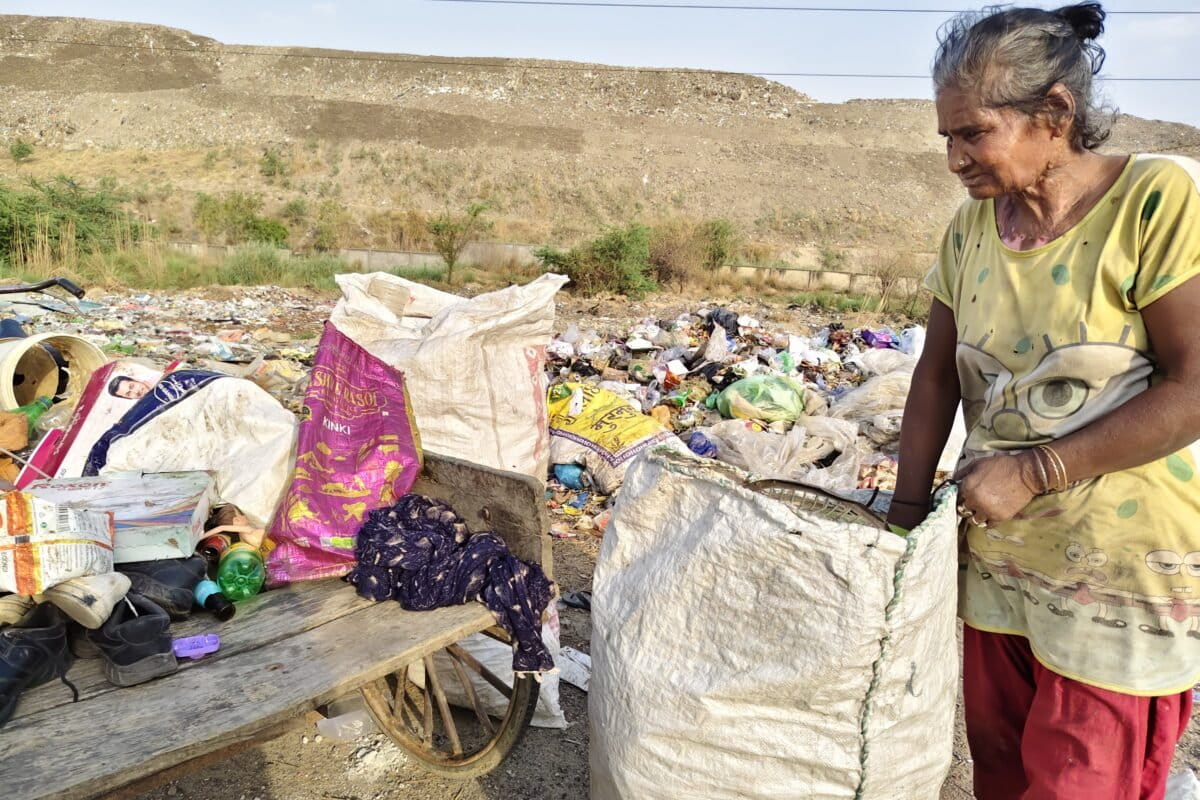
A waste worker segregates items at the edge during a fire at the Bhalswa landfill in New Delhi (Representative image; AP Photo/Manish Swarup)
- Communities that live near waste-to-energy (WTE) plants in India complain about the stench and soot. But construction has begun for a new plant in Delhi, despite protests.
- Meanwhile, with their own markets saturated, European and Japanese WTE companies are expanding in the Global South, including India.
- Funding from international finance institutions, policy changes and incentives such as carbon credits are supporting this expansion, note experts.
When Rajpal Saini retired from the Municipal Corporation of Delhi, he didn’t really plan to spend his golden years battling his former employer. But a waste incineration plant commissioned near his village, by the corporation, has made his life arduous. “We have the entire waste processing mall of Delhi here — a khatta (dumping ground), a hazardous waste disposal site, a composting plant, and a 28 megawatt (MW) waste-to-energy (WTE) plant. And as if all this were not enough, now they have imposed another one (WTE plant) on us,” said Saini, a resident of Sannoth, a village near Bawana at the northwestern edge of Delhi.
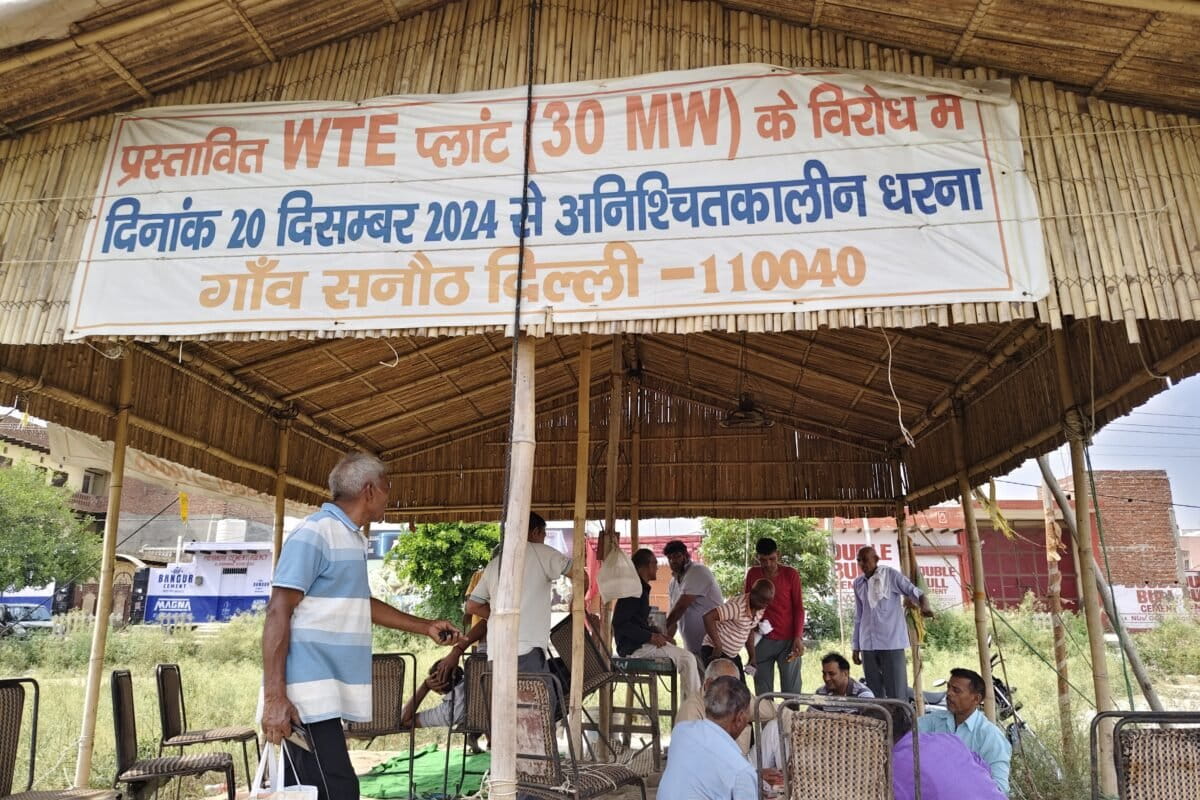
“The world recognises the value of yoga and breathing in fresh air. But forget about the outdoors; we even have to seal the holes in our doors to avoid the stench. My uncle, who regularly did pranayam (breathing exercises), has been paralysed and bedridden for six years now,” Saini said, whose car is full of posters advocating for the “right to breathe”.
The construction of the new 3,000 tonnes-per-day (TPD), 30-megawatt WTE plant began in May despite a case before the National Green Tribunal and residents’ protests since December 2024. Situated right next to Munak canal, a significant source of drinking water for Delhi, this new plant will be the capital’s fifth WTE, a city that produces close to 12,000 TPD of waste.
The first WTE plant — a technology to convert trash to heat or electricity — was set up in India in 1987 by a European company. The plan was shut down within 20 days because the garbage here lacked the “calorific value” required to generate power. Today, India has 30 plants, half of them dysfunctional due to the same issue — waste profile and economic viability. WTEs have tackled less than 6% of the country’s waste and contributed 0.1% to the energy mix, finds a 2025 policy response. Still, 16 more plants are under construction, and 33 are proposed.
In 2025, India exempted WTEs from prior environmental clearance and shifted them from red category (high pollution potential) under the Central Pollution Control Board’s industry pollution index, to blue. The category was created in 2025 for “facilities essential to control, abate, and mitigate pollution generated from domestic and industrial activities.”
In Europe, where WTE gained impetus due to the phasing out of landfills, people are now waking up to its greenhouse gas potential.
The European Union has reduced funding for WTEs, while Germany, which has the largest installed capacity of WTEs in the continent, has imposed a carbon dioxide tax on them.
Meanwhile, with their own markets saturated, European and Japanese WTE companies are expanding in the Global South.
Funding from international finance institutions, free land, policy changes and incentives in the form of carbon credits are supporting this expansion despite the harm to surrounding communities.
A burning “solution”
Unlike the segregated waste in Europe, waste in India is predominantly mixed and has a high moisture content. The Solid Waste Management Rules, 2026, and its earlier iterations mandated that only non-recyclable waste with a calorific value of 1,500 Kcal/kg can be used to generate energy. This waste must first be converted into refuse-derived fuel (RDF) pellets and fluff through drying and shredding of combustible waste — before being fed into the boiler.

“On ground, RDF is just mixed waste left to dry in a pit for 14 days,” said Chythenyan Devika Kulasekaran from Centre for Financial Accountability, a Delhi-based non-profit.
WTE has two byproducts — leachate from the RDF pit and bottom ash. The upcoming WTE in Bawana promises to recycle the more than 3.5 lakh litres leachate generated every day back into plant operations. “It’s doubtful that they will use up so much water on a daily basis even as new leachate pours in every day,” asks Kulasekran.
Bottom ash — 27-40% of the waste input — contains hazardous residue and needs to be disposed of in sanitary landfills, said Kulasekaran. EU regulations require plants to mix this ash with cement before disposal. “Every year, up to 16 million tonnes of toxic ash and residue from European incinerators are buried in the ground, often near communities with no say in the matter,” says a brief by Zero Waste Europe, a collective of non-profits in Europe working on the reduction, reuse and recycling of waste.
In Okhla, at a currently operational WTE plant, a brick manufacturing unit was supposed to handle this ash. “Not a single brick has been produced to date. Bricks require fine ash — a product of complete combustion, which doesn’t happen with low calorific value waste. However, at Tajpur Pahari, a slum cluster on the Delhi border, a 15-foot hill of ash can be found,” said Ranjit Devraj, a resident of Sukhdev Vihar, a locality in the vicinity of the Okhla WTE plant.
Health impact
Across the city from Bawana, in southeast Delhi, residents of V.P. Singh Camp, a slum cluster tucked between the Okhla waste dumping site and the Tehkhand WTE, wake up to a layer of soot on their roofs every morning. Having lived near a landfill for years, the pollution has become normalised. “Stench, soot, smoke, contaminated water — nothing matters anymore. The government is not going to do anything about it,” said Kamlesh, who has been residing there since 2006.

The Tehkhand WTE came up in 2023 with a loan from the Power Finance Corporation of India Ltd., a public sector company that has provided ₹20,000 million in loans to 13 WTEs in India.
Burning mixed waste releases more carbon dioxide than burning fossil fuels, says a UNEP report. Besides, it also releases particulate matter, heavy metals, hydrogen chloride, dioxins and furans — carcinogens linked with cancer, reproductive harm and endocrine disruption.
Even though emission norms for WTEs in India are far more relaxed than in the EU (10 times higher for PM and 1.7 times higher for dioxins), three of the four WTE plants in Delhi have flouted them.
Dioxins concentrate in the body and in food items over time. Studies conducted in the vicinity of WTEs in the Netherlands, Spain and Slovakia found high concentrations of dioxin in chicken eggs and grass even as the plants met the emission limits.
Phase out of WTE plants in Europe
“WTEs are an integral part of Germany’s waste management infrastructure. But large quantities of waste that end up there could actually be avoided, reused or recycled,” said Michael Jedelhauser, a senior officer for Circular Economy at the German non-profit Nature Protection Association (NABU).

The German CO2 tax ranges from €55-65 per tonne of CO2 equivalent, charged only on the fossil component of waste (plastics). “A carbon price can act as an incentive to divert more waste towards material recovery,” he added.
In contrast, the Okhla WTE in Delhi continues to earn from carbon credits. In 2021, the United Nations purchased 4,000 certified emission reductions (CERs) from the company to fulfill its carbon neutrality goal.
Europe has 60 million tonnes more waste incineration capacity than it needs, forcing countries to import waste to keep their plants running. In 2024, Germany imported more than a million tonnes of waste for incineration. “Excess capacity undermines waste reduction and recycling,” said Janek Vahk, Zero Pollution Policy Manager at Zero Waste Europe.
Long-term “deliver or pay” contracts legally force EU municipalities to supply guaranteed waste to WTEs. Lasting for 35-45 years, these contracts “lock in” the civic bodies, preventing them from any attempt at waste minimisation. “In Italy, six municipalities ended up paying €5 million to the WTE. Many local bodies in Europe are trapped in this cycle,” said Vahk.
Consistent advocacy for a moratorium on new plants led to the phasing out of funding for WTEs in the EU, informed Vahk. “The EU Cohesion fund – which transfers funds from rich EU states to the poorer ones, the Modernisation Fund, that helps countries meet energy targets, and even the Sustainable Finance Taxonomy, which supports green and circular technologies, dropped WTE from their list. The last one was a big victory because this Taxonomy guides government and private bank investments in the EU,” he said.