More Number Of Trees Don’t Always Mean Cooler Cities, Study Finds

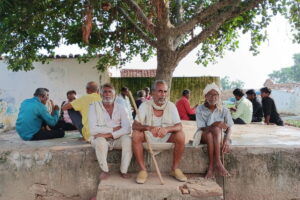
People rest under the shade of trees in New Delhi as the city is gripped by a heat wave in June 2024 (AP Photo/Manish Swarup)
- A new study finds that simply increasing tree cover does not always make cities cooler. In humid urban areas, dense tree canopies can even raise the Heat Index by trapping moisture.
- The cooling benefits of urban trees depend on a combination of canopy structure, photosynthetic activity, local climate, urban density and airflow, rather than tree cover alone.
- Researchers argue that urban greening must be climate-smart, prioritising the right tree species, the right locations and thoughtful planting design over simply planting more trees.
Urban greening is often promoted as one of the best ways to reduce rising temperatures in cities. Trees provide shade, lower surface temperatures and improve air quality, making them an important tool for tackling urban heat. However, a new study published in Nature Communications suggests that planting more trees does not always make people feel cooler. In some cities, especially humid ones, dense tree cover can actually increase the “feels like” temperature.
The study, conducted by researchers from IIT Gandhinagar and Northeastern University in the United States, examined how trees influence the Heat Index (HI), which combines air temperature and humidity to reflect how hot conditions actually feel to people. Unlike studies that focus only on air or land surface temperatures, this research looked at how both heat and moisture affect human comfort.
Researchers found that while trees generally cool cities by blocking sunlight and lowering temperatures, they also release moisture into the air through a natural process called evapotranspiration.
In humid cities where buildings are closely packed and air circulation is poor, this extra moisture can increase humidity, making people feel hotter even when the air temperature drops. In drier cities, however, the atmosphere can absorb the additional moisture more easily, allowing trees to provide more consistent cooling.
According to the study’s first author, Angana Borah, the same tree can have very different effects depending on where it is planted, the city’s climate and how densely built the surrounding area is. As cities continue to warm faster than nearby rural areas, she says urban greening strategies need to be designed according to local conditions rather than applying the same approach everywhere.
Tree canopy matters more than simply planting more trees
The researchers analysed vegetation in 138 Indian cities between 2003 and 2020, covering a wide range of climates, including tropical monsoon, tropical savanna, humid subtropical, hot semi-arid and desert regions.

Instead of simply measuring tree cover, the study examined three indicators of vegetation health and structure. These included the Enhanced Vegetation Index (EVI), which measures how green an area is; the Leaf Area Index (LAI), which estimates the density of tree leaves; and the Fraction of Absorbed Photosynthetically Active Radiation (fPAR), which indicates how actively plants absorb sunlight for photosynthesis and release moisture into the atmosphere.
Using explainable artificial intelligence (AI), the researchers identified the conditions under which vegetation improves or worsens human heat exposure. They found that the structure of the tree canopy—its leaf density, arrangement and ability to provide shade—has a much greater influence on thermal comfort than simply increasing the number of trees.
Udit Bhatia, associate professor of civil and computer engineering at IIT Gandhinagar and one of the study’s authors, said the research identified threshold values for these vegetation characteristics that determine whether trees reduce or increase heat stress.
“The study of photosynthetic activity explains why specific urban cooling succeeds in one city but becomes counterproductive in another city,” Bhatia said. “In some regions, dense canopies can restrict ventilation, while higher photosynthetic activity can lead to increased moisture through transpiration. This extra moisture can create a localised greenhouse effect due to trapped humidity, thus reducing the cooling effect.”
Mohammad Rahman, senior lecturer in urban horticulture at the University of Melbourne, who was not involved in the research, said the findings are important but consistent with what urban climate scientists have observed.
“Trees generally provide substantial cooling benefits. However, the magnitude and even the direction of their effects can vary depending on the local climate and the density of the cities,” he said.
Choosing the right tree for the right city
The study found clear differences between cities with dry and humid climates.
In hot, semi-arid cities such as Gandhinagar, Jaipur, Ahmedabad and Coimbatore, dense tree canopies, greener vegetation and higher photosynthetic activity consistently helped lower heat stress because the relatively dry air could absorb extra moisture without making conditions uncomfortable.
The situation was different in tropical cities such as Bengaluru and Chennai. There, dense canopies and greener surroundings reduced air temperatures, but trees with high photosynthetic activity released more moisture into the already humid atmosphere. As a result, the Heat Index increased, making conditions feel hotter despite cooler air.

“So, we need localised studies to determine how a tree would provide thermal comfort in one city versus another,” Borah said.
Bhatia explained that different cities require different tree species. “Gandhinagar has a higher threshold of photosynthetic activity, almost two times more than that of Bengaluru. Native trees such as Arjuna (Terminalia arjuna) and neem (Azadirachta indica), and not ornamental trees, meet our criteria for Gandhinagar,” he said.
The researchers say urban greening should go beyond simply increasing tree cover. City planners need to consider which species are planted, where they are planted, how the canopy will develop over time and whether enough airflow is maintained around trees.
Rahman said planners in humid tropical and subtropical cities should balance the cooling provided by tree shade with sufficient open spaces that allow air to circulate. He also pointed out that while satellite data is useful for identifying city-wide trends, planning decisions should include street-level measurements because they better reflect the conditions people actually experience.
Experts also noted that the study does not fully account for local wind patterns. Raghu Murtugudde, Emeritus Professor at the University of Maryland, said wind plays an important role in determining how effectively trees cool an area.
“Winds can have a strong effect on water loss through evaporation and, consequently, on cooling. That’s where hyperlocal differences matter,” he said.
According to Murtugudde, tall buildings, narrow streets and dense tree cover create complex airflow patterns that influence thermal comfort. “This is a nice big picture, but actual planning will need to consider such street-level parameters,” he added.
Bhatia agreed that future research should examine how trees interact with buildings, roads, pavements and wind to shape neighbourhood temperatures. He said thermodynamic modelling could help identify which tree species work best in different urban settings.
The researchers emphasise that trees remain essential for cities because they improve air quality, support biodiversity, store carbon and provide many ecological benefits beyond cooling. However, the study concludes that successful urban greening depends not on planting the maximum number of trees, but on planting the right species in the right places.
As Bhatia put it, “Let us not confuse mere greening with better cooling. The right tree species has to be prioritised for a given climatic region to get maximum cooling benefits. One size does not fit all.”