‘Mehangai Manav’ Strikes Again: Rahul After Fresh Fuel Price Hike
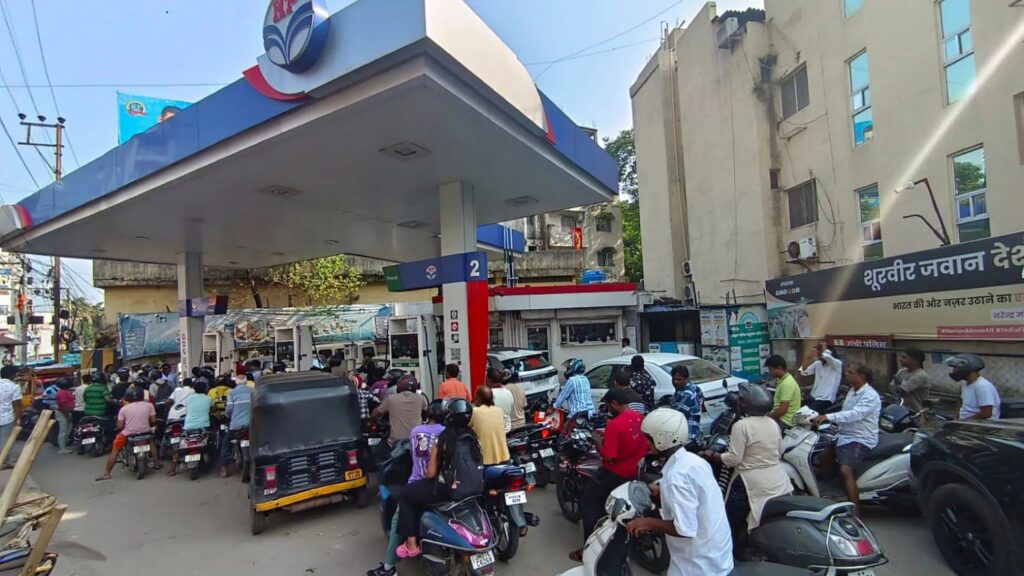
Monday’s hike — the fourth since May 15 — raised petrol by Rs 2.61 and diesel by Rs 2.71 per litre, taking total fuel price increases in under two weeks to nearly Rs 7.5 per litre (Image: CSRJournal)
Leader of Opposition Rahul Gandhi on Monday intensified his criticism of Prime Minister Narendra Modi after another round of petrol and diesel price hikes pushed fuel rates to record levels across several Indian cities. The Congress leader accused the government of deliberately delaying price revisions until elections concluded and then burdening ordinary citizens with inflation.
Taking to X, Rahul Gandhi coined the phrase “mehangai manav” — loosely translated as “inflation man” — to attack the Prime Minister over the repeated fuel price increases announced over the past two weeks.
“‘Mehangai manav’ Modi strikes again. He raises petrol and diesel prices in installments — ensuring that your pockets are quietly picked, bit by bit,” Gandhi wrote in Hindi, alleging that the government was imposing economic hardship gradually to avoid public outrage.
Monday’s increase marked the fourth fuel price hike since May 15. Petrol prices rose by Rs 2.61 per litre, while diesel became costlier by Rs 2.71 per litre. With the latest revision, cumulative increases in fuel prices over less than two weeks have climbed to nearly Rs 7.5 per litre.
The Congress MP said he had repeatedly warned about worsening economic conditions and accused the Centre of putting political considerations ahead of public welfare.
“For months, I had been warning of an impending economic storm. But Modi Ji, true to form, was busy with elections at the time and the moment the elections ended, he hiked petrol and diesel prices by Rs 8,” Gandhi said.
He further alleged that the government’s economic policies were intensifying inflationary pressures at a time when households were already struggling with rising costs of essential goods and services.
“‘Mehangai manav’ Modi has just one job: promises during elections, and attacking people’s pockets at other times,” he added.
The latest hike pushed petrol prices in Delhi to Rs 102.12 per litre from Rs 99.51 earlier, while diesel rates increased to Rs 95.20 from Rs 92.49. Similar increases were recorded across major metropolitan cities, deepening concerns over transportation costs and the likely impact on food and commodity prices.
Fuel Prices Rise Across Major Cities Amid Global Oil Pressure
In Mumbai, petrol prices climbed to Rs 111.21 per litre, while diesel reached Rs 97.83. Kolkata recorded petrol at Rs 113.51 and diesel at Rs 99.82 per litre. In Chennai, petrol prices touched Rs 107.77, while diesel rose to Rs 99.55 per litre.
The recent hikes follow earlier revisions announced on May 15, May 19 and May 23 after fuel prices had remained unchanged for an extended period. Oil companies and government officials have attributed the increases to rising international crude oil prices, narrowing refining margins and the weakening value of the rupee against the US dollar.
Industry sources said global crude prices have surged significantly since late February amid escalating geopolitical tensions in West Asia. The situation worsened following US-Israeli military strikes on Iran and disruptions near the Strait of Hormuz, one of the world’s most strategically important oil transit routes. The instability has increased concerns over supply constraints, pushing up import costs for oil-dependent economies such as India.
Opposition parties have accused the Centre of intentionally freezing fuel prices during the election period to avoid voter backlash and then implementing steep hikes immediately afterward. The government, however, has defended its approach, arguing that previous restraint in fuel pricing was aimed at shielding consumers from global market volatility and inflationary shocks.
State-run fuel retailers — Indian Oil Corporation, Bharat Petroleum and Hindustan Petroleum — together control nearly 90 per cent of India’s fuel retail market and revise prices based on international crude trends, exchange rates and refining costs.
Economists warn that sustained increases in fuel prices could have a cascading effect on inflation, as transportation and logistics expenses directly influence the cost of food, consumer goods and industrial supplies. With inflation already a politically sensitive issue, the sharp rise in petrol and diesel rates is expected to intensify debate between the government and the opposition in the coming weeks.