Lest We Forget: The Martyrs Of Sipahi Bahadur
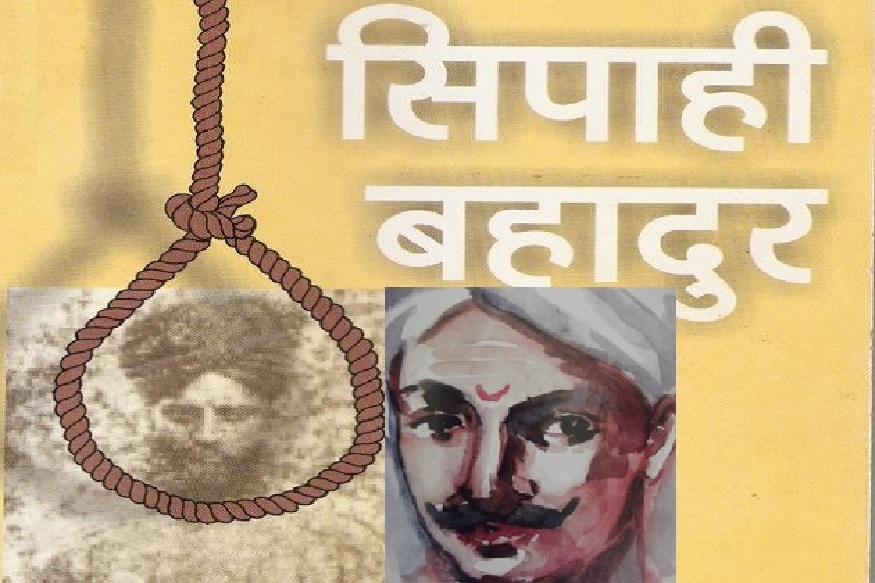
Few know of the Sipahi Bahadur uprising and its bloody end in 1858 – even though, in its five months of existence, Sipahi Bahadur provided one of the first instances of a parallel, secular Indian government within the British Raj
One hundred and sixty-eight years ago, the Revolt of 1857 stirred Indian conscience and pitched infant nationalism against established imperial might. Historians have described it as the first war of Independence and much has been recorded and written about this milestone on the road to freedom.
And yet, few know of the Sipahi Bahadur uprising and its subsequent, bloody end in 1858 – even though, in its five months of existence, Sipahi Bahadur provided one of the first instances of a parallel, secular Indian government within the British Raj. The event stands as a stark example of our official history’s impecunious memory.
Ninety years before the British left India, Sehore in Madhya Pradesh (about 30 km from Bhopal) declared independence from British rule. On August 6, 1857, Risaldar Wali Shah of the Bhopal Contingent Force led 356 soldiers in rebellion against Sikander Jehan Begum, the Nawab of Bhopal, who paid allegiance to the British.
Shah exhorted his comrades stationed in Sehore – most notably Koth Havaldar Mahavir, Arif Shah, Ramjulal, Adil Mohd Khan and Fazil Mohd Khan – to take up arms, declaring: “The British are being hounded out of the whole of Hindustan. Not so in Bhopal state. We do not owe our lives to any Raja, Nawab or Begum.”
These soldiers’ grievances were common across the rebellions that fateful year – insufficient wages, sub-standard rations like stale rotis, shabby uniforms – yet this particular group did something exceptional. After overthrowing the forces of Major Henry William Richards, the British political agent, the Indian soldiers set up their own government, complete with its own civil and criminal courts and an administrative council.
“Sipahi Bahadur was the beginning of serious attempts at a tryst with colonial modernity,” said Dr Biswamoy Pati, associate professor of History at Delhi University.
Embittered by the Nawab’s callous attitude towards their daily concerns, and emboldened by the nation joining hands in 1857, these soldiers posed the biggest-ever challenge to the viability of the Bhopal state.
Dr Shriram Tiwari, formerly Director, Culture, Madhya Pradesh said, “The rebel government was staunchly secular. It had two standards – Nishan-e-Mohammadi and Jhanda Mahaviri – that were raised together to symbolise Hindu-Muslim unity.”
By December 1857, the determined soldiers and their civilian supporters had garnered enough military resources and civilian support to lay siege to Gauhar Mahal, the Nawab’s residence.
Sipahi Bahadur (as against Company Bahadur or the East India Company) differed from other uprisings of 1857 — its leaders knew any movement that resorted to violence to effect regime change would be short-lived, and so they installed their own government machinery, complete with civil and criminal courts, a council and a state emblem. Hemmed in by rebels in a landlocked state, Nawab Sikander Jehan Begum waited for the raging tide of nationalism to ebb and for the British to come to the rescue of the state of Bhopal, now shaken to its foundations.
The movement was crushed brutally with the killing of 356 soldiers on January 14, 1858 – shot en masse in Sehore. General Hugh Rose led a combined force of the British military and the Bhopal state (under Bakhshi Baqi Mohd Khan) to rout the Sipahi Bahadur movement.
“It was the highest number of soldiers executed during the Revolt of 1857 in Madhya Pradesh. Of them, 195 were with the artillery unit, 159 were infantry soldiers,” said Dr Shambhu Dayal Guru, a veteran historian based in Bhopal.
Sipahi Bahadur inspired the people of Sehore, Bhopal, Sagar and other areas under the erstwhile state of Bhopal to shrug off tyranny-induced apathy and replace indolence with audacity. Lending strength to their cause was the citizens’ unflinching faith in a shared culture and simmering resentment against the Nawab of Bhopal and her British cohorts.
Official mentions of the event in recorded history have been rare. Shaharyar M Khan, former foreign secretary of Pakistan and a descendant of Nawab Sikander Jehan Begum, discussed the event in his 1999 book The Begums of Bhopal: “[In] August 1857… Bhopal mutineers, under the banner of the Sepoy Bahadur revolt, attacked the British garrison in Sehore…the rebel forces… gained sufficient strength to declare an alternative government in Sehore which called itself the Sepoy Bahadur government. They took control of Sehore and even set up a military court.”
Khan goes on to state, “The last bastion of rebel strength, Sehore, was recaptured… The state records state that 149 rebels lost their lives. Supporters of the rebellion claim that 356 ‘martyrs’ were either shot or hanged.”
Back in 1880, the event found mention in Hayat-e-Sikandari, based on the life and times of Nawab Sikander Jehan Begum. It is also mentioned in the Delhi Gazette of January 15, 1858 and in Volume 3 of the Bhopal State Gazetteer, 1907, edited by Captain Charles Eckford Luard.
Yet another work where Sipahi Bahadur figures is Central India during the Mutiny (1857-58), edited by Thomas Lowe, Medical Officer, Corps of Madras.
As testimony to their sense of conviction, the radicals received support from Rani Lakshmi Bai of Jhansi and the last Mughal emperor Bahadur Shah Zafar. While Lakshmi Bai wrote to the Nawab of Bhopal thrice asking her to desist from taking British assistance to crush Sipahi Bahadur, Zafar lent moral support by sending personal notes of encouragement to the leaders of the revolutionaries.
When these bravehearts were alive, every effort was made to intimidate, entice, con and coax them into laying down arms and to crush their rebellion. Over a century-and-a-half later, it is a tragedy made more poignant because it has been condemned by decades of inattention. Sipahi Bahadur remains an unpleasant reminder of an uncomfortable relationship between the rulers and the ruled.