‘Independent Journalism Will Be Punished, Compliance Rewarded’
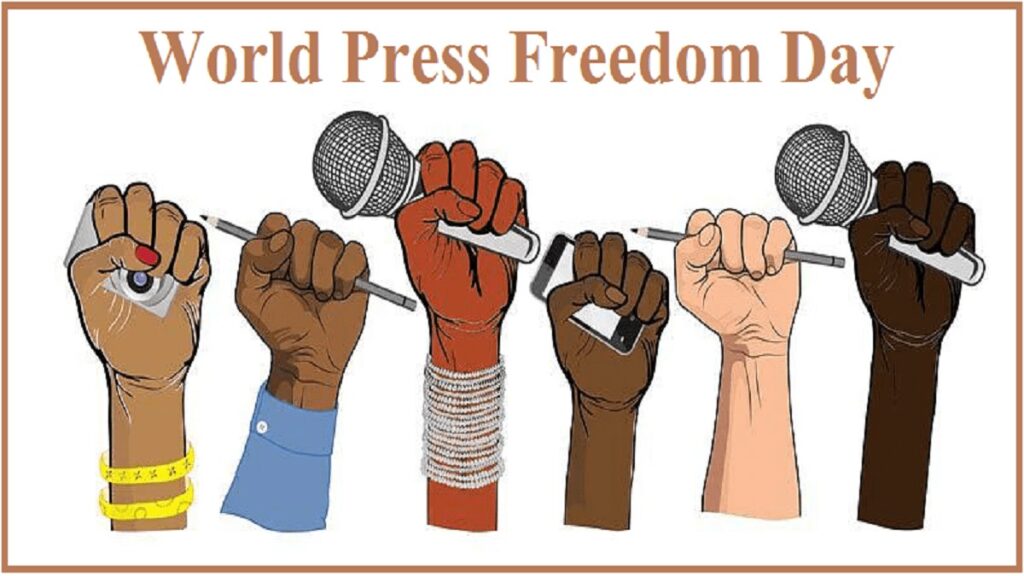
Congress chief Mallikarjun Kharge has accused the Bharatiya Janata Party and the Rashtriya Swayamsevak Sangh of undermining independent journalism in India
Congress chief Mallikarjun Kharge launched a strong critique of the ruling dispensation on the occasion of World Press Freedom Day – May 3, accusing the Bharatiya Janata Party (BJP) and the Rashtriya Swayamsevak Sangh (RSS) of undermining independent journalism in India. In a detailed post on X, Kharge alleged that the current political climate discourages critical reporting and instead incentivizes compliance with the government’s narrative.
“The message of the BJP-RSS is clear,” Kharge wrote. “Independent journalism will be punished, and compliance will be rewarded.” He further claimed that journalists who continue to question those in power are “targeted relentlessly,” suggesting that dissent in the media ecosystem is being systematically suppressed.
Kharge argued that the role of the press in a democracy is being distorted. “A free press does not exist to amplify the government’s narrative or conceal its failures,” he said. “It exists to question authority, scrutinise power, and hold those in office accountable.” According to him, this fundamental principle is increasingly being eroded in India.
Highlighting global indicators, Kharge pointed to India’s declining position in international press freedom rankings. He claimed that the country has fallen to 157th place since 2014, a period that coincides with the BJP’s rise to power at the Centre. He used this statistic to reinforce his broader argument that institutional safeguards for journalists are weakening.
Invoking India’s first Prime Minister, Jawaharlal Nehru, Kharge underscored the historical importance of media independence. Quoting Nehru, he said, “The freedom of the press is not just a slogan but an essential attribute of the democratic process.” Kharge added that this ideal now stands “gravely compromised” in the current environment.
The Congress president also accused what he referred to as the “Sangh Parivar” of using legal mechanisms to silence critical voices. “Defamation laws, national security provisions, and sweeping criminal statutes are deployed not as instruments of justice, but as tools of intimidation,” he alleged. He specifically mentioned the use of stringent laws such as the Unlawful Activities (Prevention) Act (UAPA), claiming that such provisions have been applied against journalists in a manner that stifles dissent.
To support his claims, Kharge cited figures relating to actions taken against journalists over the past decade. “Over 135 journalists were arrested, detained, or interrogated between 2014 and 2020,” he stated. He further added that “36 journalists were imprisoned between 2014 and 2023,” suggesting a pattern of increasing pressure on the media community.
Beyond legal challenges, Kharge raised concerns about the physical safety of journalists. He alleged that reporters investigating corruption or exposing wrongdoing have faced violence, particularly in states governed by the BJP. Referring to specific cases, he said individuals such as Raghvendra Bajpai in Uttar Pradesh, Mukesh Chandrakar in Chhattisgarh, Rajeev Pratap Singh in Uttarakhand, and Dharmendra Singh Chauhan in Haryana serve as “grim reminders of the cost of speaking truth to power.”
“These incidents are not isolated,” Kharge asserted. “They reflect a broader climate where journalists operate under fear and constant threat.” He suggested that such an environment discourages investigative reporting and weakens democratic accountability.
Kharge also turned his attention to digital spaces, accusing the government of attempting to expand its control over social media platforms. He described this as part of a larger strategy aimed at achieving “total dominance” over information flows. According to him, such moves risk further narrowing the space for free expression and independent voices online.
Calling for reflection on World Press Freedom Day, Kharge urged citizens and institutions alike to consider the long-term implications of diminishing press freedom. “Any deviation from democratic principles risks becoming normalised,” he warned. “This can cause lasting damage to democratic norms, values, institutions, and ultimately the people they serve.”
He concluded by emphasizing the responsibility of governments in preserving democratic balance. “Those in power must hold themselves to the highest standards of accountability,” Kharge said. “Only then can the delicate balance between authority and the rights of the people be maintained.”
Through his remarks, Kharge sought to frame press freedom not merely as a professional concern for journalists, but as a cornerstone of democracy itself—one that requires constant vigilance and protection.