In Assam, Livelihoods Adapt To A Changing Wetland
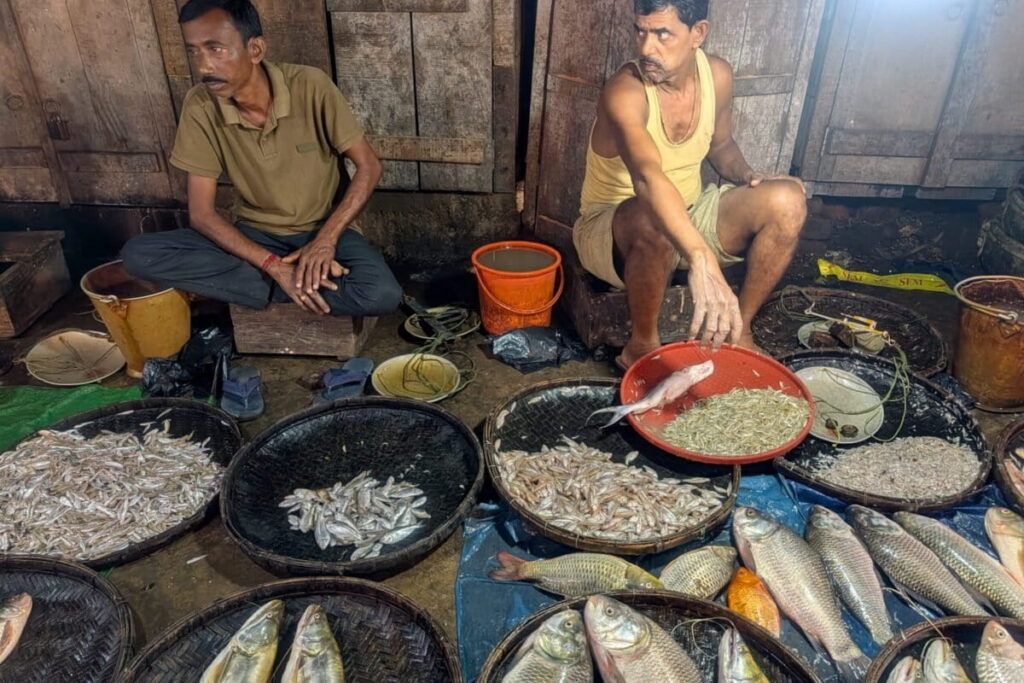
Fish caught from Son Beel in Assam for sale at a local market (Image by Debarun Choudhury)
- Environmental changes such as siltation, pollution, overexploitation of resources, shrinking area and erratic rainfall events, impact Assam’s Son Beel wetland and the families that depend on it for livelihood.
- Farmers and fishers are adapting with integrated farming and seasonal fishing to diversify income opportunities.
- While the Assam government plans to develop tourism infrastructure and floating solar in Son Beel, the wetland is absent from its newly launched statewide restoration project.
Every year, as winter approaches around mid-November, Arup Das watches the marshland surrounding his home in Dargarbond village, near Son Beel in Assam. The land, submerged just a few months earlier, begins to emerge as monsoon waters recede. Das then releases his ducks to forage for snails, aquatic plants and insects left behind by the retreating water.
Son Beel, Assam’s largest wetland, expands during the monsoon and contracts in the dry season. More than 50,000 people depend directly on it for their livelihoods. Its seasonal cycles sustain fish habitats, replenish the landscape and expose fertile land for cultivation.
“A wetland is not simply a body of water,” says Tapati Das, an ecologist and head of the Department of Ecology and Environmental Science at Assam University. “It is a system of inundation and retreat, of channels and marshes, which naturally replenishes a landscape in cycles.”
However, erratic rainfall, soil erosion, siltation, pollution, overfishing and shrinking water bodies are disrupting this ecological system. As the wetland changes, farmers and fishers are attempting to diversify their livelihoods through integrated farming and seasonal fishing. But access to land, capital and technical knowledge remains uneven.
Adapting livelihoods to a changing wetland
Das began experimenting with integrated farming in 2014, starting with a single cow. His herd eventually grew to 20, but the cost of maintaining cattle outweighed local demand for milk. He has since sold 16 cows and retained four.
He now raises around 1,200 Nageshwari ducks, a local breed introduced to him by veterinarians from Khanapara Veterinary College in 2018. His farm also has 300 female golden-breed chickens, locally known as Sonali, which produce about 250 eggs daily. An incubator helps hatch approximately 1,000 ducklings every week, while 0.4 hectares of land are used to grow winter crops such as boro rice, pulses, brinjal and rajma.
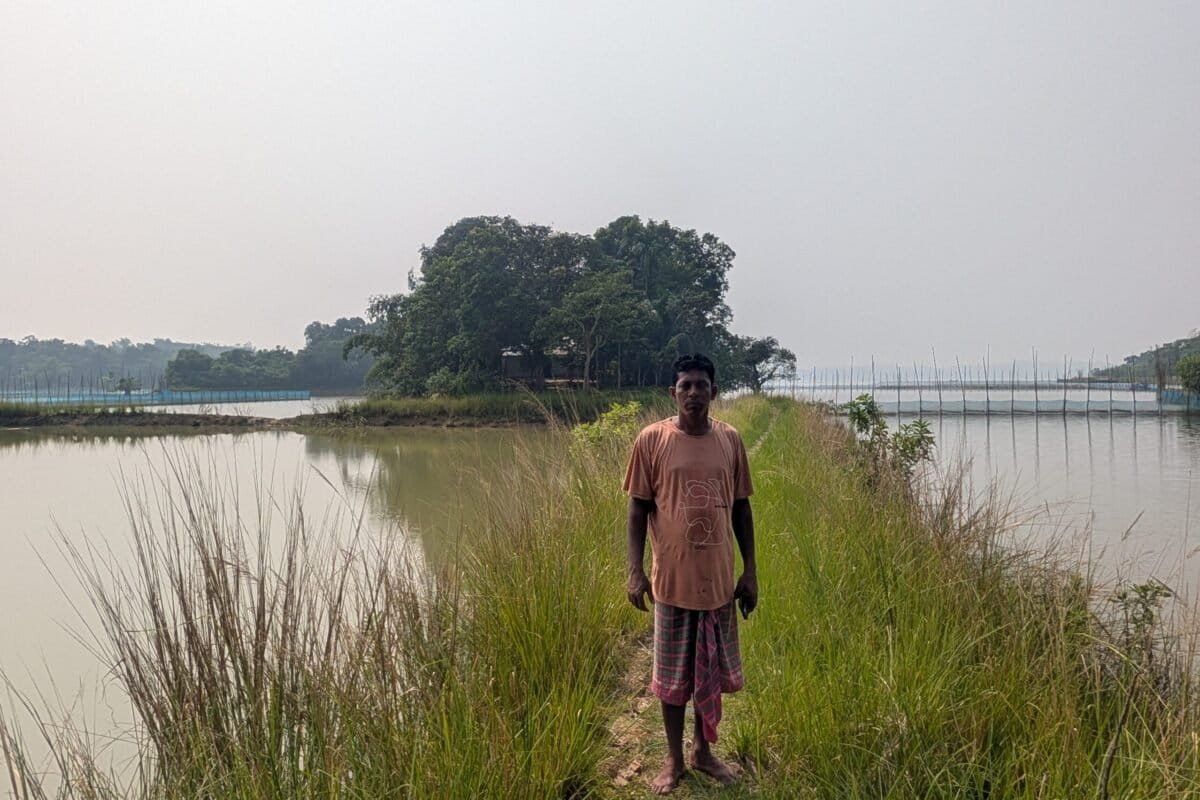
Duck droppings are used as fish feed in his ponds, linking different activities within the farm. With assistance from the Krishi Vigyan Kendra (KVK), Das registered his business in 2020.
“The incubator must maintain a temperature of 37°Celsius, a requirement that becomes harder to manage when temperatures fluctuate beneath the farm’s tin roof,” he says.
Around 10 to 12 families in Dargarbond and neighbouring villages have adopted integrated farming. However, the model remains inaccessible to many households.
A December 2025 study examining 160 households across 16 villages around Son Beel found that communities differ considerably in their ability to cope with environmental hazards. Villages such as Krishna Nagar and Bhairab Nagar face greater socio-ecological vulnerability, with flooding, hailstorms, declining agricultural incomes and wetland degradation affecting livelihoods.
Pulakabha Chowdhury, head of KVK in Sribhumi district, estimates that only around 5% of farmers have diversified their livelihoods. “A farmer who owns little land may have nowhere to construct a fishpond. Another may understand the benefits of integrated farming but lack the money to invest in livestock, poultry or an incubator,” he says.
Awareness is another constraint. Chowdhury estimates that only 10-15% of farmers know about alternative crops and livelihood opportunities. Samim Borbhuyan, a research scholar at Assam University, says the soil is suitable for crops such as dragon fruit and foxnuts, or makhana, but unfamiliar cultivation practices, investment costs and uncertain markets discourage farmers.
Seasonal fishing provides another source of income. During the monsoon, families practise mahajaal, or net fishing, by enclosing sections of rising water to trap fish.
Fisherman Maheshwar Das raises fish in a small pond before transferring them to a 20-bigha net fishery. However, fish diseases can cause substantial losses. He therefore supplements his earnings by raising young ducks for sale.
According to Anupam Sharma, the district fishery development officer, around 400 hectares of Son Beel remain productive for fisheries. Of the wetland’s 24 group fisheries, 14 have become non-productive because of siltation. Fishers also report declining catches and fewer varieties, attributing the changes to deteriorating water quality, agricultural chemicals and unsuitable fishing practices.
Shrinking waters, uncertain restoration plans
The ecological changes are increasingly visible in the wetland’s hydrology. A 2025 study using satellite imagery found that Son Beel’s perennial deep-water area nearly halved, from 0.66 square kilometres in 2015 to 0.33 square kilometres in 2024. These pools provide essential refuge for fish during the dry winter months.
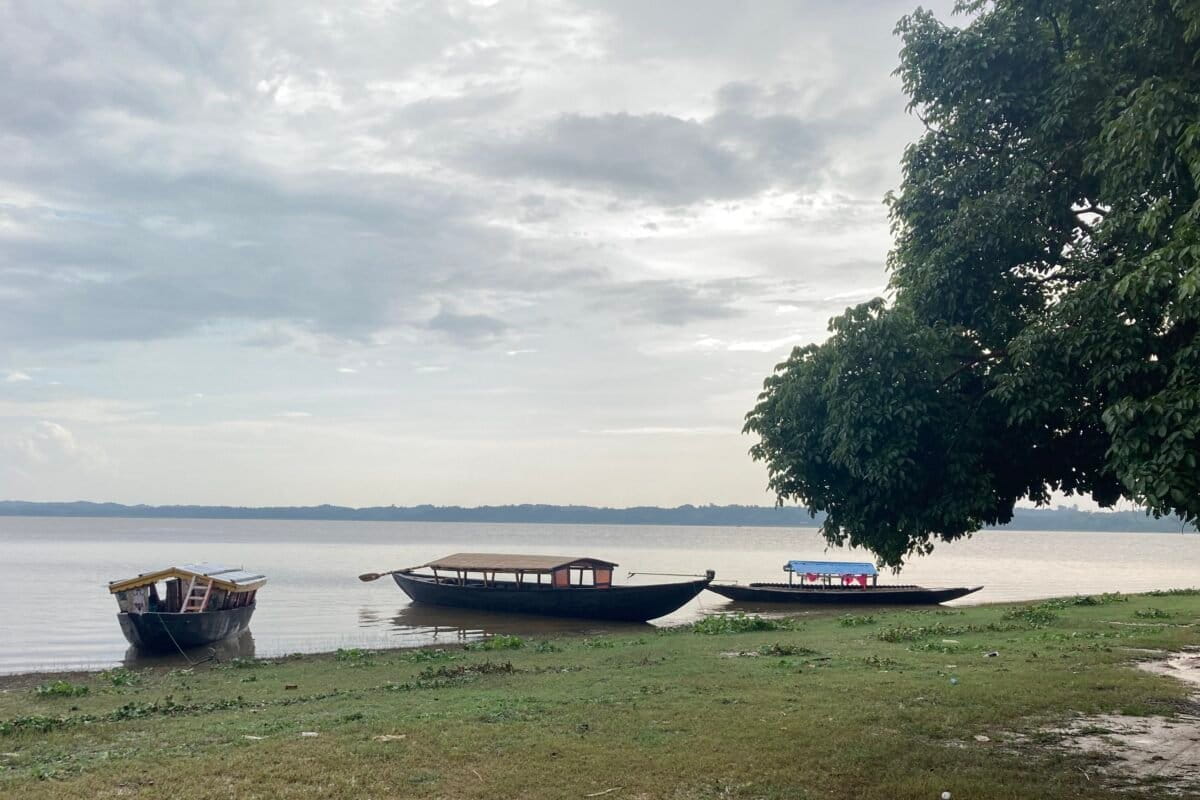
Silt accumulation, falling water levels and the spread of invasive water hyacinth are further altering the wetland. Some exposed lake beds are also converted into boro rice fields. A separate watershed study found that the mapped water-body area across the catchment declined from 46.44 to 39.64 square kilometres between 1990 and 2020.
Fishing practices add to the pressure. Small-mesh nets can capture juvenile fish, while nets stretched across channels obstruct fish movement. Increased tourism is also contributing to plastic pollution, Borbhuyan says.
The Assam government has proposed tourism infrastructure improvements and a floating solar project for Son Beel. However, the wetland has been left out of the statewide Sustainable Wetland and Integrated Fisheries Transformation (SWIFT) project, backed by the Asian Development Bank. The initiative aims to restore wetlands and expand fisheries, but no project component has been approved for Son Beel, according to Himangshu Talukdar, the district project director of ADB-SWIFT.
Experts warn that development plans must account for the wetland’s ecological needs. Tapati says a detailed assessment of seasonal water levels, flooding patterns, sediment deposits and water quality is essential before interventions are undertaken. Such monitoring should also document native and invasive plants, fish populations, waterbirds and the livelihoods dependent on the wetland.
For communities around Son Beel, adapting to environmental change is already a necessity. But without sustained ecological monitoring and inclusive support for livelihood diversification, the wetland’s declining health could make that adaptation increasingly difficult.