The Hidden Burden Of Air Pollution In Rural Areas Of Bihar
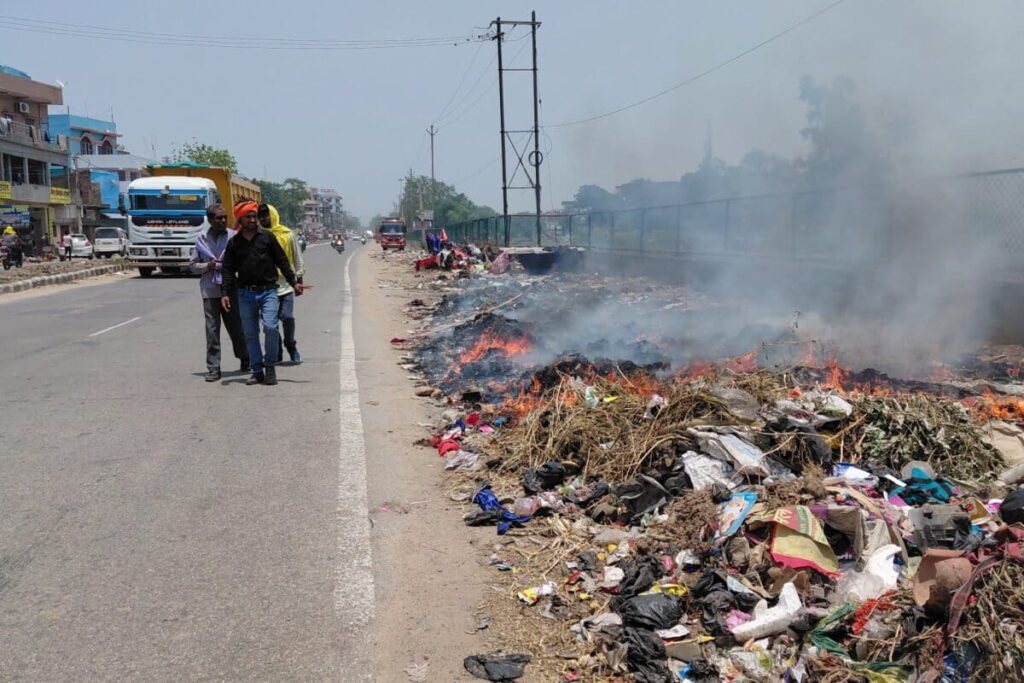
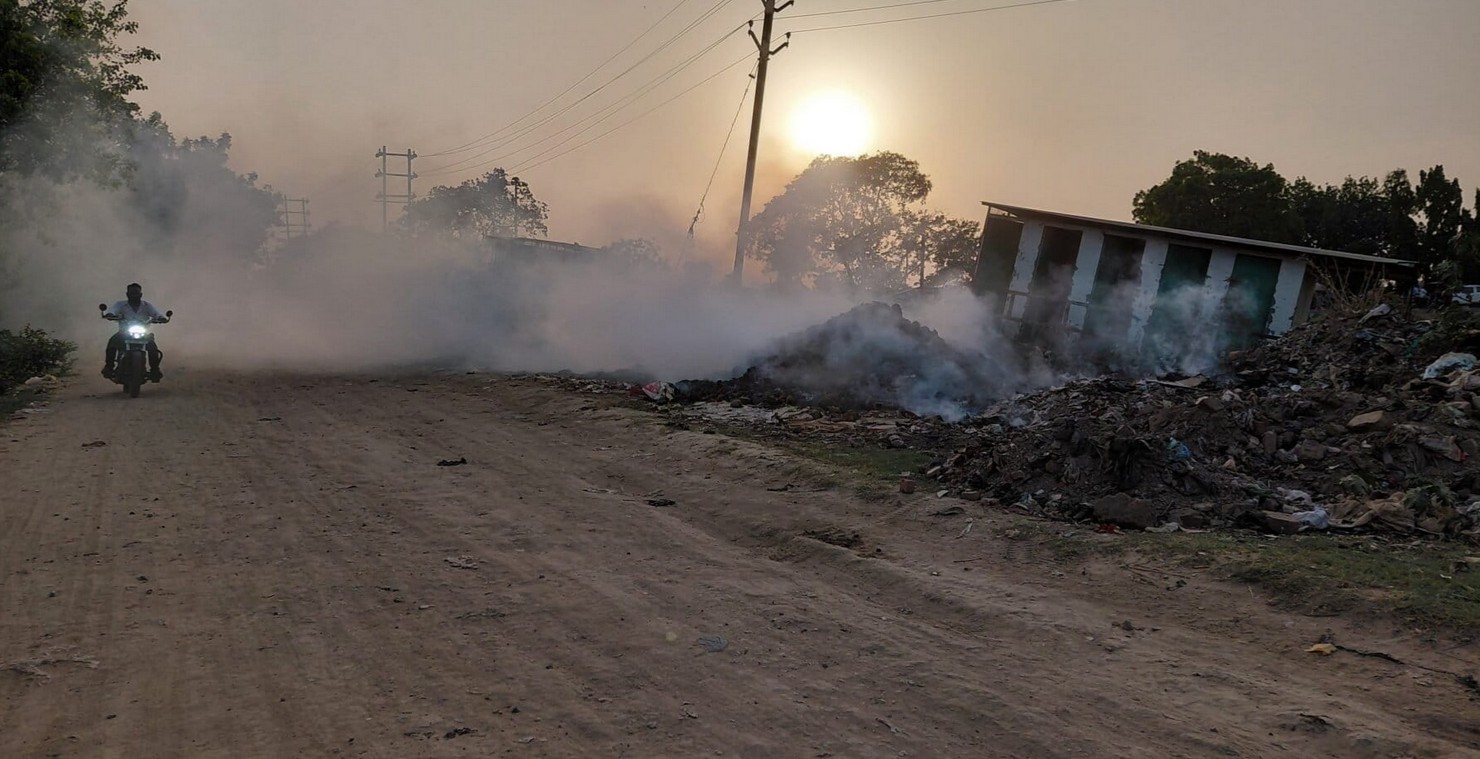
People walk past a smouldering stretch of plastic and domestic refuse set on fire along a busy highway in Bihar, exposing nearby households and commuters to high particulate emissions (Image by Himanshu Praveen)
- Villages in Bhojpur, Bihar, face severe air pollution aggravated by the weather conditions in winter.
- A study highlights that rural Bihar exceeds national PM 2.5 standards on almost all days. The Bihar State Pollution Control Board (BSPCB) questions the reliability of the data.
- Experts say reducing rural air pollution requires adopting coordinated, airshed-level action across Bihar and Uttar Pradesh, along with improving the use of clean fuels.
Dust storms are a familiar part of summer in Bihar’s Bhojpur district. By afternoon, strong winds sweep loose soil across fields in villages around Koilwar and Arrah, coating crops, homes and roads in dust. But residents say the real air pollution crisis begins after the monsoon, when winter brings stagnant air that traps smoke and fine particulate matter close to the ground.
“During the summer, we somehow manage the heat and dust storms, which are challenging but still manageable,” said Vishwanath Pratap Singh, a social activist based in Bhojpur. “But the real disaster unfolds during the winter months when a strange heaviness grips the village air. Persistent eye irritation and chronic throat infections have now become a daily reality for our children and the elderly.”
For many residents, winter has become synonymous with poor air quality.
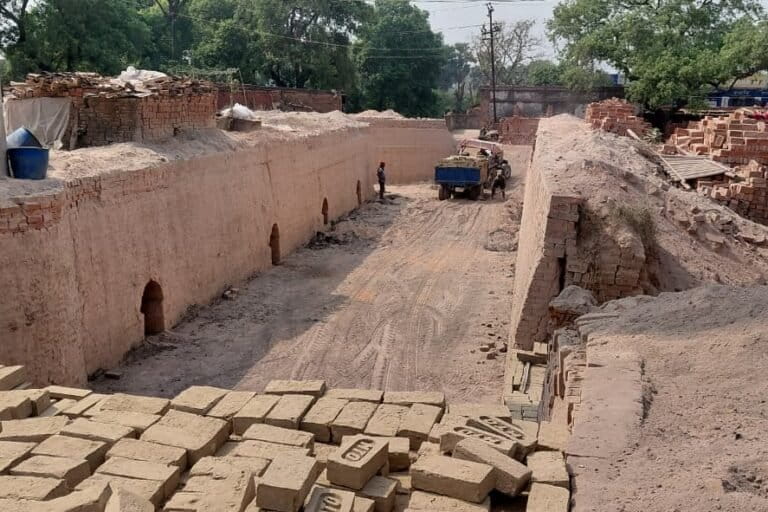
“Once the brick kilns start operating, the whole area fills with smoke, especially in the mornings,” said Koilwar resident Aamod Kumar. “Ash settles on our crops, affecting the harvest. Stepping outside feels like breathing smoke instead of fresh air.”
Their experiences are reflected in a large-scale study conducted by the Indian Institute of Technology (IIT) Kanpur under the Ambient Air Quality Monitoring over Rural Areas using Indigenous Technology (AMRIT) project. Researchers installed 538 indigenous air quality sensors across every block in Bihar’s 38 districts, covering villages, small towns, industrial clusters and urban centres.
Published in the journal Environmental Science & Technology in November 2025, the study found that rural Bihar exceeded national air quality standards on nearly 90% of monitored days. PM2.5 concentrations during the post-monsoon and winter seasons were found to be two to three times higher than India’s prescribed safety limit.
In northwestern districts such as Muzaffarpur and Gopalganj, winter PM2.5 levels regularly reached 210 micrograms per cubic metre, more than three times the national standard of 60 micrograms. Researchers linked these levels to emissions from brick kilns, sugar mills and thermal power plants.
Southwestern Bihar, including Bhojpur, Buxar and rural Patna, also emerged as a uniformly polluted region, where stubble burning and brick kilns were identified as major contributors.
However, the findings have been questioned by the Bihar State Pollution Control Board (BSPCB).
Chairman D.P. Shukla argued that the low-cost indigenous sensors used in the study were only about 60% accurate.
The IIT Kanpur team rejected that criticism.
“No instrument in the world of environmental science operates at 100% absolute accuracy,” said Sachidanand Tripathi, National Clean Air Programme Chair Professor at IIT Kanpur and chief investigator of Project AMRIT. “Even the expensive regulatory monitors used by governments have operational limitations. The strength of modern environmental science lies in proper calibration and data validation, not simply the cost of the instrument.”
Project consultant Meenakshi Sundaram added that the indigenous monitoring network had undergone extensive validation.
“Our indigenous sensors are scientifically highly accurate, and their data trends mirror official regulatory stations perfectly, as proven through our extensive co-location trials,” he said.
Tripathi also highlighted the lack of monitoring infrastructure across rural Bihar.
“Bihar covers nearly 100,000 square kilometres and has a population of around 127 million,” he said. “Yet the state has only about 35 conventional monitoring stations, most of them located in cities. That effectively meant we had almost no scientific understanding of the air quality experienced by the rural majority.”
Multiple pollution sources demand region-specific solutions
Researchers say rural air pollution cannot be explained simply by the absence of traffic or factories.
Sanjay Kumar, Head of the Postgraduate Geography Department at Maharaja College, Ara, said geography and weather combine to trap pollutants over villages during winter.
“During the day, urban centres develop heat islands because of concrete and traffic,” Kumar explained. “But after sunset, temperatures fall sharply and the dense, cool air over the Indo-Gangetic plains creates a temperature inversion. Instead of pollutants dispersing upward, smoke, dust and moisture remain trapped close to the ground throughout the night and early morning.”
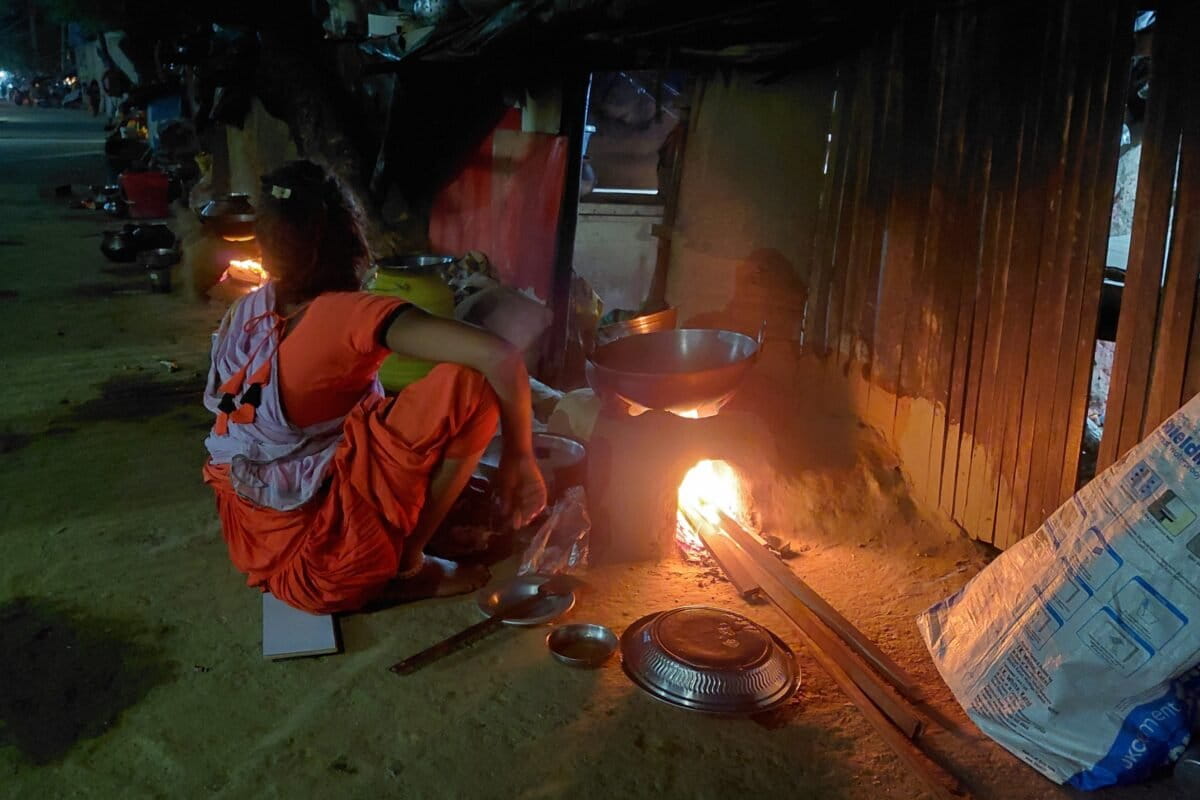
According to the IIT study, pollution originates from several local sources. These include domestic cooking with firewood, agricultural waste and dung cakes, seasonal crop residue burning, loose road dust and emissions from traditional brick kilns.
The brick kiln industry, however, disputes suggestions that it bears primary responsibility.
“It is an oversimplification to scapegoat brick kilns as the sole cause of rural air pollution,” said Manoj Singh, spokesperson for the Bihar Brick Kiln Owners’ Association.
“Our industry operates only during certain seasons. Most kilns have already shifted to cleaner zigzag technology and installed pollution-control systems in line with Bihar State Pollution Control Board regulations.”
Researchers agree that household energy use is another significant challenge.
“The issue is not only the affordability of LPG cylinders,” Sundaram said. “Many rural households continue using traditional mud stoves because agricultural residues, firewood and dung cakes are freely available.”
He noted that many families practise “fuel stacking,” using LPG for some purposes while continuing to rely heavily on biomass for daily cooking.
“Without changing this long-established behaviour, cleaning rural air will remain extremely difficult,” Sundaram said.
The study also points to pollution transported into Bihar from neighbouring states. Large parts of Bihar and eastern Uttar Pradesh lie within a common Indo-Gangetic airshed, allowing prevailing northwesterly winds to carry pollutants from Punjab, Haryana, Delhi and western Uttar Pradesh into the state during winter.
Researchers argue that improving Bihar’s air quality will therefore require coordinated action across multiple states, alongside stronger local interventions.
The report recommends increasing access to affordable LPG refills, ensuring strict compliance with cleaner kiln technologies, strengthening enforcement against crop residue burning and adopting region-specific pollution management strategies based on individual airsheds.
For residents like Aamod Kumar, however, the issue is immediate rather than technical.
“Every winter we breathe this air because we have no choice,” he said. “We just hope something changes before it becomes impossible to live here.”
(Published under Creative Commons from Mongabay-India)