India Must Learn From Others Before Expanding Carbon Markets

A man navigates the waterways through the Picharavam mangroves, collecting wild halophytes that have taken root alongside the salt-tolerant mangrove trees following restoration near Chidambaram, Tamil Nadu (AP Photo/Aijaz Rahi)
India is preparing to expand its carbon market beyond industries and into farms, forests, grasslands, wetlands, mangroves and other natural ecosystems. These landscapes are increasingly being seen as places where climate action, biodiversity conservation and rural livelihoods can work together.
Carbon credits are expected to attract private investment into these sectors, helping communities restore degraded ecosystems while earning additional income. However, international experience shows that carbon projects often fail to deliver the environmental and social benefits they promise.

Several projects across the world have generated carbon credits despite weak scientific evidence, unrealistic assumptions or poor community participation. These experiences offer important lessons for India as it develops its own carbon market.
A 2024 study published in Nature Communications analysed 2,346 carbon-credit projects covering nearly one billion tonnes of issued carbon credits. It found that fewer than 16% of the credits examined represented genuine emission reductions. While this does not mean every carbon project has failed, it highlights how inaccurate baselines, weak monitoring and poor project design can produce misleading claims.
Recent examples reinforce these concerns.
In 2025, carbon certification agency Verra reviewed Zimbabwe’s Kariba REDD+ forest conservation project and found that projected deforestation had been significantly overestimated. As a result, Verra concluded that more than 15 million carbon credits had been issued in excess of actual climate benefits.
Similarly, in 2024, Verra rejected 37 rice cultivation carbon projects in China after identifying problems related to project boundaries, additionality and emissions calculations. Project developers and verification agencies were penalised, while compensation was ordered for excess credits.
Community participation has also emerged as a critical issue.
The Northern Kenya Grassland Carbon Project was temporarily placed under review because of concerns regarding community land rights and governance. It was restored only after an independent assessment confirmed proper consultation, community consent and a transparent decision-making process involving around 1,500 people.
These examples demonstrate that carbon projects cannot succeed through scientific methodologies alone. Strong governance, transparent land rights and meaningful community participation are equally essential.
India has the opportunity to avoid repeating these mistakes.
The country’s Carbon Credit Trading Scheme includes a voluntary carbon offset mechanism, with agriculture and forestry expected to be added in phases. The Bureau of Energy Efficiency has already approved methodologies covering afforestation, mangrove restoration and methane recovery from livestock waste.
As India expands this framework, careful planning will be more important than ambitious carbon credit estimates.
Feasibility—not carbon promises—should guide every project
The first step in any Agriculture, Forestry and Other Land Use (AFOLU) project should not be asking how many carbon credits a piece of land can generate. Instead, the key question should be whether the proposed activity actually suits that landscape.
Different ecosystems require different approaches.
Afforestation, forest restoration, avoided deforestation, grassland management, wetland restoration, mangrove conservation, improved farming practices and methane reduction in rice cultivation all operate under separate ecological conditions and scientific methods.
A degraded forest may benefit from restoration, but a natural grassland should not automatically be converted into a plantation simply because trees store carbon. Similarly, wetlands depend primarily on healthy water systems, while mangroves require appropriate tidal flow, salinity and sediment conditions.
Projects that overlook these ecological differences risk damaging biodiversity rather than protecting it.
Forest conservation projects must also demonstrate that deforestation would actually occur without intervention. If future forest loss is exaggerated, carbon credits may be issued for emissions that would never have happened.
Likewise, rice farming projects aimed at reducing methane emissions can only succeed where farmers have reliable irrigation systems and are willing to adopt new water management practices.
Choosing the right project for the right landscape is therefore the foundation of a credible carbon programme.
Scientific evidence is equally important.
Satellite imagery and Geographic Information Systems (GIS) can help identify land-use changes, vegetation cover and project boundaries. However, satellite data alone is insufficient.
Ground surveys remain essential to verify local conditions, assess vegetation, understand farming practices and confirm land ownership.
Equally important is the principle of additionality—the requirement that carbon finance should support activities that would not have taken place otherwise.
If a plantation is already being funded through a government programme or legal obligation, carbon credits should not be issued simply because trees are being planted. Projects must clearly demonstrate that carbon finance is creating additional climate benefits.
Institutional arrangements are another major challenge.
Many rural landscapes in India involve a complex mix of private ownership, common lands, leased areas, forest rights and customary community use. Revenue records alone may not accurately reflect actual land use or ownership.
Before any project begins, it must clearly identify who owns the land, who holds carbon rights, who provides consent and who will manage the project over many years.
Farmer Producer Organisations (FPOs), cooperatives and community institutions can help organise small landholders and reduce project costs. However, they also require strong systems for record-keeping, accountability and transparent decision-making.
Benefit-sharing is equally important.
Communities should know from the outset how project revenues will be distributed, who bears implementation costs, how disputes will be resolved and what happens if carbon prices decline. These arrangements should be finalised before credits are issued rather than after profits begin flowing.
Financial planning is another area where many carbon projects underestimate risks.
AFOLU projects require significant investment before any credits are generated. Expenses include land surveys, mapping, ecological studies, documentation, registration, field implementation, monitoring and independent verification.
Revenue often arrives years later.
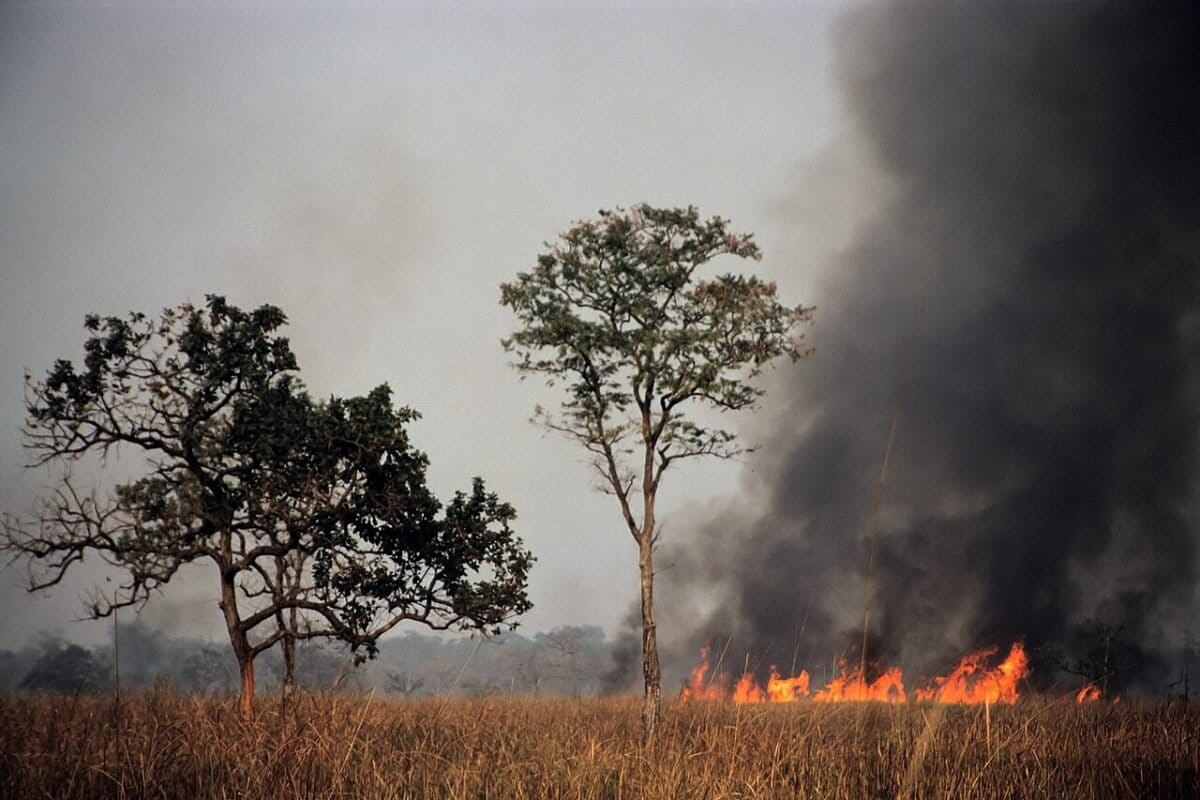
Natural risks such as drought, wildfire, flooding, pest attacks or farmers withdrawing from the programme can reduce carbon storage and lower credit generation. In California’s forest carbon programme, large wildfires forced the retirement of more than 1.1 million verified carbon credits after forests were destroyed.
For this reason, projects should prepare financial models based on conservative assumptions rather than optimistic projections. They should consider different carbon price scenarios, monitoring expenses, verification costs, taxes, insurance, buffer reserves and potential delays.
Scale also matters.
A very large project spread across thousands of fragmented land parcels may be far more difficult and expensive to manage than a smaller, well-organised cluster of farms or forests.
Ultimately, every feasibility assessment should end with a clear recommendation—whether the project should proceed, be redesigned, tested through a pilot or be abandoned altogether.
Carbon finance remains a valuable opportunity for India. It can support climate action, ecosystem restoration and rural incomes. But the credibility of the entire system will depend on careful planning before carbon credits are ever issued.
The experiences of Zimbabwe, China and Kenya show that strong science, transparent governance, community consent and realistic financial planning are not optional—they are the foundation of successful carbon markets.
As India builds its carbon credit ecosystem, the focus should not be on issuing the maximum number of credits. Instead, it should be on creating projects that can withstand scientific scrutiny, deliver genuine climate benefits and earn the trust of both communities and investors.