Great Nicobar Island: ‘Commercial Project Disguised As Development’
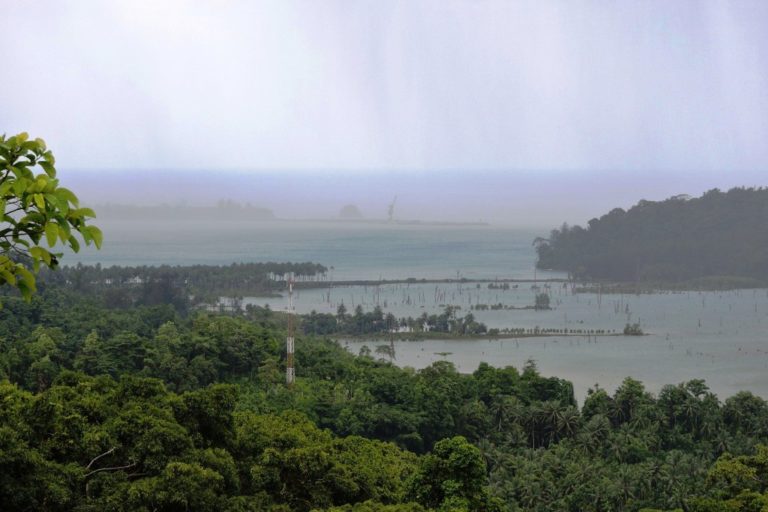
A view of the Great Nicobar Biosphere Reserve on the Great Nicobar Island. “This project is overwhelmingly a commercial enterprise,” said Congress leader Jairam Ramesh. “The environmental costs associated with it could be enormous and potentially irreversible." (Representative image by Biswarup Ganguly via Wikimedia Commons) (Prasun Goswami/Wikimedia Commons)
Senior Congress leader Jairam Ramesh has renewed his attack on the proposed Great Nicobar Island development project, describing it as a largely commercial venture that could inflict irreversible damage on one of India’s most ecologically fragile and biodiverse regions.
In a detailed letter addressed to Union Environment Minister Bhupender Yadav, Ramesh challenged the rationale behind the environmental approvals granted to the project and questioned whether adequate scientific studies had been conducted before clearances were issued.
Responding to Yadav’s recent remarks on the issue, the former environment minister argued that the environmental assessment process had relied heavily on limited data and secondary sources rather than comprehensive, project-specific field research.
‘Environmental clearances based on inadequate studies’
Ramesh contended that a project of the scale proposed for Great Nicobar required extensive ecological investigations carried out over multiple seasons.
“Historical datasets and secondary information cannot substitute for detailed field studies conducted specifically for a project of this magnitude,” he said.
According to him, understanding the true environmental impact of large-scale infrastructure development in a sensitive island ecosystem requires primary data collection across different climatic conditions and ecological cycles.
“You cannot assess biodiversity, coastal dynamics, wildlife movement, and ecosystem vulnerability through limited observations,” Ramesh argued. “Seasonal variations are critical in understanding the long-term consequences of any intervention in such a fragile landscape.”
The Congress leader also referred to previous observations made by the National Green Tribunal (NGT), claiming that concerns had already been raised regarding the environmental clearance process.
“The NGT itself identified shortcomings and called for a closer examination of several important issues,” he said. “Those concerns cannot simply be brushed aside.”
A significant portion of Ramesh’s criticism focused on Galathea Bay, where key port infrastructure is proposed under the broader development project.
Citing scientific assessments conducted by the Indian Space Research Organisation’s Space Applications Centre, he claimed that parts of the eastern shoreline of the bay have shown signs of erosion.
“The available evidence points to shoreline instability in sections of Galathea Bay,” he said. “Before undertaking major construction activities, there should be far more detailed investigations into coastal processes and long-term environmental risks.”
Questioning the compliance process, he said, “Existing guidelines for port projects in island territories require comprehensive environmental impact assessments, modelling exercises, and seasonal studies. It is important to know whether all these requirements were fully met.”
Ramesh further argued that transparency surrounding the project remained inadequate.
“The report of the High-Powered Committee that reviewed the project should be made public,” he demanded. “When planning documents and project details are already available in the public domain, there is no justification for keeping crucial parts of the review process confidential.”
‘Strategic interests should not be used to justify ecological damage’
The former Union minister also questioned what he described as a shifting narrative around the Great Nicobar project.
“Initially, the project was promoted as a development initiative,” he said. “Increasingly, however, the justification appears to be based on strategic and national security considerations.”
Ramesh argued that India’s strategic objectives in the Indian Ocean region could be achieved through alternative means that would involve far less ecological disruption.
“If strengthening national security is the primary objective, then existing defence infrastructure can be expanded and modernised,” he said. “Facilities such as INS Baaz and other assets under the Andaman and Nicobar Command already provide a foundation for enhancing India’s strategic capabilities.”
He maintained that the current model of development goes far beyond strategic requirements and is primarily driven by commercial ambitions.
“This project is overwhelmingly a commercial enterprise,” Ramesh asserted. “The environmental costs associated with it could be enormous and potentially irreversible.”
According to him, Great Nicobar represents one of India’s most unique ecological zones, hosting rich biodiversity, fragile coastal systems, and habitats of immense conservation value.
“Decisions affecting such landscapes must be guided by rigorous science, transparency, and public accountability,” he said. “The burden of proof lies with those advocating large-scale transformation of a sensitive ecosystem.”
Ramesh urged the government to undertake a more comprehensive review of the project before moving ahead with implementation.
“What is required is a fresh and transparent assessment based on robust scientific evidence,” he said. “The stakes are too high for shortcuts or assumptions.”
The Great Nicobar Island project continues to generate intense debate across political and environmental circles. While supporters argue that the initiative could boost economic growth, improve connectivity, and strengthen India’s strategic presence in the region, critics warn that the project may come at a significant ecological cost.
With environmental groups, scientists, and opposition leaders continuing to raise concerns, the future of the ambitious development plan remains at the centre of a growing national conversation about balancing infrastructure expansion with environmental protection.