What Happens To The Ocean If We Take Out All The Fish?
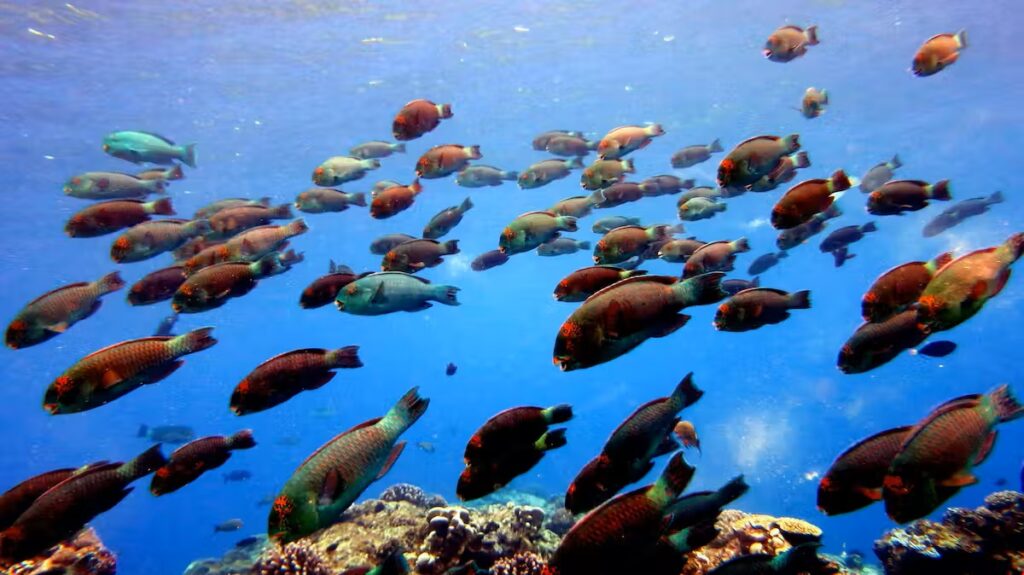
A school of slopehead parrotfish (NOAA, Kevin Lino)
The ocean is massive and covers most of the surface of our planet. In addition to its size, it’s packed with life, ranging from an astounding diversity of plants, microbes, worms, corals and crabs to squids, whales and, yes, even fish. The ocean is full of fish, so much so that they make up the second-largest amount of all carbon – the material that makes up living things – in the entire animal kingdom. They’re just behind the group containing insects and crustaceans.
Most people only interact with the ocean from a beach or in a boat, so it can be hard to wrap your head around how many fish there really are. But the ocean is swarming with them, from its surface to its depths.
These fish also come in all kinds of shapes and sizes, ranging from the tiny sardines, guppies and blennies that you might see on a coral reef to massive tunas and whale sharks that you might find out in the open ocean.
These fish perform all kinds of roles in their ecosystems that support the lives of other organisms around them. If they disappeared one day, the ocean would look very different.
I’m a scientist who studies fish, their diversity and all the ways they contribute to ocean environments.
Fish As Food
Fish play important roles as both predators and prey in ocean ecosystems. Thousands of species throughout the ocean and terrestrial ecosystems rely on fish for food – including people.
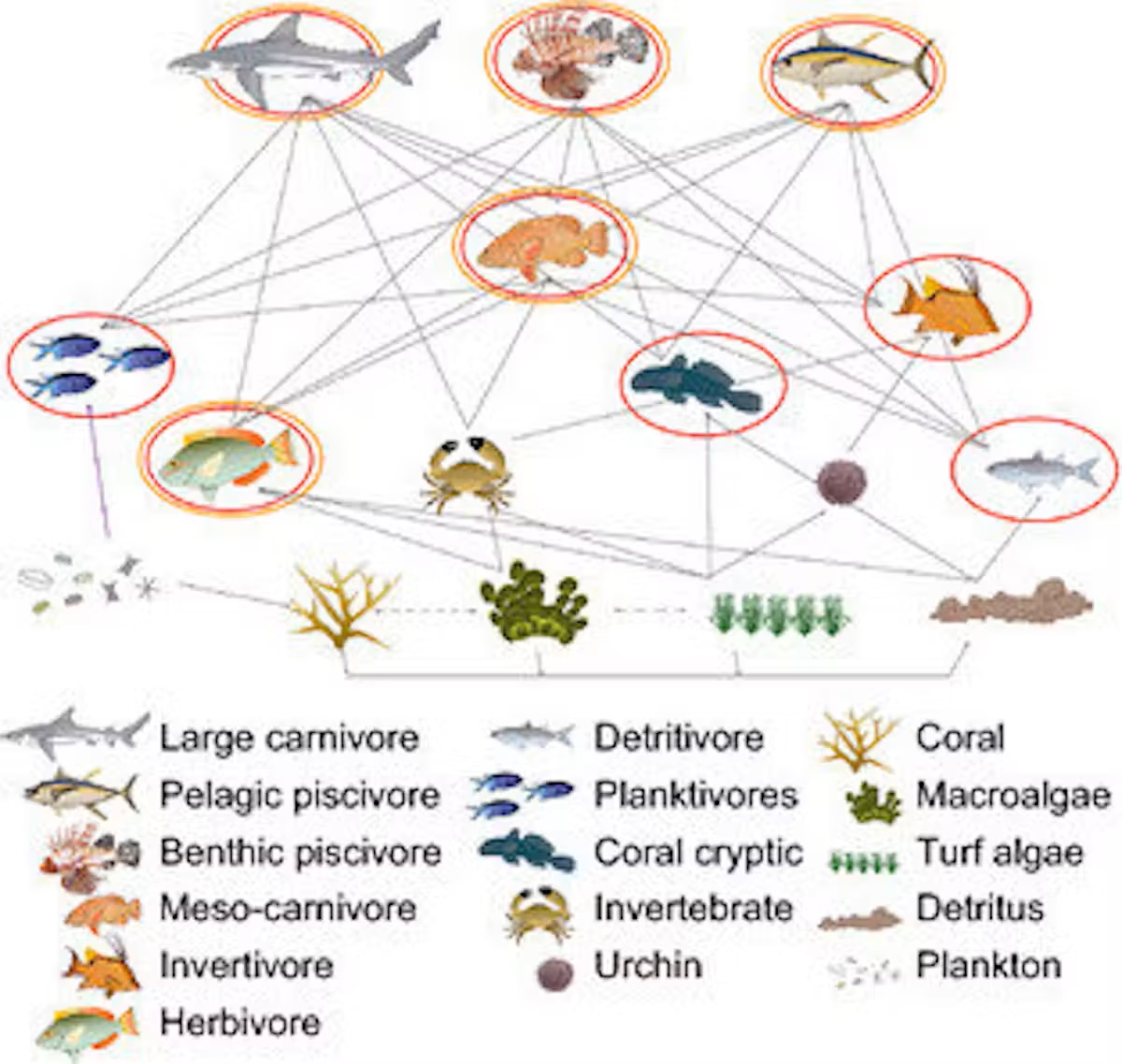
In coral reef ecosystems, small fish are eaten by larger fish and other marine animals. This means the little fish form the base of the food web – they provide energy to the bigger fish and other creatures.
Outside of the water, many birds, mammals and reptiles eat fish and rely on them as an essential source of protein.
Even land plants can benefit from the presence of fish. On the western coast of the United States, salmon returning to small streams after spending several years at sea function as a conveyor belt of nutrients. The salmon feed not only animals that catch them, like bears, but also the plants that border the streams. Studies have shown that some plants get 70% of their nitrogen from salmon that die on or near the river banks.
Humans also depend on fish as a food source. Fish and other seafood products are an important protein source for nearly 3 billion people. Human populations have been eating and following fish around the world for thousands of years.
Fish Maintain Habitats
Fish are also more than just food. As fish themselves forage for food, they can create and maintain important habitats for other organisms. In coral reef ecosystems, plant-eating fish control the growth of algae by constantly grazing it down. Without the help of these herbivores, or plant-eating fish, the algae would rapidly grow and smother the coral, effectively killing it.
One type of herbivorous fish, the parrotfish, feeds directly on the corals. At first, this may seem bad for the corals, but the grazing done by parrotfish can actually increase a coral colony’s rate of growth. And the poop – yes, the poop – from parrotfish has been shown to be particularly nutritious for corals. Parrotfish poop also forms part of the beautiful white sand beaches that you may have enjoyed on a family vacation.
Other fish create habitats for other animals and influence their environment by disturbing sand while they feed. By moving the sand around, they’re exposing tiny organisms hiding in the sand, which other animals can eat.
Despite the fact that many types of fish are confined to the ocean, their presence can be felt across many habitats. They can directly and indirectly affect the lives of the organisms that depend on them for food and shelter. Without fish, Earth would gradually lose its beautiful white sand beaches, the coral reef ecosystems would be overgrown with algae, lots of people would run out of food to eat, and we would lose some of the planet’s most fascinating creatures.
(Published under Creative Commons from The Conversation. Read the original article here)