Shift From Paddy To Apples Raises Food Security Concerns In Kashmir
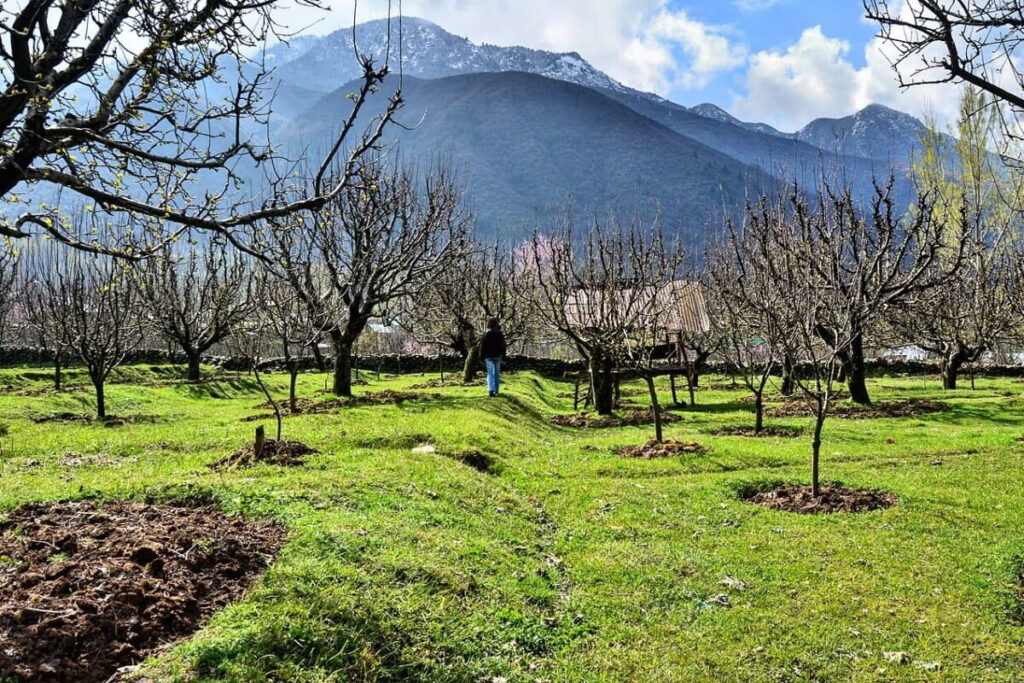
An apple orchard in Aragam. Kashmir’s dependence on rice imported from other states is growing, raising the question of how resilient the local food system is (Image by Revoshots via Wikimedia Commons)
Kashmir’s agricultural landscape is undergoing a significant transformation as farmers replace traditional paddy fields with high-value horticulture, particularly apple orchards. While the shift promises higher incomes for growers, it is also reducing local rice production and increasing the region’s dependence on supplies from other states, raising concerns about long-term food security, water resources and climate resilience.
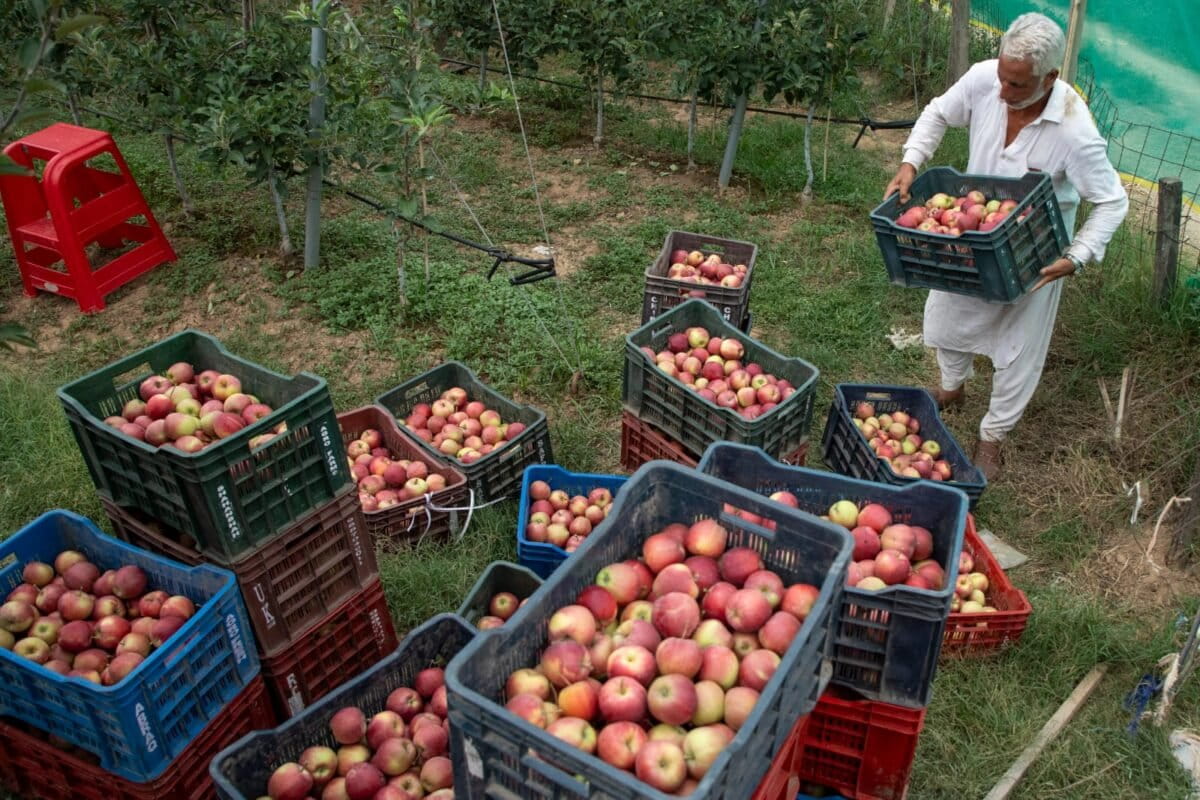
“Twenty years ago, all this was paddy,” recalls Nazir Ahmad, a farmer from Qaimoh village in south Kashmir’s Kulgam district, pointing to rows of apple saplings growing on land once used for rice cultivation. Although irrigation channels still run through the fields, the crops they once nourished have largely disappeared.
For farmers facing rising cultivation costs and modest returns from paddy, switching to apples has become an economically attractive option.
Nisar Ahmed, who converted his nine-kanal farmland in Kulgam into a high-density apple orchard, said his annual earnings increased substantially. Paddy cultivation had earned him between ₹30,000 and ₹50,000 a year, while his orchard now generates around ₹4 lakh to ₹5 lakh per season.
The growing appeal of horticulture, however, is reshaping Kashmir’s traditional food-producing landscape.
Shrinking paddy fields, expanding orchards
Official figures show that Jammu and Kashmir’s paddy acreage declined from 304,500 hectares in 2015-16 to 258,840 hectares in 2024-25, a fall of approximately 15%. Meanwhile, the area under apple cultivation increased from 107,930 hectares in 2004-05 to 173,073 hectares in 2024-25, representing an increase of around 60%.
The transformation is particularly visible in south Kashmir’s traditional rice-growing districts. In Kulgam, apple orchards covered 18,255 hectares in 2024-25, compared with just 6,951 hectares under paddy. In neighbouring Pulwama, apple cultivation occupied 15,928 hectares, while paddy covered 10,990 hectares.
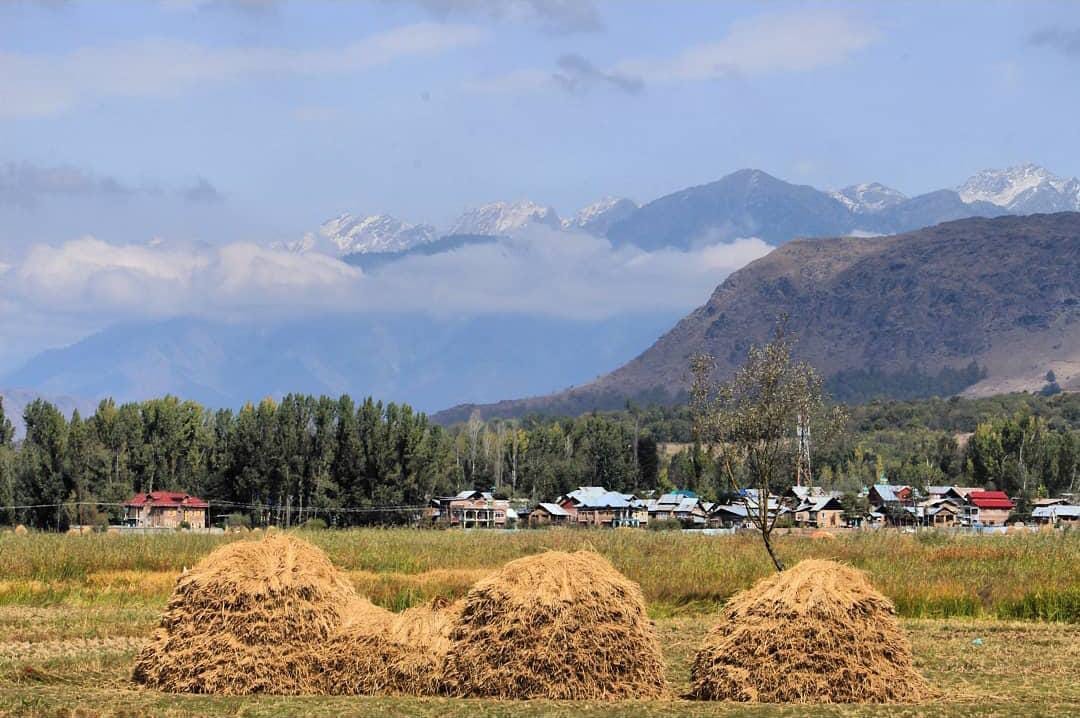
A 2019 study using satellite imagery found that agricultural land in the Kashmir Valley declined by around 28% between 1992 and 2015, while plantation cover increased by approximately 88%.
Sameena Lone, a researcher at the Sher-e-Kashmir University of Agricultural Sciences and Technology of Kashmir (SKUAST-K), said the transition reflects farmers’ economic realities rather than a rejection of food crops.
“Apple orchards can generate several times the returns from paddy per unit of land, while shrinking landholdings due to fragmentation push farmers towards higher-value crops,” she said.
However, the shift also brings risks. Apple orchards are vulnerable to hailstorms, temperature fluctuations, pests, diseases and market uncertainty. A recent hailstorm damaged orchards in parts of Shopian and Kulgam, threatening growers’ annual incomes.
Lone warned that the expansion of orchards could narrow cropping patterns and increase farmers’ exposure to climate and market shocks. She also noted that converting paddy fields into perennial orchards changes soil structure and moisture conditions.
The transition has implications beyond agriculture. Paddy fields can help replenish shallow groundwater aquifers because standing water infiltrates the soil during the growing season. They also temporarily store rainwater and irrigation runoff, helping reduce flood peaks.
According to Pir Rayees Ahmad, a hydrogeologist at the Central Ground Water Board, converting paddy fields into orchards could reduce groundwater recharge opportunities and weaken natural flood buffers, particularly across the Jhelum floodplain.
Balancing farm incomes with food security
The decline in paddy cultivation is contributing to Kashmir’s growing dependence on rice supplied from outside the region.
Jammu and Kashmir produced approximately 650,000 tonnes of rice in 2024-25. However, Ashaq Hussain, a professor of agronomy at SKUAST-K, estimates that the region meets only 50-55% of its rice requirements through local production, with the remainder supplied by other states, particularly Punjab.
Data from the Food, Civil Supplies and Consumer Affairs Department show that rice supplies brought into the region increased from 374,000 tonnes in 2022-23 to 436,000 tonnes in 2023-24 and 486,000 tonnes in 2024-25.
The growing reliance on external supplies raises concerns about transport disruptions, market fluctuations and the resilience of food distribution networks.
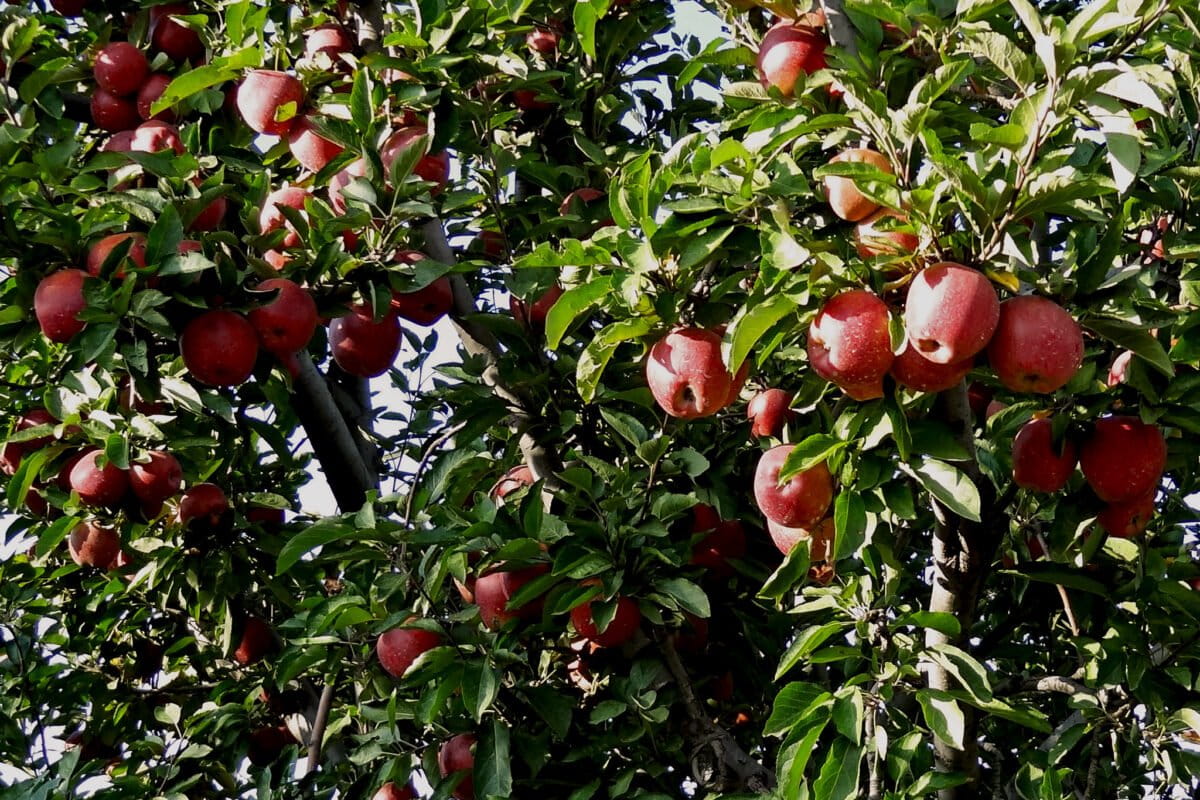
Kashmir-based economist Ejaz Ayoub argues that the shift towards horticulture is a rational response to market forces. The region, he said, can concentrate on crops in which it has a comparative advantage, including apples, saffron, almonds and walnuts, and use the resulting income to purchase rice from elsewhere.
However, Javaid Iqbal Khan, an associate professor of economics at the University of Kashmir, warned that individually rational decisions could create wider structural risks.
“At the micro level, it is a rational and income-maximising decision. But when these individual decisions aggregate, they can create a macro-level structural hazard,” he said.
Khan cautioned that a poor apple season could simultaneously reduce farm incomes and households’ ability to purchase rice from outside the region. He also highlighted the difficulty of reversing the transition because established orchards cannot easily be converted back into paddy fields.
Experts argue that the solution is not to reverse horticultural growth but to protect strategically important rice-growing areas, diversify fruit cultivation and invest in climate-resilient crops and efficient irrigation systems.
At SKUAST-K’s Rice Research Station in Khudwani, scientists are developing high-yielding, disease-resistant and climate-resilient rice varieties. Technologies such as direct-seeded rice could also reduce water and labour requirements.
Meanwhile, some farmers continue to grow paddy for its reliable contribution to household food supplies. Bashir Ahmad, a farmer from Bijbehara, said assured irrigation and manageable cultivation costs make rice worthwhile despite the higher potential returns from apples.
“If we lose the crop, we could lose both our income and the food we produce,” he said.
For Kashmir, the challenge is to preserve the economic benefits of horticulture while retaining enough land under paddy to safeguard food security against future climate, market and supply-chain shocks.