Default Bail Exposes Constitutional Fault Lines In Criminal Justice
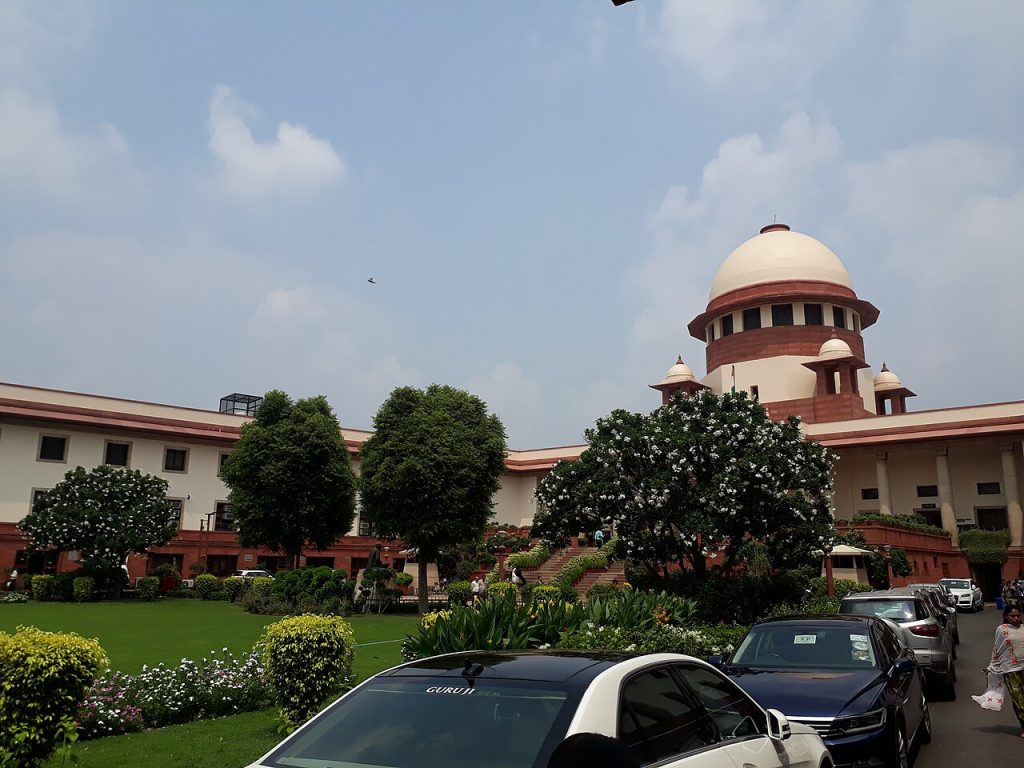
Special judicial consideration granted to foreign undertrials is not available to Indian undertrials (Image: Wikimedia Commons)
A Delhi Special Court’s decision to allow seven foreign nationals under National Investigation Agency (NIA) investigation in a terrorism-related case to travel home for a month raises a constitutional question: how should criminal law balance national security, investigative deadlines and personal liberty?
The accused, an American national, Matthew Aaron VanDyke and six Ukrainian citizens were arrested in March 2026. The allegations included drone assembly, electronic warfare training and support to ethnic armed organisations along the Indo-Myanmar border.

However, after the statutory period for filing a chargesheet expired, the NIA’s report omitted substantive charges under the Unlawful Activities (Prevention) Act, 1967 (UAPA), and instead cited regulatory violations under the Foreigners Act, 1946. The agency maintained that its wider investigation into scheduled terrorism offences continued.
The Special Court for the NIA at Rouse Avenue, New Delhi, granted default bail and later allowed the accused to travel abroad, subject to personal bonds and diplomatic undertakings. They did not decide the merits of the allegations or represent judicial leniency; they enforced a statutory deadline. The central question is not why these foreign nationals secured release, but why comparable safeguards remain difficult for many Indian undertrials to exercise.
Default bail was provided under Section 167(2) of the Code of Criminal Procedure, 1973 (CrPC), and is now governed by Section 187 of the Bharatiya Nagarik Suraksha Sanhita, 2023 (BNSS). Ordinarily, an investigating agency must file its police report within 60 or 90 days, depending on the offence. If it fails, an accused ready to furnish bail acquires an indefeasible statutory right to release.
For scheduled UAPA offences, Section 43D(2)(b) permits the Special Court to extend the 90-day investigation period up to 180 days. Extension is not automatic. In Hitendra Vishnu Thakur v State of Maharashtra (1994) and Bikramjit Singh v State of Punjab (2020), the Supreme Court held that detention beyond 90 days requires an independent, reasoned report from the Public Prosecutor demonstrating investigative progress and explaining why further detention is necessary.
The accused in the Rouse Avenue case were detained on March 13, 2026, and the 180-day period expired on September 8, 2026. Although the NIA filed a chargesheet that day under Section 193 BNSS, it omitted the substantive UAPA offences that had justified extended detention. The agency said supplementary charges could follow.
The court rejected this approach. In M Ravindran v Intelligence Officer, Directorate of Revenue Intelligence (2021), the Supreme Court affirmed that default bail protects Article 21 liberty and that statutory deadlines are substantive safeguards, not technicalities. In Ritu Chhabaria v Union of India (2023), the Court also rejected incomplete or piecemeal chargesheets used to defeat an accrued right to bail.
An agency cannot maintain custody indefinitely by reporting peripheral offences while leaving the principal investigation unresolved. Once the statutory period expired without the requisite chargesheet, the basis for continued detention ceased.
Constitutional remedies
Default bail differs from regular statutory bail under the UAPA. Section 43D(5) restricts bail for offences under Chapters IV and VI where the court finds reasonable grounds to believe the accusation is prima facie true.
In National Investigation Agency v Zahoor Ahmad Shah Watali (2019), the Supreme Court held that courts should not undertake a detailed assessment of evidence or witness credibility at this stage. They examine whether the prosecution’s allegations, taken at face value, disclose a prima facie case. This standard makes regular bail difficult and prolongs pre-trial detention.
Constitutional courts nevertheless retain the power to protect liberty. In Union of India v K.A. Najeeb (2021), the Supreme Court held that statutory restrictions, including Section 43D(5), cannot exclude the jurisdiction of courts under Articles 32 and 226 where prolonged incarceration and no realistic prospect of a timely trial violate Article 21. In Javed Gulam Nabi Shaikh v State of Maharashtra (2024), the Court reiterated that criminal law cannot become a vehicle for indefinite detention without trial.
The routes to release thus differ. Default bail enforces statutory investigation deadlines; regular UAPA bail is constrained by the prima facie standard in Watali; and constitutional bail addresses detention incompatible with fundamental rights, particularly the right to a speedy trial. Each reflects the principle that pre-trial detention must remain subject to lawful process.
After granting bail, the Special Court considered the accused persons’ request to travel overseas. In Maneka Gandhi v Union of India (1978), the Supreme Court recognised that travel abroad forms part of personal liberty under Article 21 and may be restricted only through a just, fair and reasonable procedure. Article 21 protects every person in India, irrespective of citizenship. In National Human Rights Commission v State of Arunachal Pradesh (1996), the Court confirmed that non-citizens enjoy protection of life and personal liberty, although Article 19 rights are reserved for citizens.
In the Rouse Avenue proceedings, the court permitted temporary travel subject to personal cash bonds of Rs 100,000 each, detailed travel itineraries and diplomatic undertakings. Following default bail and the omission of substantive national-security charges, the court required travel restrictions to have a lawful basis rather than rest on apprehension alone.
Unequal access to liberty
The broader concern is not that foreign nationals were released, but that these protections are unevenly accessible. According to National Crime Records Bureau prison statistics, undertrials constitute more than three-quarters of India’s prison population. Many lack the legal representation needed to monitor deadlines and seek prompt relief.
Financial barriers remain even after bail is granted. In In Re: Policy Strategy for Grant of Bail (2023), the Supreme Court highlighted that undertrials may remain imprisoned because they cannot meet surety requirements or provide local guarantors. The ability to furnish cash bonds or secure diplomatic undertakings, as in the Rouse Avenue case, is unavailable to many ordinary prisoners.
The deeper constitutional failure is the unequal practical enjoyment of these protections. A legal system committed to Article 21 must ensure that every undertrial can access legal assistance, invoke default bail in time and meet bail conditions without being defeated by poverty or procedural complexity.