Early Weather Warnings Must Reach Every Farmer, Not Just Some
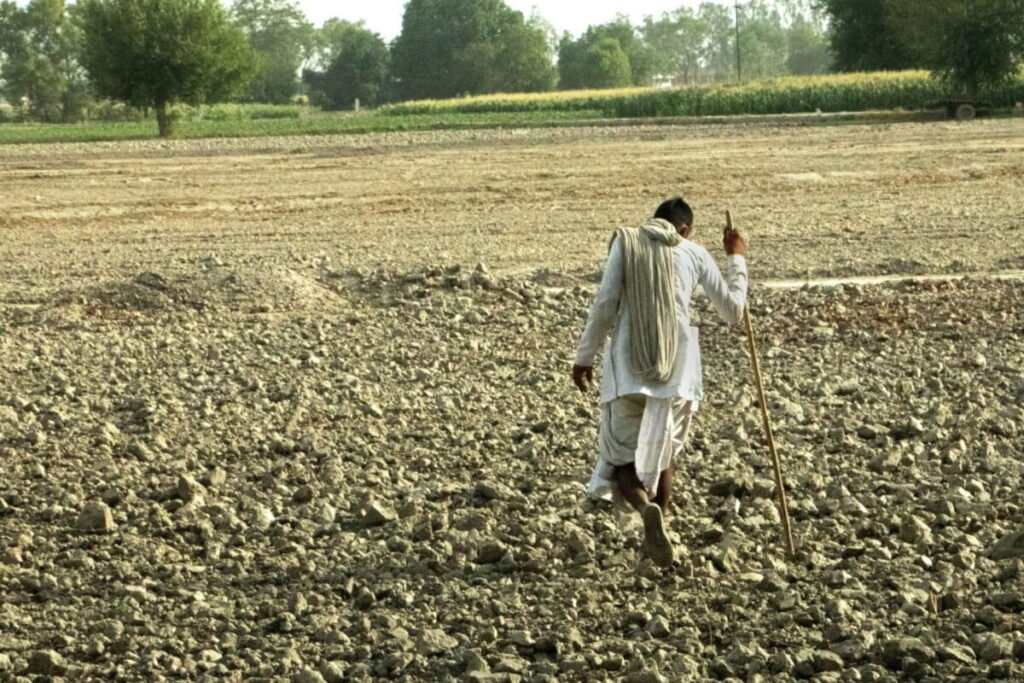
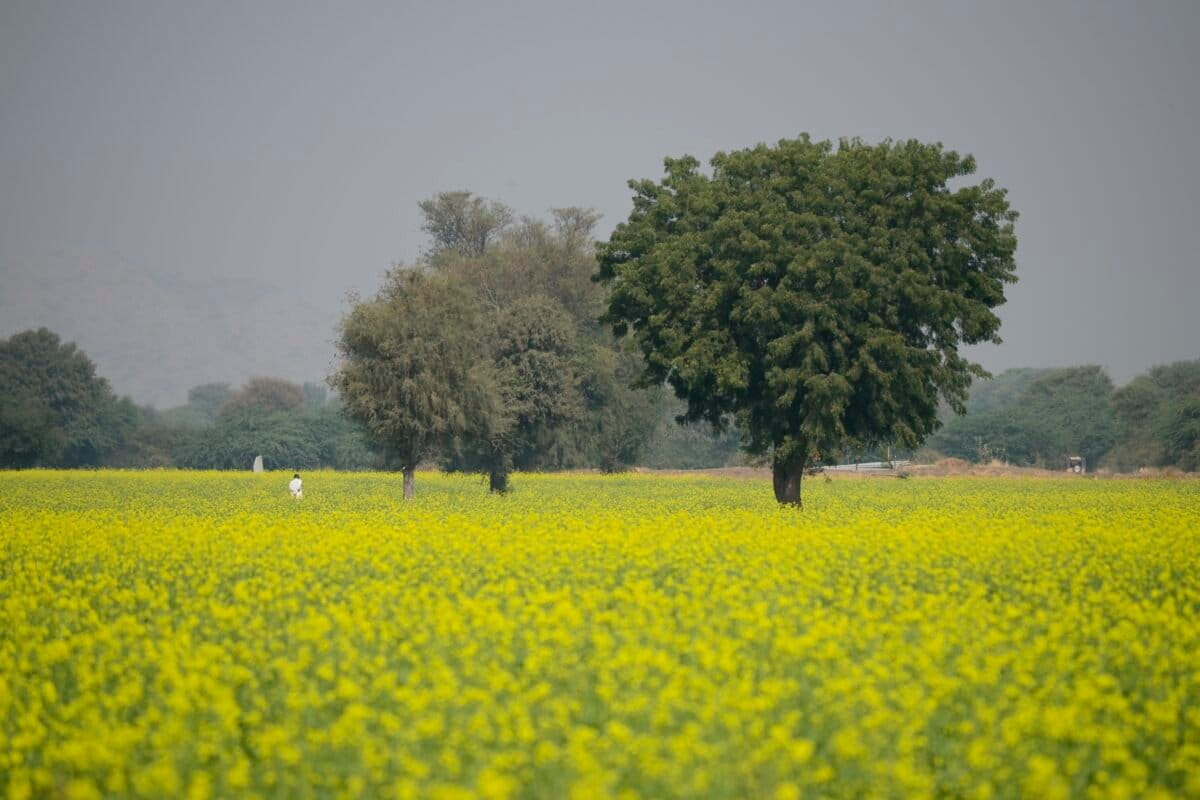
For India, an El Niño year has usually meant a weaker monsoon. This year, the India Meteorological Department predicted a 60% likelihood that the season would close with a rainfall deficit (Representative image by Katrin Park/IFPRI via Flickr)
- Forecasts about this year’s El Nino and its impact on rain were known for some months but in Rajasthan, where drought is a recurring hazard, not all farmers received advisories based on weather.
- Farmers part of institutional networks such as local Krishi Vigyan Kendras (KVKs) do receive their advisories but precision and the scale of the forecast are challenges.
- For farmers outside such networks, lack of awareness about institutional support, messages delivered in technical and non-regional languages, and patchy network coverage, are all obstacles.
India’s weather agencies had warned months in advance that El Niño could weaken the 2026 monsoon. The India Meteorological Department (IMD) gave a 92% probability of El Niño developing during the monsoon, while the United States National Oceanic and Atmospheric Administration put the chances of it continuing through winter at 96%. IMD also forecast that rainfall would be around 90% of the long-period average, with a 60% chance of a deficient monsoon.
The warnings proved largely accurate. By the first week of September, Rajasthan had received 21% less rainfall than normal, with 21 of its districts recording a deficit. Across India, rainfall was about 13.8% below normal between June and August. The weak monsoon affected farming, with kharif sowing initially falling behind last year’s levels.
But while the weather agencies had issued warnings well in advance, not all farmers received information that could help them prepare. An investigation across Rajasthan found a clear difference between farmers connected to local agricultural institutions and those outside these networks. Those who received regular advice from Krishi Vigyan Kendras (KVKs) were often able to change their crops or adjust sowing. Others relied on traditional knowledge, uncertain messages and the hope that rain would arrive.
A warning system that does not reach everyone
India has been issuing agricultural weather advisories since 1977. Initially, forecasts were shared through radio and newspapers. Television programmes such as Krishi Darshan later became another source of information. Over the years, the system expanded from state-level bulletins to district-level advisories in 2008 and block-level forecasts in 2018.
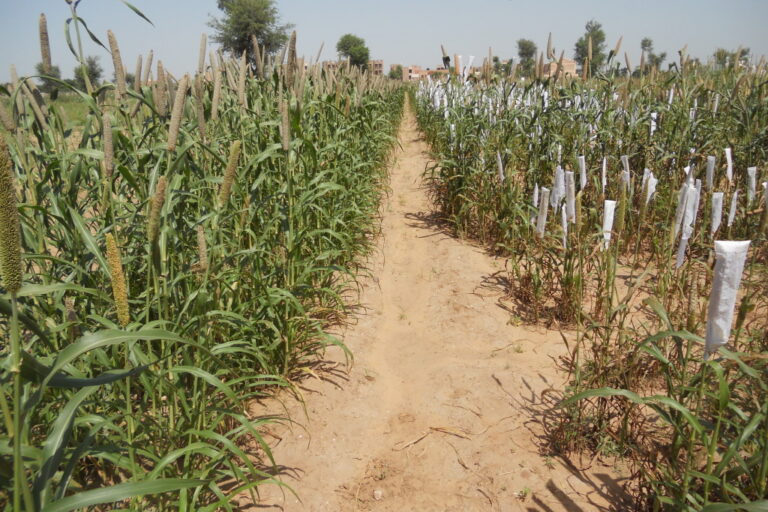
Today, farmers can receive weather information through SMS, WhatsApp groups, mobile applications such as Meghdoot and the Kisan Portal. KVKs and more than 130 Agromet Field Units help prepare and distribute these advisories.
The information is also meant to become more specific as the farming season approaches. Long-range forecasts provide an indication of the coming monsoon several months in advance. Medium-range advisories, issued twice a week, suggest actions such as delaying sowing or irrigation. Short-range warnings alert farmers to sudden weather events.
Yet having a warning system does not mean every farmer can access or understand its messages.
Farmers who regularly interact with their local KVKs said the El Niño warning helped them make changes. Rampal, a farmer from Sri Ganganagar, said he divided his paddy sowing into stages instead of planting everything at once.
“It was an El Niño year, so I didn’t sow the rice all at once. I watched which way the rain was going and sowed it in portions, one section at a time,” he said.
Others shifted to crops that need less water. “This year I didn’t sow crops that need a lot of water. Instead I sowed bajra and guar, because they need less water,” said Sheeshpal from Pratapgarh. Rajpal, a farmer from Baran, said he replaced soybean with pearl millet.
One farmer limited sowing on his 25-bigha plot to just ten bighas. He calculated that his tube well could support that area if the rains failed, while reducing the risk of losing money on the remaining land.
Farmers without regular contact with KVKs faced a different situation. Girdhari from Jaisalmer said: “We are relying on god. We have sown the crop and are waiting for the rain, and the crop is being ruined.”
Problems of access, trust and accuracy
Even farmers who receive advisories have concerns. They say forecasts may be accurate for an entire block but fail to capture rainfall differences between nearby fields. A limited number of automated weather stations makes it difficult to provide information at the level of individual farms.
The growing use of digital platforms has created another problem: farmers often cannot distinguish official warnings from unreliable messages circulating online.
“Messages come from every direction, government, private, or anyone else, and we just glance at them and delete them. We can’t tell which warning is genuine and which is false,” said Dhanraj from Hanumangarh.
For farmers outside institutional networks, the barriers are greater. Poor mobile connectivity, lack of awareness about available services and messages written in technical or unfamiliar languages prevent many from using the information.
Mohanlal, a farmer from Jodhpur, recalled trusting a WhatsApp message predicting a good monsoon. “We trusted it and bought more seed. Later it turned dry, and we had to bear a big loss,” he said.
Traditional knowledge, including observations of clouds and the onset of rain, continues to guide many farmers. But for those without access to official forecasts, it remains their main source of information.
Improving the system will require more than adding mobile applications and messaging platforms. Agencies such as IMD, the Agriculture Ministry, the National Disaster Management Authority and ISRO need to work together to ensure that warnings actually reach farmers.
Farmers outside KVK networks need messages in local languages, voice alerts and telephone services through which they can speak directly to agricultural experts. Karnataka’s Varuna Mitra service, which connects farmers with agrometeorologists, offers one possible model. More automated weather stations could also improve the accuracy of local forecasts.
India has committed to expanding access to early warnings by 2030 under the Sendai Framework. But the experience of Rajasthan shows that issuing a forecast is only the first step.
For some farmers, the El Niño warning arrived early enough to change their decisions. For others, it never became useful information. The forecast may have been the same, but the warning did not reach everyone.