Trump Loses Congress: India Faces New Washington Realities
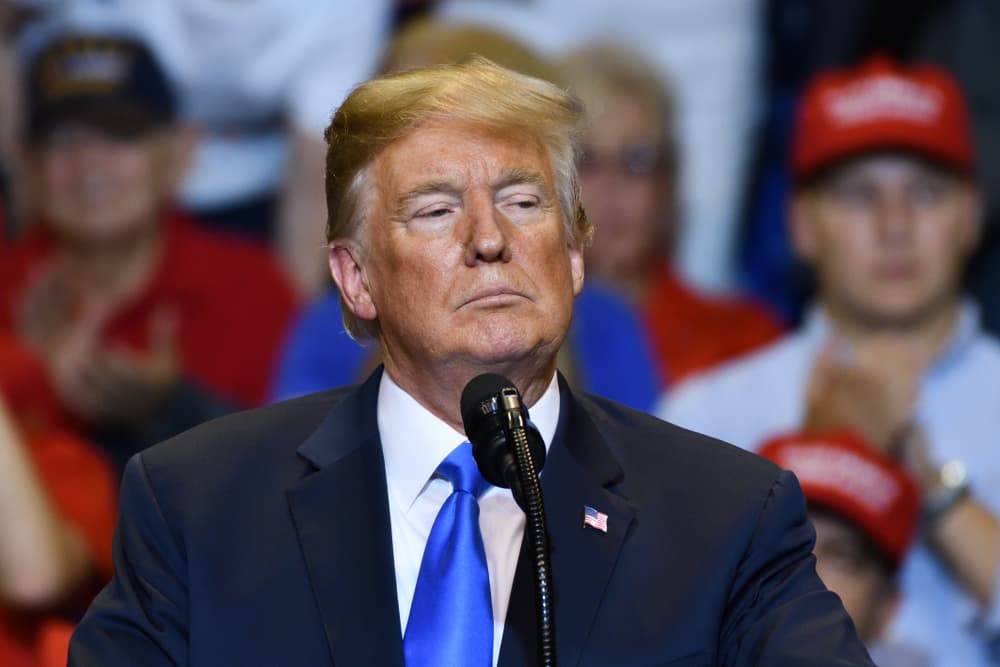
Results of the US mid-term election have put President Donald Trump on the backfoot. The verdict is being seen as a rebuke of Trump's domestic and economic record
The sweeping Democratic victory in the November 3 US midterm elections has changed the political equation in Washington, dealing a major setback to President Donald Trump and ending Republican control of both chambers of Congress. For India, the outcome offers the possibility of relief from some of the trade pressures generated by the Trump administration, but it also introduces fresh uncertainties into an already complicated relationship.
Democrats won control of the House of Representatives and the Senate, capitalising on voter frustration over the cost of living, inflation, tariffs, the war with Iran and concerns about the administration’s conduct. The results mark a significant reversal from the 2024 presidential election, when Trump returned to the White House with a mandate to pursue his political and economic agenda.
The new Congress, which takes office in January 2027, will have greater powers to scrutinise the administration, investigate its decisions and obstruct parts of its legislative programme. It will not, however, automatically take control of US foreign policy. Trump retains considerable executive authority, including the power to veto legislation, while the Senate’s procedural rules will make it difficult for Democrats to pass major bills without Republican support.
Trade: Breathing space, but no immediate reset
The most immediate implications for India are likely to be felt in trade. The United States is India’s largest export market, and Trump’s tariff policies have put pressure on Indian exporters and complicated negotiations for a bilateral trade agreement.
The Democratic takeover could give New Delhi more room to negotiate. Congressional scrutiny of tariffs may make it harder for the administration to pursue unilateral trade measures without facing political resistance. Indian officials have reportedly viewed the result as an opportunity to resist an agreement on unfavourable terms.
However, the victory does not mean that existing tariffs will disappear. Economic experts have cautioned that the current 18% tariff on Indian goods is unlikely to change immediately. A review is possible if US lawmakers increasingly see tariffs as contributing to inflation, but the proposed trade agreement could also face delays as Washington’s political priorities shift. Fresh US trade investigations, including those concerning alleged forced labour, remain a source of uncertainty.
The issue of India’s purchases of Russian oil is even more complicated. A sanctions law signed by Trump in September gives him the power to impose tariffs of up to 100% on major buyers of Russian energy. Democratic control of Congress may increase scrutiny of how such powers are used, but it does not automatically remove the threat. India will have to balance its energy security requirements against the risk of punitive US measures.
There is also a broader strategic dimension. Democrats have traditionally supported a more multilateral approach to trade and international engagement, but they are not necessarily advocates of unrestricted trade. Their concerns about China, supply-chain security and technology competition could translate into tighter scrutiny of exports and investment. India may benefit from efforts to diversify supply chains away from China, while facing greater pressure to align with US standards and restrictions in sensitive sectors such as semiconductors and artificial intelligence.
Immigration, defence and the wider strategic relationship
Immigration is another major concern for India, particularly because of the large number of Indian professionals working in the American technology sector. The Trump administration’s restrictions on the H-1B visa programme have caused anxiety among workers, students and companies dependent on skilled migration. People born in India accounted for nearly 70% of approved H-1B petitions in the 2025 financial year, according to US immigration data cited by The Times of India.
A Democratic-controlled Congress can hold hearings, investigate visa restrictions and scrutinise immigration enforcement. It may also challenge measures affecting international students and skilled foreign workers. But immigration rules are substantially shaped by the executive branch. Trump can continue pursuing restrictions, and Democrats would need a two-thirds majority in both chambers to override a presidential veto. The likely immediate change, therefore, is greater scrutiny rather than a wholesale reversal of policy.
Defence and security cooperation may prove more resilient. The relationship is supported by shared concerns about China’s growing influence in the Indo-Pacific, military modernisation, maritime security and cooperation in emerging technologies. These interests extend across party lines in Washington. A Democratic Congress could scrutinise defence spending, arms transfers and technology-sharing arrangements, but there is little reason to assume that the broader strategic partnership will be abandoned. India will nevertheless have to navigate differences over Russia, trade and its preference for strategic autonomy.
The Iran conflict is particularly consequential. India depends heavily on energy supplies from the Middle East and has important interests in regional stability, the safety of its citizens in the Gulf and connectivity projects such as the Chabahar port in Iran. Democrats could use congressional hearings, defence appropriations and oversight powers to press the administration to explain its military actions and their costs. A change in congressional control could therefore increase pressure for a reassessment of the conflict. But Congress cannot simply take over the President’s role as commander-in-chief, and any de-escalation would not automatically restore stability to energy markets or shipping routes.
India will also watch how Washington handles Pakistan. Trump’s claims about his role in easing India-Pakistan tensions have been a source of diplomatic discomfort in New Delhi. A Democratic Congress could demand greater transparency about US engagement with Islamabad, including military assistance and counterterrorism cooperation. But Washington’s regional interests mean that its relationship with Pakistan is unlikely to disappear.
Ultimately, the midterm verdict is a rebuke of Trump’s domestic and economic record, not a referendum on India. It gives New Delhi some negotiating space, particularly on tariffs, while creating opportunities for closer congressional engagement. Yet the President retains substantial powers over foreign policy, immigration and trade.
India’s response should be pragmatic: strengthen ties with both parties, defend its economic and strategic interests, and avoid assuming that a Democratic victory will automatically produce a more favourable Washington. The central question is not whether Congress has changed hands, but how effectively its new majority can translate electoral discontent into limits on presidential power.