UP Farmers Prepare For Low Rain But Get Floods Instead…
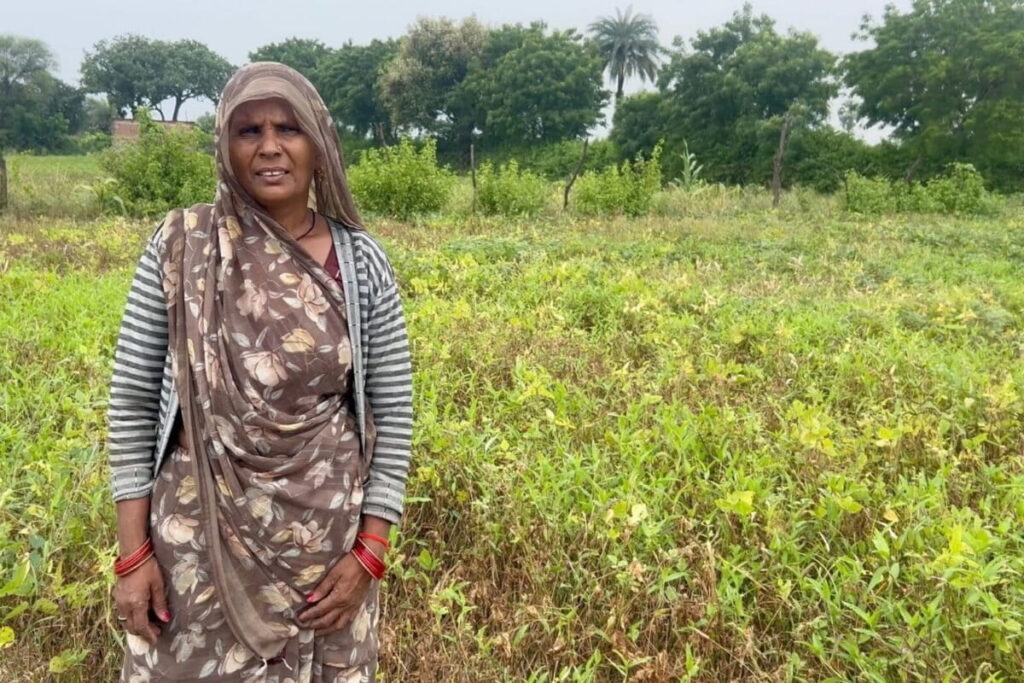
Sampat, a farmer, stands in her damaged field. She is one of many farmers in Mahoba, Uttar Pradesh, who are struggling to access compensation for their crop loss due to unpredictable heavy rains (Image by Sameeksha Sharma)
- Mahoba in Uttar Pradesh received 90% more rainfall than normal during the 2026 monsoon, flooding fields after farmers had prepared for a drier season based on forecasts of a strong El Niño.
- Tenant and small farmers face additional hurdles in accessing compensation, with land ownership, documentation and delayed claim processing affecting their access to insurance support.
- The widening gap between seasonal forecasts and localised weather events, makes it harder for farmers to plan according to the crop calendar.
“At the Krishi Vigyan Kendra in July, we were told to plant more sesame, groundnut and urad. These are crops expected to withstand less rain. But God decided to flood our fields instead,” shares Jaidevi, a farmer in Chandpura, a village in Mahoba, Uttar Pradesh, pointing to her withered sesame crop. Jaidevi and her husband own three bighas of farmland and have struggled to make a living from it. Chandpura is among the worst hit villages by intense rainfall in Mahoba during this southwest monsoon.
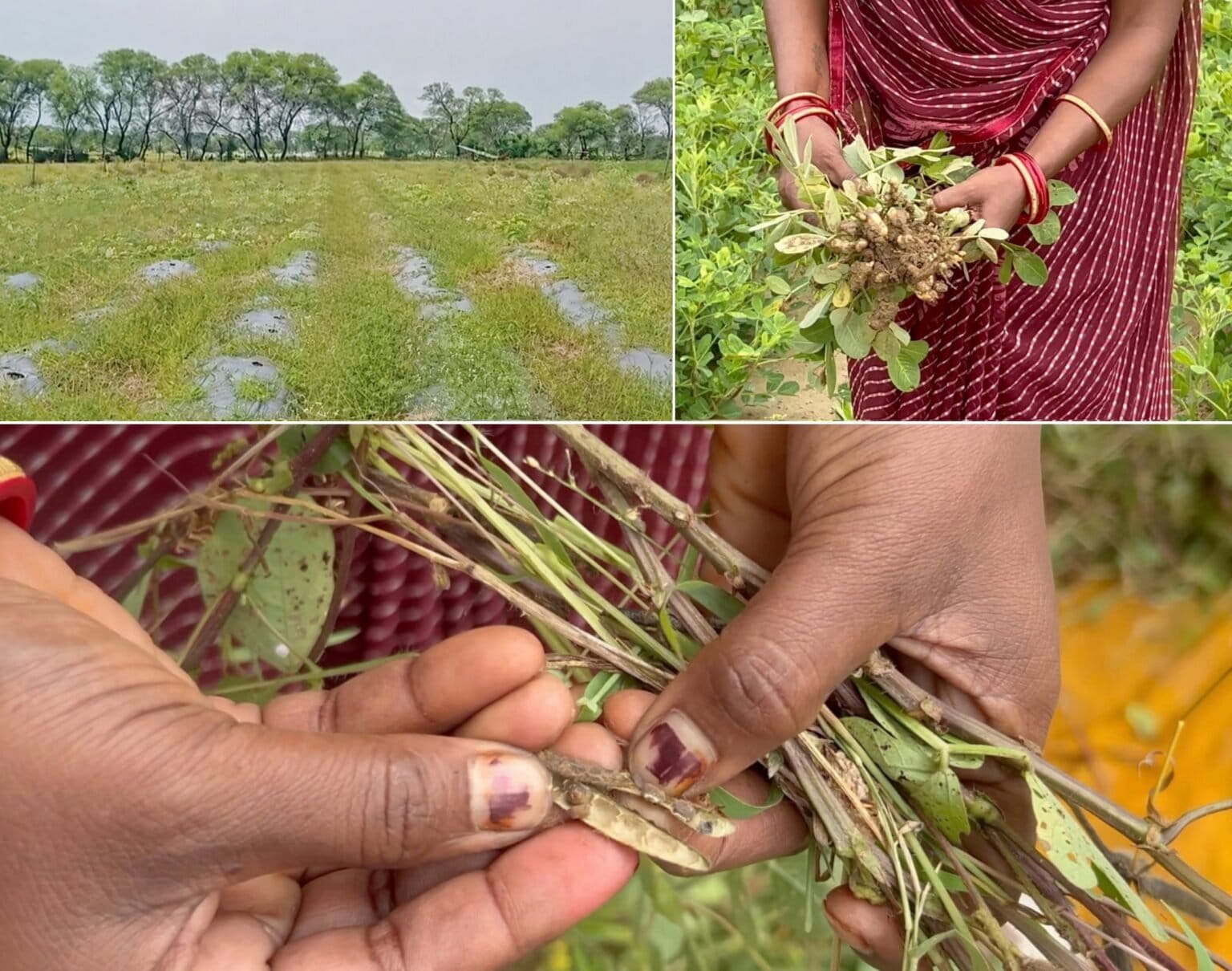
Ahead of the 2026 southwest monsoon, Mahoba’s Krishi Vigyan Kendra advised farmers to sow low-water crops, anticipating low rainfall because of the effects of El Niño this year. The monsoon arrived nearly 20 days late, with deficient rainfall for much of the season that typically starts mid-June. But the pattern reversed in late August, when heavy rain lashed the region, leaving much of farmland waterlogged by September 15.
This year’s El Niño forecast is expected to be one of the strongest on record. Its impact in India is in the form of a weaker monsoon and warmer temperatures. In June, the agriculture ministry classified Mahoba as one of 111 high-priority districts based on irrigation coverage and vulnerability to rainfall deficits. Irrigation coverage in these districts is expected to be below 25 percent.
Part of the drought-prone Bundelkhand region, Mahoba has long faced rainfall deficits, falling groundwater levels and limited irrigation. This monsoon though, Mahoba received 1,127 mm of rainfall between June 1 and September 30, about 90% above its normal rainfall of 588.4 mm, according to the India Meteorological Department (IMD).
Trends from rest of the state showed that Uttar Pradesh recorded its highest monsoon rainfall in 18 years, said Atul Kumar Singh, a scientist at IMD Lucknow. However, the rest of the country showed an opposite trend. India received 759.4 mm of rainfall (June to September), its fourth-lowest monsoon rainfall since 2001 and the 13th lowest since 1901. The impact of El Niño was felt across several states, with the Centre declaring drought in five states, including Maharashtra, Rajasthan and Telangana.
For farmers in UP including Mahoba, the excess rain came at the wrong time. Standing kharif crops were submerged and damaged in the fields. “We were supposed to harvest our kharif crop in October, but now we know it will yield nothing. The entire crop has rotted,” says Sampat, another farmer, standing in the fields with her husband. The couple, both in their late fifties, had high fever but continued working because they saw no other option for their income.
The Indian Council of Agricultural Research-Agricultural Technology Application Research Institute (ICAR-ATARI) contingency plan for the season had also advised farmers to prepare for the expected effects of El Niño, including below-normal rainfall. These plans are usually shared with KVKs and their officials then communicate the information to farmers through meetings at the centres, discussions with village sarpanches, and sometimes verbally in the villages. But this season brought a sharp shift in weather conditions, exposing the limits of planning in a changing climate.
The damage was not limited to pulses and sesame; vegetable cultivation was also severely affected by the flooding. Jag Kushwaha, who owns 13 bighas in Bijapur, another village hit by heavy rain, struggled to hold back tears while showing his cucumber fields. In one field, he says, some fruit survived. In the other, there was not even a flower.
Kushwaha estimates that under favourable conditions, he earned approximately ₹80,000 from a half-hectare cucumber field. This year, he is unsure whether he will recover even his cultivation costs. Eleven members of his family depend on farming. Without the rain damage, he says, the crop would have generated enough income to support his family for the next two to three months.
The forecast gap
For farmers in Mahoba, the problem is not simply excessive rain. It is also the widening gap between seasonal forecasts and localised weather events, making it harder to plan according to the crop calendar.
“Climate change is a regular phenomenon, but in recent years it has been accelerated primarily owing to anthropogenic activities, modifying complex interactions between different components of the Earth system. This makes forecasting challenging at different spatial and temporal scales,” explains Atul Kumar Singh, a scientist from IMD Lucknow.
Seasonal forecasts can indicate broad rainfall patterns over a larger area and longer period, but they cannot always capture where and when an extreme rainfall event will occur. This matters for farmers whose decisions depend on the timing and intensity of rain.
Explaining why the uncertainty is particularly significant in Bundelkhand, Raghwendra Singh, the director of ICAR-ATARI, says western Uttar Pradesh has better irrigation facilities, whereas eastern Uttar Pradesh and Bundelkhand remain vulnerable to rainfall deficits, particularly during critical crop growth stages. This vulnerability has pushed authorities to focus more on water management and crop planning suited to variable rainfall.
Seasonal indicators may have pointed towards a weaker monsoon, but they could not account for the intense rainfall that arrived later in Mahoba, he adds.
No land, no aid
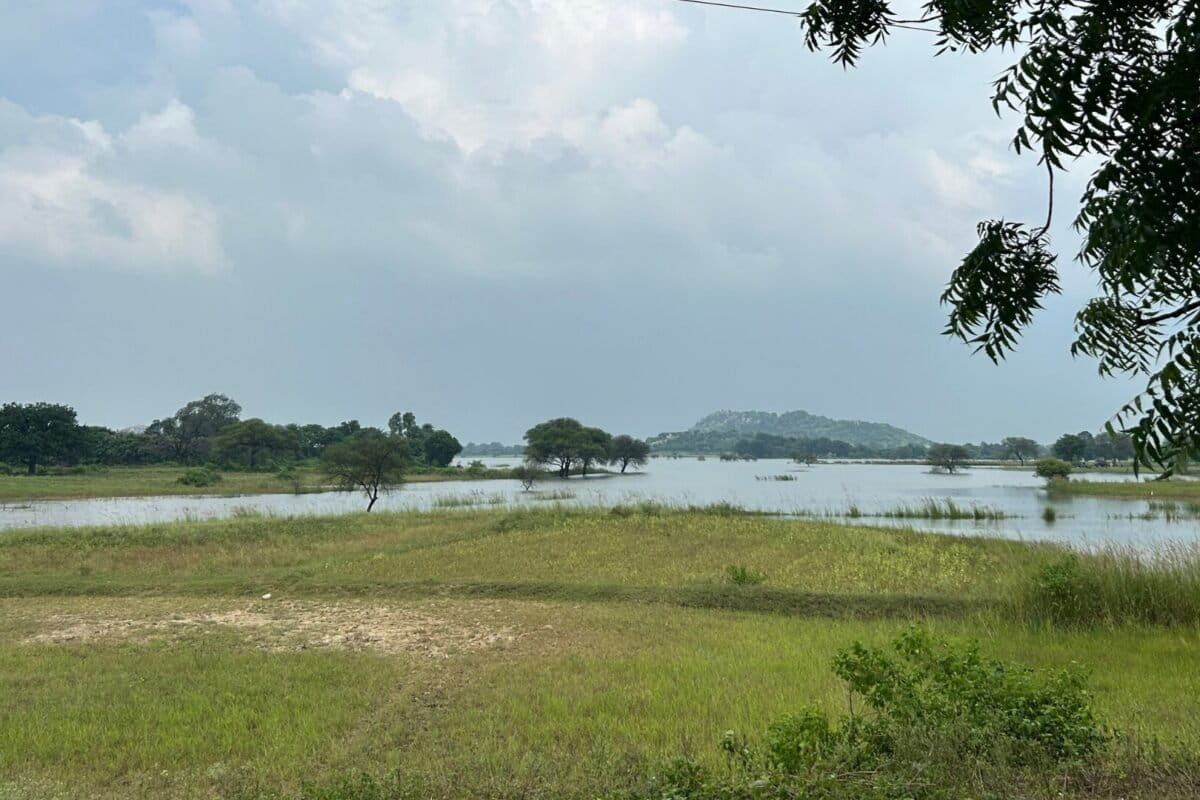
The rain turned the farmland into lakes and has destroyed an estimated 70-80% of standing crops in some affected areas. Considering the situation, Mahoba district magistrate Ghazal Bharadwaj announced on September 12 that support would be provided under the Pradhan Mantri Fasal Bima Yojana (PMFBY) within 30 days. The Agriculture Department, crop insurance company (IFFCO-TOKIO General Insurance Company Limited) and Revenue Department will prepare a consolidated report, which may take until the end of November to finalise.
But there is another concern for tenant farmers, who may struggle to access compensation as they do not have formal land records.
“We do not own any land. We take land on rent and whatever little aid comes will go into the account of the landowner, leaving us with nothing,” says Babu Lal Kushwaha, one of the farmers affected in Bijanager village.
Separately, the state government’s Ativrishti (excess rainfall) relief distribution began on October 13.
Mahesh Rajput of Gram Unnati, an NGO that has worked with farmers in the region since 1983, says this is a wider problem in the whole Bundelkhand region. “The majority of farmers are small cultivators here and do not own land. They take land on rent and share the harvest with the owner. But when disaster strikes, insurance compensation goes to the land owner,” he says.
The scheme does have provisions to cover tenant farmers, but accessing the benefit requires documentation such as a valid lease or rental agreement. In villages, such formal agreements are not always available.
“Perhaps because people have traditionally cultivated land informally, many farmers are either not aware of the documentation required or do not prefer written agreements because they fear losing the land,” says Ram Sajivan, the Deputy Director of Agriculture, Mahoba.
The PMFBY report dated September 11, 2026, shows that over 5.93 lakh farmer applications were recorded from kharif 2025 to kharif 2026, but only around 1.82 lakh farmers had received claims totalling ₹9.13 crore. Claims worth ₹18.53 lakh were held back due to unverified bank accounts. For small and tenant farmers, such documentation and access gaps can make it harder to receive support when crops are lost.
These gaps become more significant as climate change makes weather patterns more unpredictable and extreme events more frequent. Around 65% of Uttar Pradesh’s population depends on agriculture. In Bundelkhand, where irrigation remains limited and farming is heavily dependent on rainfall, unpredictable weather can leave farmers with fewer options to protect their crops and livelihoods.
(Published under Creative Commons from Mongabay-India)