Is The Government Afraid Of CJP’s Growing Protest Power?
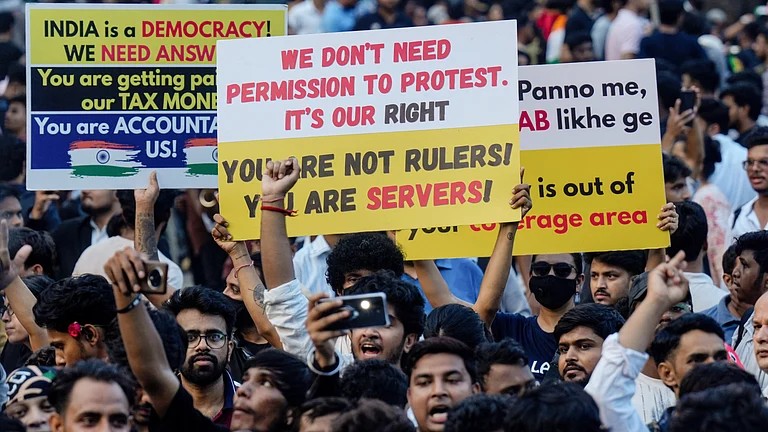
CJP supporters during their protest at Delhi's Jantar Mantar in July 2026. CJP has announced that it will hold another protest at the same spot on October 10, this time demanding the resignation of Chief Election Commissioner Gyanesh Kumar
The streets of New Delhi are once again becoming the stage for a confrontation between popular dissent and the machinery of the state. On Saturday, October 10, the Cockroach Janta Party (CJP) plans to return to Jantar Mantar, demanding the resignation of Chief Election Commissioner Gyanesh Kumar over allegations concerning electoral administration and voter rights. But even before the protest begins, the extraordinary security preparations and restrictions surrounding the national capital have raised a question that goes beyond the immediate demands of the demonstrators: why does a peaceful protest appear to provoke such an expansive response from the authorities?
Reports indicate that the preparations include cancelled train services to major Delhi railway stations, the closure of numerous Delhi Metro stations, heightened police deployment and restrictions affecting public movement. Delhi Police has denied permission for the proposed demonstration, citing the timing of the application, alleged non-compliance with directions during an earlier protest, and concerns about public safety, law and order and traffic management. The authorities’ explanation deserves consideration, but so does the larger democratic question: whether the response is proportionate to the threat posed by demonstrators seeking political accountability.
A protest movement that the establishment can no longer ignore
The present confrontation cannot be understood without recalling what happened in July. CJP’s earlier agitation over the NEET-UG examination paper leak and demands for accountability in the education system culminated in the resignation of Union Education Minister Dharmendra Pradhan on July 25, 2026. The protest, which began on June 6, continued for 49 days before being called off following Pradhan’s resignation and government assurances concerning other demands.
That outcome was significant not merely because a Union minister stepped down, but because a sustained youth-led agitation demonstrated that public mobilisation could force an issue onto the government’s political agenda. The resignation does not, by itself, establish that every allegation made by the protesters was correct. Nevertheless, it gave CJP a powerful example of what sustained collective action might achieve.
The October 10 demonstration brings a different institution into the spotlight: the Election Commission of India (ECI), a constitutional body entrusted with the superintendence, direction and control of elections under Article 324 of the Constitution. CJP is demanding the resignation of Chief Election Commissioner Gyanesh Kumar, raising questions about voter rights, electoral-roll revisions and the transparency of the Commission’s decisions. These allegations require scrutiny and an opportunity for the institution to respond, rather than automatic acceptance or dismissal.
Yet the political significance of the protest is unmistakable. A movement that secured national attention through an education-related agitation is now challenging the credibility and accountability of an institution central to India’s democracy.
It is therefore reasonable to ask whether the authorities are concerned not simply about the number of people expected to assemble, but also about the possibility that CJP could once again turn a protest into a larger political movement. That remains an interpretation, not an established fact about the government’s intentions. However, the timing and scale of the preparations make the question difficult to avoid.
When security measures begin to look like political intimidation
Governments have a legitimate responsibility to prevent violence, protect public infrastructure and ensure that demonstrations do not endanger ordinary citizens. Delhi is particularly sensitive because of its concentration of government institutions, diplomatic establishments and other critical infrastructure. Police authorities are entitled to assess genuine risks and impose lawful, proportionate restrictions.
But public safety cannot become a blanket justification for measures that effectively prevent citizens from assembling or make an entire city pay the price for a planned demonstration.
When train services are cancelled, Metro stations are closed and security arrangements extend across multiple public spaces, the consequences reach far beyond protesters. Office-goers, students, patients, traders and ordinary commuters may find their movements disrupted. The state must explain why each significant restriction is necessary, how long it will remain in place and whether less disruptive alternatives were considered.
The distinction between security and intimidation lies partly in proportionality and transparency. A credible security response addresses identifiable risks. A disproportionate response can create the impression that the authorities are more concerned about preventing dissent from becoming visible than about managing it safely.
There is also a democratic irony here. If the government believes the allegations against the Election Commission are unfounded, a transparent institutional response and a peaceful demonstration should provide an opportunity to make that case. If protesters violate the law, the police can act within the law. Neither circumstance requires treating dissent itself as a threat.
The government’s apparent nervousness is therefore a legitimate subject for public debate. The authorities have cited operational and legal concerns, and those explanations must be assessed against the actual restrictions imposed.
What cannot be ignored is the chilling effect that excessive restrictions may have. When the practical cost of exercising the right to protest becomes too high, citizens may begin to wonder whether that right exists only in principle.
The larger test: Can India protect dissent and institutional accountability?
The most important question raised by the October 10 confrontation is not whether CJP can repeat its July success. It is whether Indian democracy can accommodate a determined protest against a powerful constitutional institution without allowing the dispute to become a confrontation between citizens and the state.
The Election Commission must be independent. Its decisions cannot be dictated by street pressure, just as its constitutional position should not shield it from legitimate public scrutiny. Demands for the resignation of a Chief Election Commissioner are political demands, not legal findings. They must be evaluated against evidence, applicable law and the safeguards governing the institution.
At the same time, institutional independence cannot mean freedom from explanation. Questions about electoral-roll revisions, the exercise of statutory powers and the transparency of decision-making deserve reasoned answers. The credibility of electoral administration depends not only on the conduct of elections but also on public confidence that the rules are applied fairly.
The right to peaceful assembly is equally fundamental to democratic life. Restrictions must satisfy legal requirements and remain proportionate to demonstrable risks. If the authorities deny permission for a demonstration, they should communicate clear reasons and consider lawful alternatives that allow citizens to express dissent without compromising public safety.
CJP, too, has responsibilities. Its organisers must make clear demands, encourage peaceful participation, discourage violence and distinguish substantiated evidence from political rhetoric. A movement seeking accountability must demonstrate accountability in its own conduct.
The resignation of Dharmendra Pradhan gave CJP a powerful political precedent. It does not guarantee a similar outcome in the case of Gyanesh Kumar. But it explains why the upcoming protest carries significance beyond a single day’s gathering.
Ultimately, the strength of a democracy is not measured by how effectively it can empty its streets of protesters. It is measured by how confidently its institutions can withstand criticism, answer difficult questions and uphold the rights of those who disagree with them.
If the authorities are confident in their position, they should have little to fear from peaceful dissent. A government that trusts its democratic legitimacy should seek to manage protest, not make the protest itself appear like a threat to the state.