Rahul’s Protest: ‘Vote Chori’ Charge Escalates Into Oppn-Govt Face-Off
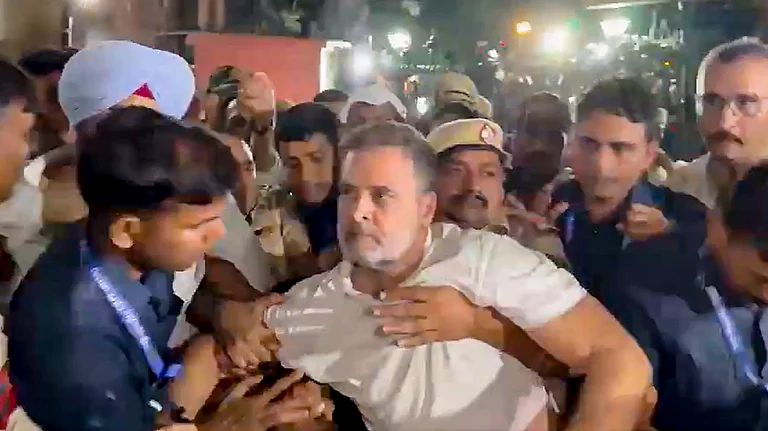
Rahul Gandhi has been leading an INDIA bloc protest in New Delhi for the past few days, demanding the resignation of Chief Election Commissioner Gyanesh Kumar
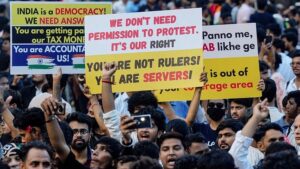
The political confrontation between the Congress-led Opposition and the government intensified in New Delhi this week as Rahul Gandhi led an INDIA bloc protest demanding the resignation of Chief Election Commissioner Gyanesh Kumar. The protest, centred on allegations of irregularities in electoral rolls and the Election Commission’s Special Intensive Revision (SIR), has developed into a wider political battle over the credibility and independence of India’s electoral institutions.
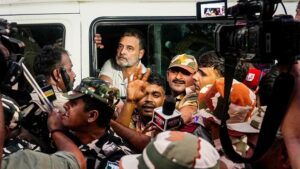
On October 6, Opposition MPs attempted to march from Parliament towards the Election Commission headquarters. Police stopped the march near Nirvachan Sadan, leading several leaders to stage a sit-in. Gandhi and Congress leaders, including Priyanka Gandhi Vadra, K.C. Venugopal and Pawan Khera, subsequently entered the Akashvani Bhavan premises, where they continued their protest for more than eight hours. Police later detained the leaders and took them to Kingsway Camp. They were released later that night.
The confrontation continued on October 7, with Gandhi and other Opposition leaders moving towards Jantar Mantar for another protest against the Chief Election Commissioner.
The Congress says the issue goes beyond one political party or one election. Gandhi has repeatedly framed the dispute as a question of whether voters can have confidence that their votes are being accurately represented in electoral rolls.
What Congress is alleging
At the heart of the protest is the SIR exercise undertaken by the Election Commission to revise electoral rolls. Congress and several Opposition parties have alleged that the process could result in legitimate voters being excluded and have raised questions about deletions and discrepancies in voter lists.
Gandhi has used the phrase “vote chori” to describe what he alleges are irregularities in the electoral process. During Tuesday’s protest, he said he wanted to meet the Chief Election Commissioner and raise these allegations directly. He also demanded Kumar’s resignation.
The Opposition’s argument is essentially about transparency and accountability. If large numbers of voters are removed from electoral rolls, it says, there must be a clear and verifiable process through which citizens can establish their eligibility and challenge wrongful exclusions.
The controversy has also acquired a larger political dimension because several Opposition parties have joined the protests. Leaders from the Samajwadi Party, Trinamool Congress, NCP (SP), CPI(M) and other parties participated in the October 6 march.
However, the protest has not been without disagreements within the INDIA bloc. Some allies reportedly felt that the episode at Akashvani Bhavan became too closely identified with Rahul and Priyanka Gandhi, while others questioned whether the Congress had adequately coordinated the decision to seek a meeting with the Election Commission.
Election Commission and BJP reject Congress’s claims
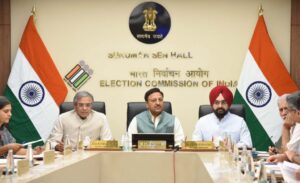
Meanwhile, the Election Commission has rejected the suggestion that it refused a formal meeting with Opposition MPs. According to the Commission, no political party had sought an appointment through an authorised representative until 4 pm on October 6. It said it subsequently received information from Delhi Police about a proposed delegation led by Gandhi, but objected to the suggested venue and size of the delegation.
The Commission said its established protocol requires such meetings to take place at its premises and that it had offered to receive a memorandum through a senior official. The dispute over whether the Opposition was denied access to the Commission has therefore become another point of contention between the two sides.
From electoral dispute to larger political battle
The protests have now moved beyond a disagreement over voter lists and become a broader confrontation between the Opposition and institutions responsible for conducting elections.
For Gandhi and Congress, the protests offer an opportunity to make electoral transparency a central political issue and to bring several Opposition parties together around a common cause. The dramatic scenes of Gandhi standing on police barricades, waving the national flag and later remaining inside Akashvani Bhavan have also given the campaign considerable visibility.
The police action has added another layer to the dispute. Delhi Police registered an FIR in connection with the alleged unauthorised entry into Akashvani Bhavan, while Congress has portrayed the detention of its leaders as an attempt to suppress democratic protest.
The immediate political question is how long the confrontation will continue and whether the Opposition can sustain a united campaign around electoral reforms. The larger institutional question is whether the controversy can be resolved through transparent examination of the voter-roll concerns rather than continued confrontation on the streets.