India At 79: The Varied Challenges That Will Shape Its Future
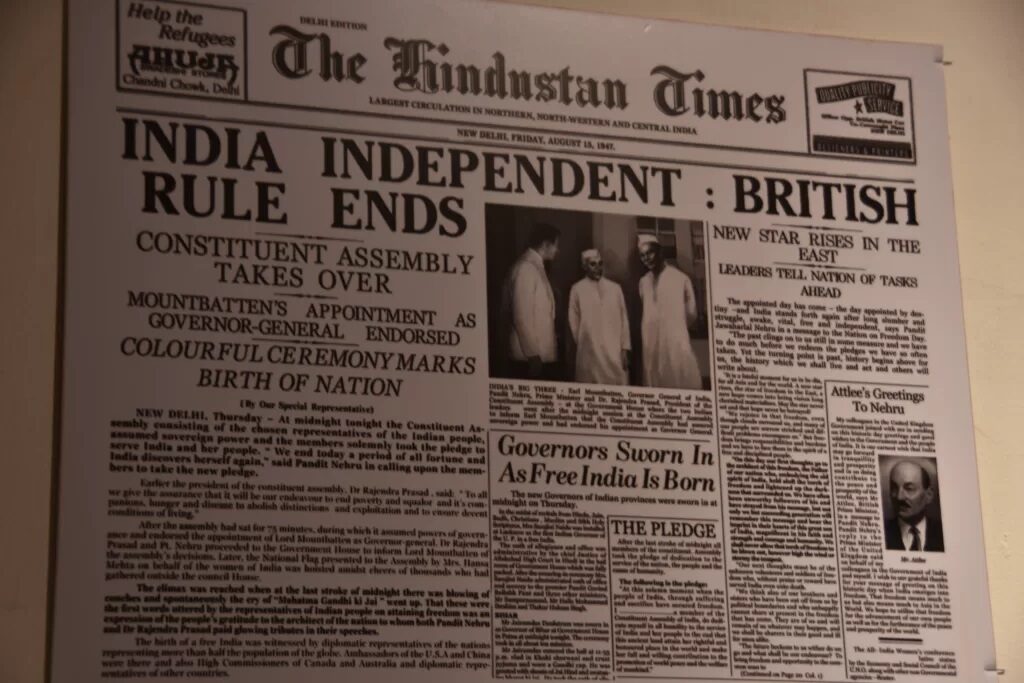
India gained independence from British rule on August 15, 1947 (Flickr: shankar s)
As India marks 79 years of independence on August 15, 2026, it is entering its 80th year as a republic-in-the-making and as the world’s largest electoral democracy. The distinction matters: India has held regular elections, witnessed peaceful transfers of power and maintained a remarkably diverse political system. Yet democracy is about more than voting. It also depends on institutions that restrain power, a free press, an independent judiciary, political competition, equal citizenship and the ability of ordinary people to question those who govern them.
India’s democratic journey has therefore reached a complicated moment. Elections remain competitive and millions continue to participate in politics, but concerns over civil liberties, institutional independence, political polarisation and inequality have grown. Freedom House’s 2026 assessment continues to classify India as “Partly Free”, while the V-Dem Institute’s 2026 Democracy Report places India among the countries it categorises as “electoral autocracies”. These assessments are contested and should not be treated as definitive verdicts, but they highlight questions that India cannot afford to ignore.
Institutions, accountability and the freedom to dissent
One of the biggest challenges facing Indian democracy is ensuring that institutions remain independent and capable of holding governments accountable. Parliament, the judiciary, election authorities, investigative agencies and information commissions all have important roles in preventing excessive concentration of power.
The Election Commission of India, for example, has traditionally been regarded as an important pillar of the electoral system. But its independence has come under greater scrutiny after a 2023 law changed the process for selecting its leadership and gave the government greater influence over appointments, according to Freedom House. The credibility of elections depends not only on whether votes are counted properly, but also on whether voters believe that the institutions overseeing elections are impartial.
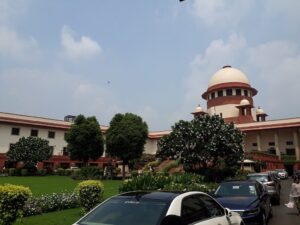
Political funding presents another challenge. The Supreme Court struck down the electoral bonds scheme in 2024, finding it unconstitutional because it undermined citizens’ right to information and electoral transparency. Yet the broader question of how political parties are funded remains unresolved. Democracy becomes less equal when some parties or candidates have significantly greater access to financial resources and voters cannot clearly see where political money comes from.
The use of investigative agencies also needs greater public scrutiny. Allegations that agencies such as the Enforcement Directorate and Central Bureau of Investigation have been used selectively against opposition politicians have raised concerns about the separation between legitimate law enforcement and political competition. Such allegations should be investigated transparently, because institutions lose public trust when citizens believe that the law is applied differently depending on political allegiance.
The health of the media is equally important. A democracy cannot function effectively if journalists are afraid to investigate those in power or if citizens receive information through increasingly polarised and partisan channels. Freedom House reports that journalists in India face harassment, threats and legal pressure, while self-censorship has increased. At the same time, misinformation spreads rapidly through social media, making it harder for citizens to distinguish evidence from propaganda.
The challenge, therefore, is not simply protecting newspapers or television channels. It is protecting the broader principle that citizens must be able to criticise governments without fear. Freedom of expression must include the right to question policies, expose wrongdoing and disagree with the majority.
Inclusion, polarisation and the promise of equal citizenship
India’s second major democratic challenge is ensuring that political freedom is matched by social and economic equality. The Constitution promises equal citizenship, but discrimination based on caste, religion, gender and economic status continues to shape people’s lives.
Religious polarisation is particularly damaging because democracy depends on citizens seeing one another as equal participants in a shared political system. Political competition naturally produces disagreements, but when communities are portrayed as threats to one another, democratic debate can turn into social hostility. Freedom House has documented continuing concerns about discrimination and violence affecting Muslims, as well as the marginalisation of Dalits and Adivasis.
This does not mean that India lacks political diversity. Regional parties remain powerful, governments change at the state level and opposition parties continue to compete in elections. The 2024 Lok Sabha election itself demonstrated that Indian voters can produce outcomes that force political parties to negotiate and form coalitions. The BJP won 240 seats, while the National Democratic Alliance secured 293, making coalition politics necessary at the national level.
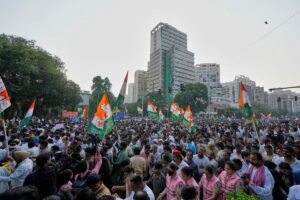
But democratic participation must extend beyond elections. Citizens need meaningful opportunities to influence decisions between elections through local government, civil society, public consultations, peaceful protest and access to information.
The Right to Information Act remains one of India’s most important democratic tools because it enables citizens to examine how governments function. Yet information commissions have faced vacancies and backlogs, while activists seeking information have sometimes faced harassment. A democracy becomes weaker when citizens have a formal right to information but struggle to obtain answers in practice.
The justice system faces a similar problem. Courts are essential safeguards against executive overreach, but severe backlogs, understaffing and delays mean that justice can take years. Freedom House notes concerns about due process, lengthy pretrial detention and weaknesses in the lower judiciary. For a poor citizen, delayed justice can effectively become denied justice.
India’s democratic future will ultimately depend on whether its institutions can preserve a balance between majority rule and individual rights. The majority has the right to govern, but democracy also protects minorities from the unchecked power of the majority. Governments must be able to act decisively, but they must also remain accountable.
After nearly eight decades of independence, India’s democratic achievement is substantial but not guaranteed. The country does not need to choose between strong government and democratic freedom. Its real challenge is to build institutions strong enough to provide both. Independent oversight, transparent political funding, a free press, an effective justice system and equal citizenship are not obstacles to national development. They are its foundations.
India’s next decades will therefore test not merely how often its citizens vote, but whether they remain free to question, organise, disagree and demand accountability. The strength of Indian democracy will be measured not by the absence of political conflict, but by the ability of its institutions and citizens to resolve that conflict without sacrificing liberty, equality and constitutional values.