‘Why Have We Not Been Able To Build New Schools In Our Villages?’
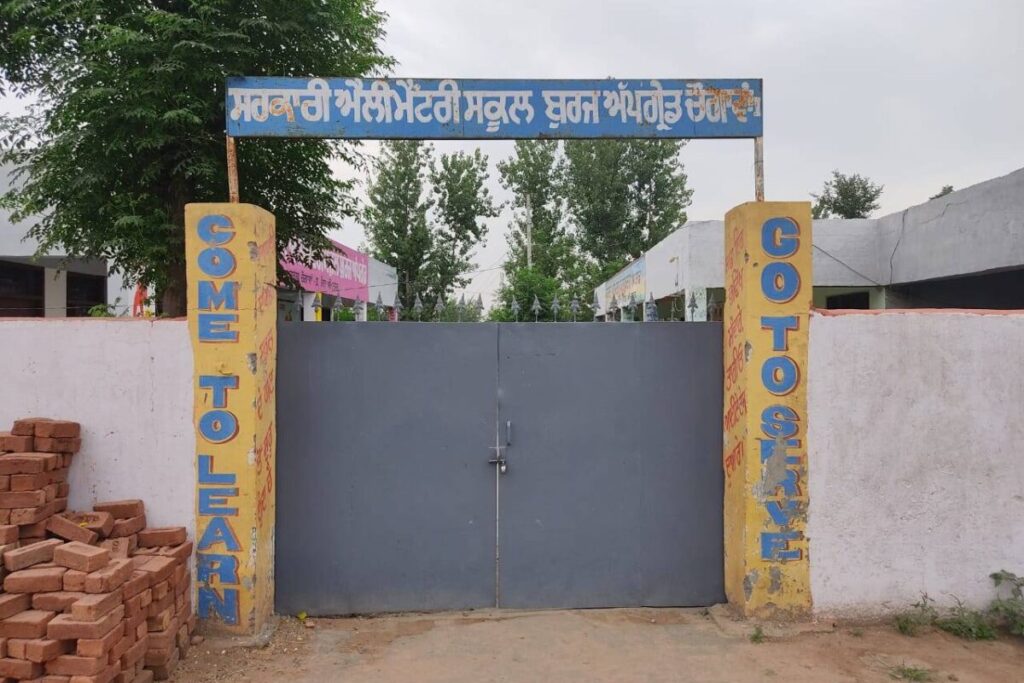
CJP founder Abhijeet Dipke said the campaign to improve government schools in rural India -- like the one above in Punjab --aims to ensure that children of farmers and wage labourers studying there receive facilities comparable to those available to students in urban areas (Image by Nabarun Guha)
Cockroach Janta Party (CJP) founder Abhijeet Dipke has announced a nationwide campaign to improve government schools in rural India through community participation, citizen-led audits, and local accountability.
The initiative will begin on August 15, India’s 80th Independence Day, with the organisation calling on parents, citizens, and village leaders to work together to address what it describes as the long-standing neglect of educational infrastructure in rural areas.
Dipke said he would launch the campaign from his own village in Hingoli, Maharashtra, by approaching the local sarpanch and seeking improvements to government schools in the area.
“The coming 15th August is our 80th Independence Day. But, if anything has been neglected or ignored the most in the last 80 years, it is the government schools in our villages,” Dipke said in a video message.
He questioned why the country had been able to build major government infrastructure while many rural schools continued to lack basic facilities.
“We have made a new Parliament, a new PM house. Why have we not been able to build new schools in our villages? Do we not consider the children of farmers and labourers the future of our country?” he asked.
The campaign will focus on basic infrastructure, including drinking water, electricity, functional toilets, and mid-day meal facilities. Dipke highlighted the difficulties faced by children in rural areas, many of whom travel long distances to attend school, only to find that essential amenities are unavailable.
“Even today, village children have to walk a long distance to go to school. After going there, they don’t find water or toilet facilities,” he said, pointing particularly to the challenges faced by girls who depend on functioning washrooms at school.
“I feel that on this 15th August, if we should pay attention to anything, if we should make a new start, we should start by improving our government schools,” he added.
As part of the campaign, the CJP has announced a “Sarpanch Challenge”, encouraging village heads across India to take responsibility for upgrading government schools in their respective areas.
The organisation plans to publicly recognise sarpanches who improve schools by sharing before-and-after photographs of the facilities on its social media platforms. Dipke said the initiative was intended to encourage healthy competition among village leaders.
“We will give you credit so that after seeing you, after seeing the schools that you have improved, many other village heads also start improving schools in their villages,” he said.
The campaign will also introduce a social audit mechanism involving parents and local citizens. Parents whose children attend government schools will be encouraged to visit the institutions and assess whether basic facilities are available.
The proposed audit will cover electricity, clean drinking water, functioning washrooms, and the quality and availability of mid-day meals.
“You go to your children’s schools and see if basic facilities are available. See if there is electricity, water… Do your children get washroom facilities? Do they get mid-day meals?” Dipke said.
Parents will also be encouraged to record videos documenting inadequate or missing facilities. The CJP said it would soon release a printable audit form that citizens can use to record the amenities available at individual schools and identify gaps.
Dipke said the campaign aims to ensure that children of farmers and wage labourers studying in village schools receive facilities comparable to those available to students in urban areas.
“If not, you make videos of it. Because your children’s schooling should be good. That is your fundamental right,” he said.
He called on citizens to participate in the initiative and make improvements to rural schools a priority on Independence Day.
“Let us all make a promise to the children who live in villages that we will improve their schools. Together, we can do this,” Dipke said, ending his message with the slogan, “Real India lives in villages”.
The CJP began as an online satirical platform before expanding into street-level activism. Its 36-day protest at Jantar Mantar in Delhi over alleged examination irregularities ended on July 25, following the resignation of then Union Education Minister Dharmendra Pradhan.
At a two-day strategy meeting in Chhatrapati Sambhajinagar earlier this month, the organisation decided to continue as a youth movement rather than enter electoral politics. It also announced a nationwide public outreach campaign, “Kya Bolti Public?”
Dipke had earlier appealed to Prime Minister Narendra Modi to use his Independence Day address to engage directly with the country’s youth.
With its latest campaign, the CJP is shifting attention towards a basic but persistent issue — the condition of government schools in rural India — and seeking to place parents, citizens, and local elected representatives at the centre of efforts to improve them.