Kerala Landslide Raises Fresh Ques Over Mountain Development
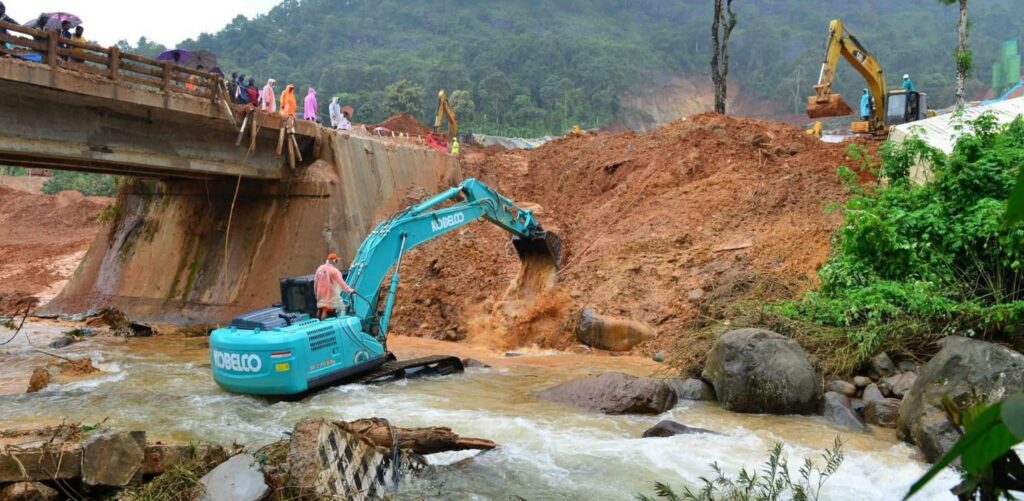
Excavators clear tonnes of mud and debris from the Kalladi landslide site as search and recovery operations continue along the Meenakshi river (Image by Ajay Ghosh S)
- Eight workers died in a landslide at the under-construction tunnel project in Wayanad, which triggered investigations into possible lapses in environmental safeguards.
- Scientists say the disaster reflects the combined impact of fragile geology, large-scale excavation and increasingly intense monsoon rainfall, rather than rainfall alone.
- The incident has renewed concerns over how major infrastructure projects are planned and monitored in the landslide-prone Western Ghats.
Less than a month before the second anniversary of the 2024 Wayanad landslides which fundamentally altered public understanding of landslide risks in the country and killed 298 people while leaving many more injured and homeless, another mountain slope collapsed in Wayanad district of Kerala. This time, the slip occurred at the exit section of the under-construction Anakkampoyil-Kalladi-Meppadi twin tunnel project.
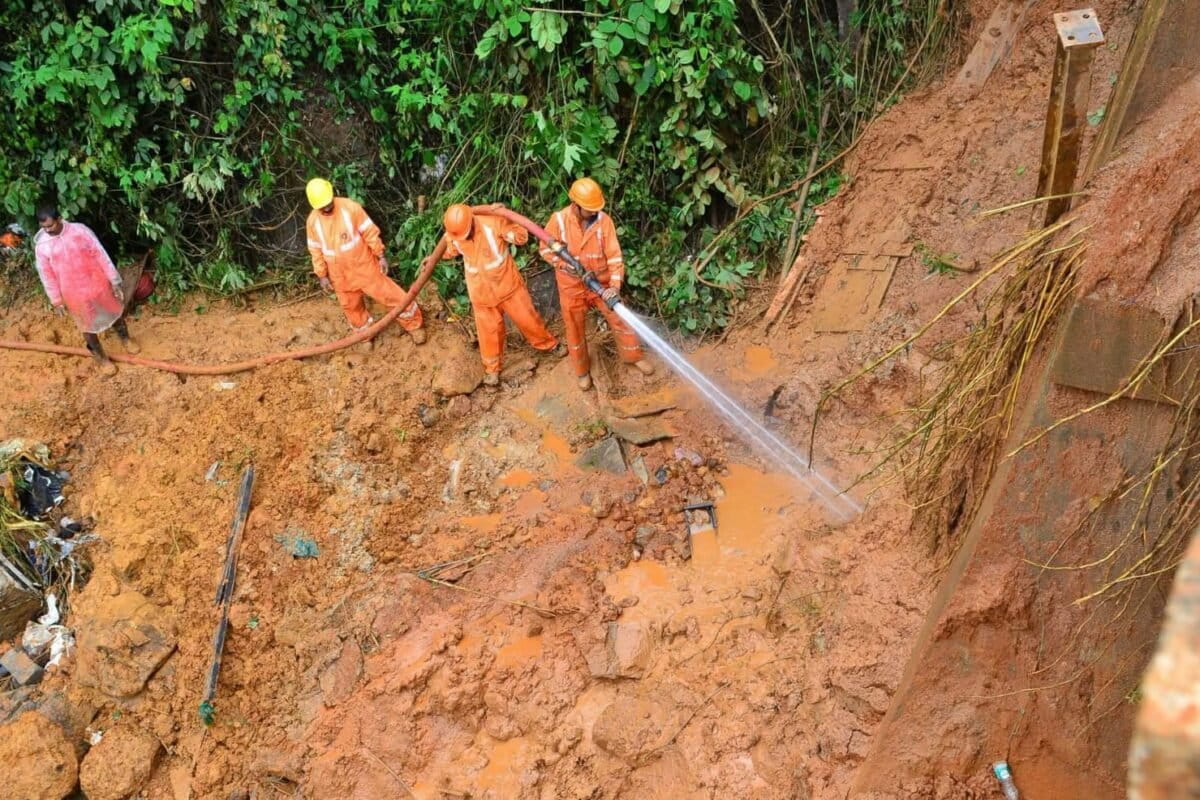
On July 7, 2026, following intense monsoon rain, a massive slope failure hit the tunnel project near Meenakshi Bridge at Kalladi, near Meppadi. The incident was initially described as a mudslide because a large mass of waterlogged excavated earth swept through the construction site. It was later identified by experts and officials as a landslide that originated higher up the slope, with the accumulated tunnel spoil adding to its destructive force. The collapse buried workers, vehicles and equipment, killing seven people. Two others remained missing after days of search operations.
Investigations in progress
Investigators are also examining whether the failure was aggravated by the contractor’s alleged non-compliance with directions to remove the excavated soil accumulated near the site before the monsoon. As per the reading on the hyper-local rain gauge at the research institute, Hume Centre for Ecology and Wildlife Biology near the Kalladi-Meppadi tunnel corridor, the area received about 260 mm of rainfall over the preceding three days, saturating the already unstable hillside before the collapse.
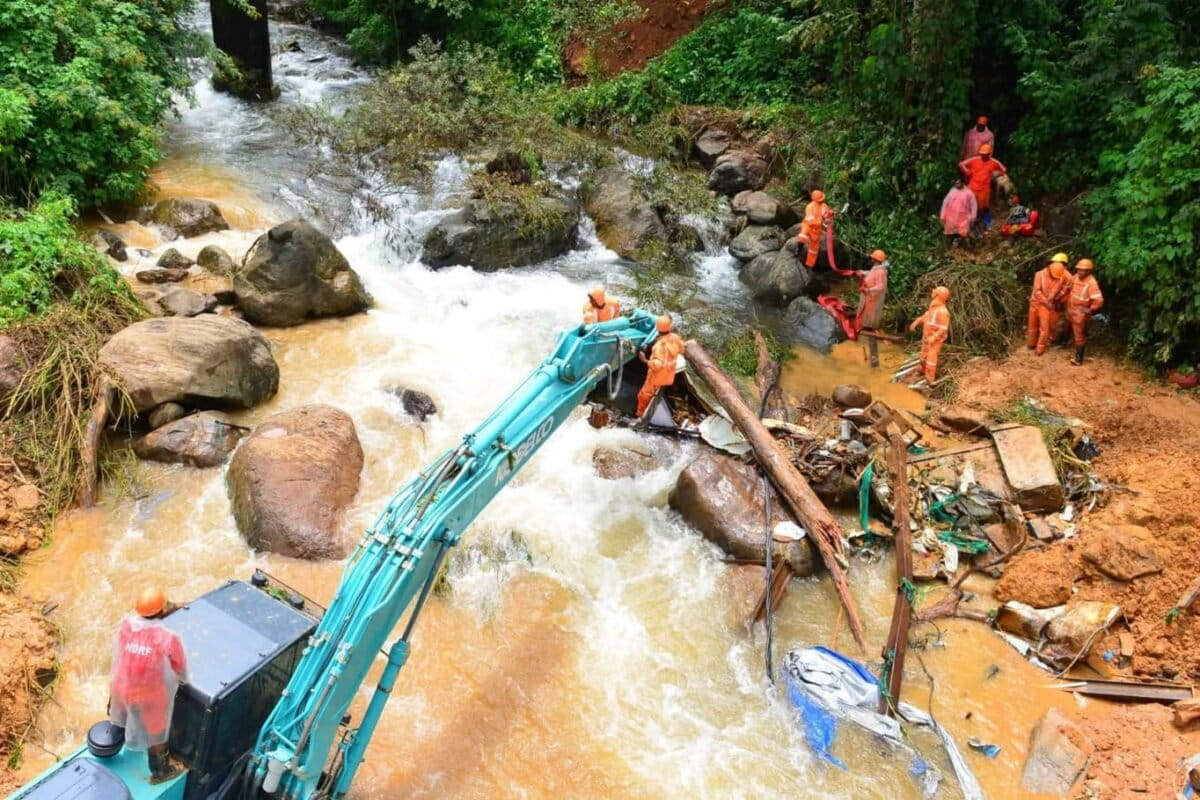
According to the district administration, the tragedy unfolded when earth, boulders and debris crashed onto the construction site, trapping workers engaged in the tunnel project.
The Kalladi disaster raises a larger question: Was it the natural consequence of intense rainfall, or did it expose weaknesses in the way development projects are being planned in one of India’s most ecologically sensitive mountain systems?
Stretching through the Vellarimala hills, the proposed tunnel has long been promoted as a solution to Wayanad’s transport challenges. It is expected to provide an alternative route connecting Kozhikode and Bengaluru through Wayanad and Mysuru, reducing dependence on the accident-prone Thamarassery Ghat Road and improving connectivity. Supporters argue that the project is essential for Wayanad’s economy, particularly for farmers, traders and the tourism sector.
Yet the project has never escaped scientific scrutiny. Geologists, ecologists and local environmental groups have repeatedly cautioned that engineering interventions of this scale demand extraordinary care in a landscape shaped by steep slopes, deeply weathered rock and increasingly erratic monsoon rainfall.
Safeguards violated?
Soon after the collapse, the Kerala government suspended work on the tunnel project and ordered separate technical and environmental investigations. Speaking to Mongabay-India, Chief Minister V.D. Satheesan said: “The findings would determine both the immediate cause of the accident and whether mandatory environmental safeguards had been followed during construction.” He added that investigators would also examine allegations that several key conditions attached to the project’s environmental clearance had been violated.
The Union Ministry of Environment, Forest and Climate Change’s Expert Appraisal Committee (EAC) had imposed 60 mandatory conditions when it granted environmental clearance for the project in May 2025.
A senior official with the Kerala State Disaster Management Authority (KSDMA), who requested anonymity because they were not authorised to speak publicly, said the conditions required excavated material to be disposed of only at approved sites and in a manner that would not affect local ecology or nearby communities. According to the official, proper compliance could have prevented heavy rains from washing the excavated soil into nearby rivers and streams, reducing risks to downstream residents.
Wayanad-based environmental activist Sreedhar Radhakrishnan said the environmental clearance had also required the installation of four automated ground vibration monitoring stations with telemetry transmission because of the area’s high susceptibility to slope failures. “That crucial condition has not been complied with. Equally worrying, several wildlife mitigation measures prescribed as part of the environmental clearance also remain incomplete,” he alleged, citing the EAC conditions.
Kerala Agriculture Minister T. Siddique, who represents the affected region in the state Assembly, said the incident warranted a careful scientific investigation and expressed concern over the handling of excavated earth and slope management around the construction site. Officials have maintained that responsibility can be determined only after detailed geological and engineering assessments are completed.
The construction company, however, rejected allegations of negligence, stating that prescribed safety measures had been followed and that the landslide originated beyond the engineered section of the project.
“The landslip occurred during an active monsoon spell marked by heavy rainfall. The project is being executed in strict compliance with all engineering, safety and environmental protocols and statutory approvals. The handling and disposal of excavated material are being carried out in accordance with the approved environmental management plan under the supervision of the Central Empowered Committee. We are extending full cooperation to the authorities investigating the incident,” Dilip Buildcon Ltd, the contractor executing the tunnel project, said in a statement issued to the media.
Caution in the mountains
Among those calling for a broader examination is environmental researcher C.K. Vishnudas of the Hume Centre for Ecology and Wildlife Biology. He told Mongabay-India that mountain systems disturbed by excavation become increasingly vulnerable during episodes of intense rainfall. “You cannot explain an incident like this by looking at rainfall or construction practices alone. It is the interaction between altered slopes, changes in natural drainage and extreme weather that ultimately determines whether a hillside remains stable,” he said.
Long before the Kalladi project entered the construction stage, landslide susceptibility maps prepared by scientific institutions had identified large parts of Wayanad as areas requiring extreme caution. The 2024 landslides only reinforced those warnings.
Geologist K.G. Thara said landslides in Kerala seldom arise from a single trigger. Instead, the interaction between geological structure, prolonged weathering, groundwater conditions, land use and rainfall determines how a slope responds under stress. “That complexity makes continuous geological monitoring indispensable during major infrastructure projects, rather than treating geological investigations as a one-time exercise before constructions begin,” she said.
Studies by several institutions have repeatedly classified large parts of Wayanad among Kerala’s most landslide-susceptible regions. Climate scientists, however, caution against interpreting every landslide as proof of climate change. C.P. Rajasekharan, former Additional Director General and senior engineering geologist at the Geological Survey of India, described climate change as a risk multiplier. “When fragile geology, human-induced alterations to slopes and natural drainage, and unusually intense rainfall converge at the same place and time, the probability of a catastrophic landslide increases dramatically,” he said.
(Published under Creative Commons from Mongabay India)