Menstrual Health Is Not Charity But A Fundamental Right: Experts

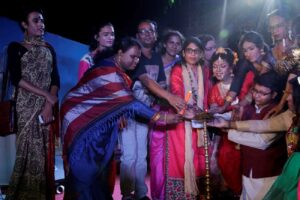
At a conclave in Bhubaneswar on Menstrual Hygiene Day 2026, speakers urged society to end menstrual stigma, improve sanitation access and recognise menstrual health as a fundamental right linked to dignity and equality (Image: CSRJournal)
Menstruation is a natural biological process, yet millions of girls and women continue to face silence, shame and discrimination because of it. Speakers at the Menstrual Health and Hygiene Conclave 2026 in Bhubaneswar stressed that society must move beyond token awareness campaigns and recognise menstrual health as a matter of dignity, equality and constitutional rights.
The state-level conclave, organised by the Odisha Menstrual Health and Hygiene Alliance (OMHH Alliance) in collaboration with UNICEF on Menstrual Hygiene Day 2026, brought together policymakers, legal experts, educators and social activists under the theme “Rising Together: Transforming Menstrual Health as a Fundamental Right.”
Chairperson of the Odisha State Commission for Protection of Child Rights, Babita Patra, said menstrual health discussions should no longer remain confined to whispers or private spaces. “No girl or woman should feel excluded, embarrassed or unsafe because of menstruation,” she said, adding that “a compassionate and informed society is the foundation of menstrual dignity for all.”
Patra underlined that menstrual health is closely tied to confidence, education and participation in public life. According to her, many girls still miss school, avoid social interactions or face humiliation because of deeply rooted taboos surrounding periods. She stressed that communities, families and institutions must work together to create safe and supportive spaces where menstruation can be discussed openly and without stigma.
Several speakers at the conclave pointed out that despite improvements in access to sanitary products and awareness campaigns over the years, discriminatory attitudes continue to persist in homes, schools and workplaces. Menstruation, they noted, is still treated as impure or shameful in many parts of the country, leading to exclusionary practices that affect women’s physical and emotional well-being.
Odisha Additional Director General of Police Shyni S said menstrual dignity could not be achieved without ensuring basic infrastructure and sanitation facilities. “These are not luxuries but basic necessities that must be guaranteed so that every woman and girl can manage her menstrual cycle with safety, comfort and dignity,” she said while referring to the lack of clean toilets, safe water and sanitary products in schools, colleges, workplaces and public spaces.
She also questioned social customs surrounding the celebration of a girl’s first period. While such ceremonies are often projected as cultural recognition, she argued that they are frequently accompanied by restrictions and exclusion. “Celebration without dignity, freedom and respect has little meaning,” she remarked.
Shyni S also stressed that menstrual conversations should not remain limited to women alone. She said boys and men must be included in discussions around menstruation in order to dismantle harmful stereotypes and normalise the subject within society. According to her, meaningful social change would only happen when menstruation stops being viewed as a “women’s issue” and becomes a shared social concern.
Menstrual health linked to equality and constitutional rights
The conclave also highlighted the growing recognition of menstrual health as a constitutional and human rights issue rather than merely a welfare concern. Experts noted that access to hygiene, healthcare and sanitation directly influences education, mobility, privacy and equality for women and girls.
Prasanta Kumar Dash, Chief Field Officer of UNICEF Odisha, said that although access to sanitary products has improved in recent years, social stigma remains deeply entrenched. “Normalising menstruation in society must begin with open conversations at home, in schools, workplaces and communities,” he said.
Dash observed that silence surrounding menstruation often leads to misinformation, poor health practices and emotional distress among adolescent girls. He argued that awareness campaigns alone are insufficient unless accompanied by broader social transformation and sustained policy support.
Legal scholar Dr Saumya Uma, Professor and Director at the Centre for Women’s Rights at O P Jindal Global Law School, said menstrual health must be understood through the lens of equality and social justice. “Menstrual health is not only a health issue but also an issue of dignity, equality, inclusion and intersectionality,” she said.
Referring to the Supreme Court’s 2026 judgment in Dr Jaya Thakur versus Union of India, Uma explained that menstrual hygiene management had evolved into an enforceable constitutional entitlement linked to the rights to life, education, privacy and substantive equality. The judgment, she said, marked an important shift in recognising menstrual dignity as part of fundamental rights rather than a charitable or welfare-based concern.
Throughout the conclave, speakers repeatedly emphasised that the burden of managing menstruation should not fall solely on individuals. Instead, governments, institutions, communities and families must collectively ensure access to awareness, sanitation, healthcare facilities and supportive policies.
The discussions reflected a growing consensus that menstrual dignity is essential for achieving gender equality. Until girls and women can manage menstruation safely and without fear, exclusion or shame, true social inclusion will remain incomplete.