The Slow Exit Of Foraging In India’s Urban Blue Spaces
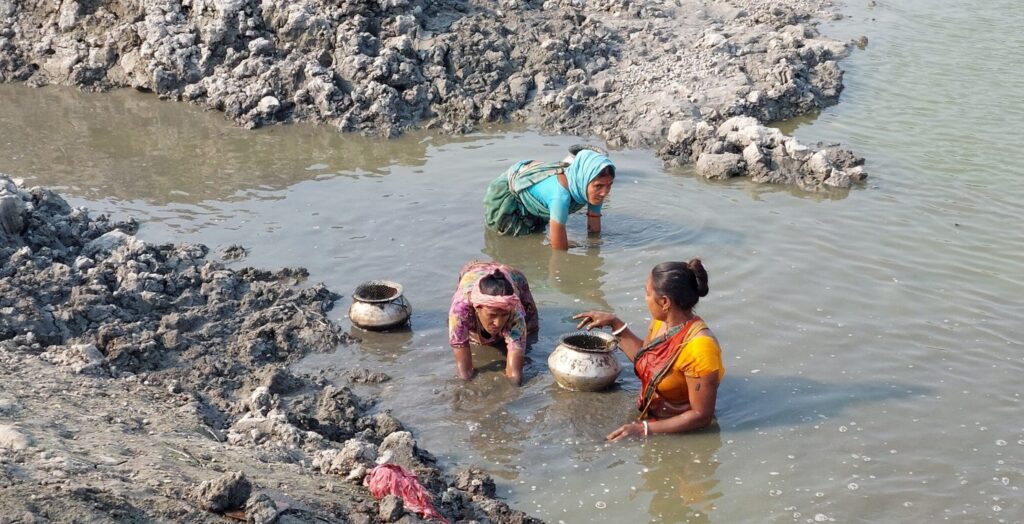
Women wade into the East Kolkata Wetlands to forage for small crabs and fish, a practice that is often done before the working day begins (Image by Sukanya Basu)
- A new study finds that more than half of all urban blue space users across India’s cities forage frequently for nutrition, income and food security.
- As Indian cities restore and beautify their lakes for recreational use, the communities most dependent on them for food are being overlooked.
- Researchers and practitioners are calling for foraging to be recognised as a legitimate use of urban blue spaces.
It is 4 a.m. at the East Kolkata Wetlands. The city has not yet woken up, but a woman has already arrived at the lake’s edge. She wades in and starts collecting crabs, mussels, and fish, moving with the ease of someone who has done this many times. Once it is done, she changes into dry clothes and is off to work as a domestic help in one of the new lake-view apartment buildings nearby. Before her shift begins, she will sell some of what she has collected, and cook the rest in the evening, with the women in her neighbourhood.
Sukanya Basu, researcher and faculty at Azim Premji University, saw this woman and others like her across lakes and rivers in Kolkata, Kochi, Bengaluru and Mumbai during months of fieldwork for her study, Widespread Practices and Sustainability Benefits of Foraging in Urban Blue Spaces of India, published in Nature Cities journal, conducted with colleagues Brenda Maria Zoderer, Harini Nagendra, Peter H. Verburg and Tobias Plieninger.
The study surveyed over 1,200 people (799 women and 391 men) who used these urban water bodies or blue spaces from March to September in 2023 and found that more than half of them frequently collected edibles from lakes, rivers and wetlands for personal consumption, selling, sharing and collective cooking. And yet, this practice is almost entirely absent from policy, planning and public imagination. Urban water bodies are valued as recreational amenities, ecological assets and for flood management, but never as food systems, which is what they are for a significant portion of users.
The foragers of urban blue spaces
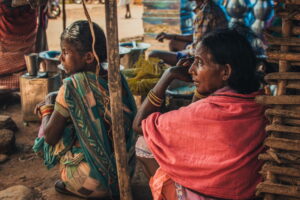
The study identified three distinct groups — frequent foragers, occasional foragers and rare foragers. Frequent foragers regularly collect edibles for personal consumption, local sale and sharing, sometimes even preparing meals together from what they have gathered. This group is overwhelmingly women, the elderly, daily wage labourers, and communities from Scheduled Castes and Scheduled Tribes, mostly from households with annual incomes below ₹7 lakh (₹700,000). Households below this income dropped to occasionally or rare forager category.
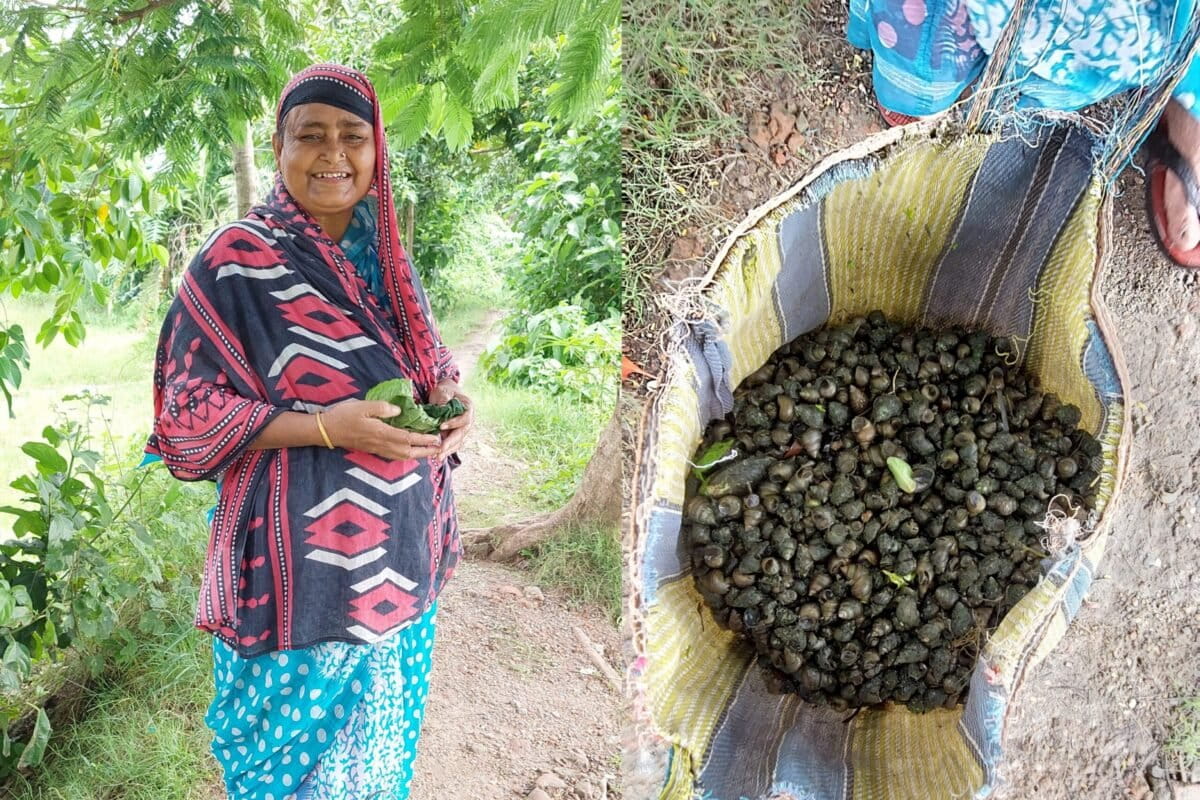
Occasional foragers are better educated, employed, and belong to a higher-income category. They collect and cook foraged items occasionally but rarely sell them.
Rare foragers, as the term suggests, barely engage with the edible landscape at all. These are mostly men, under 31, university-educated, with the highest household incomes.
The difference between these groups extends to nutritional security as well. For frequent foragers, a lack of foraging amounts to the omission of micronutrients from the diet entirely. A trip to the market doesn’t fix that. “What do we buy from the market? The same three or four greens. Palak, methi, something generic,” says Harini Nagendra, Director of the School of Climate Change and Sustainability at Azim Premji University, known for her research spanning over 30 years on forest conservation, and urban sustainability. “What these women forage is far more diverse and nutritive. Many of the (plant) species are bitter, seasonal, largely absent from urban markets. These are probably what keep them healthy.”
Foraging is also a social act. Women come in groups, at particular times, along particular routes, and cook together in the evenings with what they have individually collected. “I was shocked,” says Sukanya. “People cooking together is something I associated with villages, with forests. But it is happening inside cities.”
The study found that 63% of women surveyed were frequent foragers, compared to 26% of men. Suresh Kumar, founder of Sarjapur Curries, a community organisation working to revive forgotten plants and edible weeds native to Bengaluru, says, “Men hardly forage. They are clueless (about foraging).”
He reminisces what Bengaluru’s lakes once were, “In summer, when water bodies would dry out seasonally, their moist beds would fill with ponnangante keerai, a green so valued it is named after gold across Tamil, Telugu and Kannada. The entire lake bed would be covered with them,” he says. “Women would come to forage because it was the only moist space left in the heat.” The knowledge survived in those who practised it, and they were almost always women.
The uniqueness of blue spaces
“Blue spaces are much wilder than green ones in cities,” Sukanya explains, “Water bodies and their edges create distinct microhabitats — the waterline, muddy banks, shallow water, seasonal floodplain — each supporting different edible species, historically left to grow as opposed to manicured parks.”
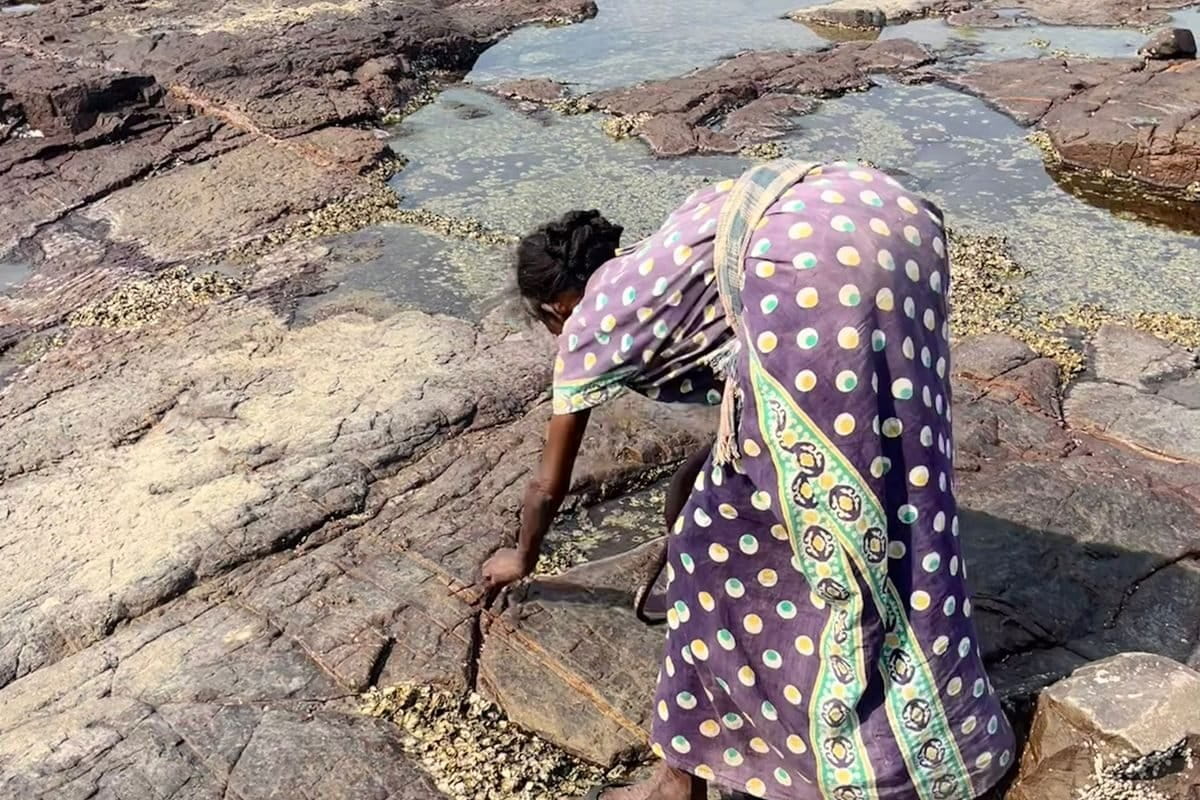
Sanjiv Valsan, founder of Waghoba Habitat Foundation in Mumbai, works on conserving the traditional ecological knowledge of wild food plants through foraging workshops, nature-sensing programmes and cross-cultural exchanges with Adivasi communities in Aarey Forest. He describes how Mumbai’s blue spaces multiply in the monsoon, from a few fixed lakes to an entire network of seasonal streams, floodplains and marshes, each yielding something different.
The Adivasi communities he works with harvest Chimburi and Gopnik crabs, Kuppas snails, and Tadgola palms from around lakeshores. “For an Adivasi, a forest and the water body within it is the supermarket, the pharmacy, and the hardware store. It is everything,” he says.
From the interviews conducted on 300 people from Mumbai and Bengaluru, about 65% of blue space users in Mumbai turned out to be frequent foragers while the numbers were starkly in Bengaluru: 67% of its blue space users were rare foragers.
The low number of foragers in Bengaluru is striking for a city once known as the city of lakes, with more environmental movements and lake restoration projects than perhaps anywhere else in India.
The answer lies in the restoration itself. “Where would you forage?” asks Nagendra. “Along the boundary of the lake, where land meets water. That bund is now all stone, even concrete in many places. And in many lakes, you will find boards that say: plucking of plants is prohibited.” Suresh adds that restored lake paths are planted with ornamental, non-native species chosen because no insects eat them.
Kaikondrahalli Lake, considered a restoration success story, has butterfly habitat patches and bird-friendly plantations. “But there is hardly anything to forage,” says Suresh. “Not for us. Not even for the insects.” Nagendra notes that while there are arrangements made for grazers to harvest grasses for cattle, foraging for human food has no recognition.
Who collects edible greens?
Principal scientist at CSIR-NEERI in Nagpur Shalini Dhyani who edited Urban Foraging in the Changing World, one of the first global compilations of foraging research from the Global South, did a study across 15 Indian cities on foraging practised on urban green spaces. She documented 130 plant species and 16 fungal species being foraged, with women constituting nearly 69% of foragers.
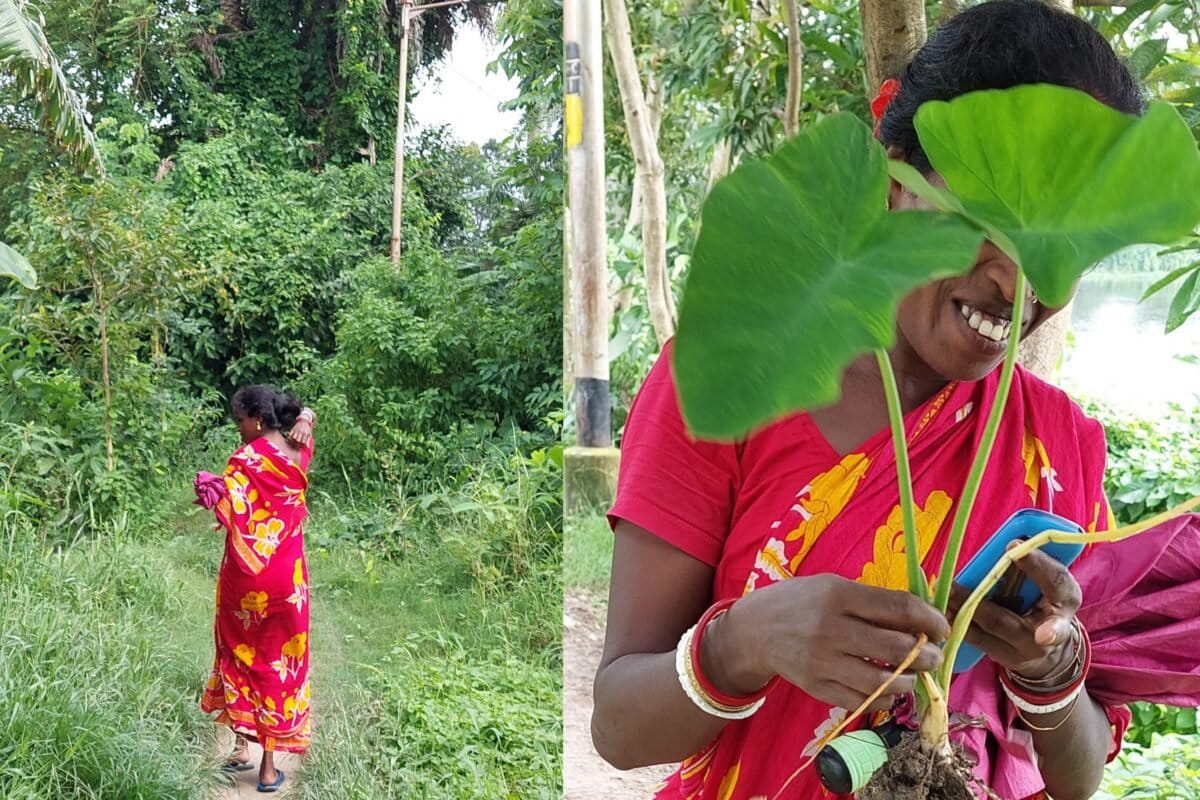
Her fieldwork has taken her into unexpected territory. In parts of Assam, she found communities foraging for water hyacinth and preparing curry from it; in Udaipur, it was being harvested as green fodder for cattle. It is a striking example of communities adapting to ecologically stressed water bodies, but she raises an immediate note of caution consistent with the study’s findings on contamination. “Water hyacinth is known to absorb heavy metals, and fish in these water bodies may also accumulate contaminants given the influx of sewage and wastewater. Many of these water bodies are no longer safe, and the communities most dependent on them are the least equipped to absorb that risk.”
A lead author of the IPBES global assessment on the sustainable use of wild species, she situates foraging within a larger argument. “Urban foraging is one of the things that keeps people connected to their local ecosystems, it gives you a sense of place and cohesion with your neighbourhood.” Sanjiv puts the same thought differently: “Humans will not cut down a forest that gives them something tangible. There is a circular relationship between using and protecting — which is why most of the remaining forests on this earth are under the care of Indigenous people.”
The blue spaces in Indian cities are being restored, beautified and fenced to favour the recreational economy. More than half of all blue space users forage frequently, a practice that underpins the nutritional security of some of the country’s most economically vulnerable communities. Yet, it remains almost entirely invisible to the institutions deciding the future of these spaces.
Sanjiv points to something immediate: Jamun trees fruit every year, their fruit falling, staining the pavement purple, and rotting while the same jamuns sell for ₹600 a kilo in the market. “Everyone would collect them,” he says. “Nobody knows who has the right.” It is a small but telling image of a country sitting on edible abundance it has not thought to claim.
“Why not make foraging the hero ingredient of a water body; the reason why people come to a lake?” asks Nagendra.