Farm Ponds Offer Hope For Farmers In Bundelkhand, However…
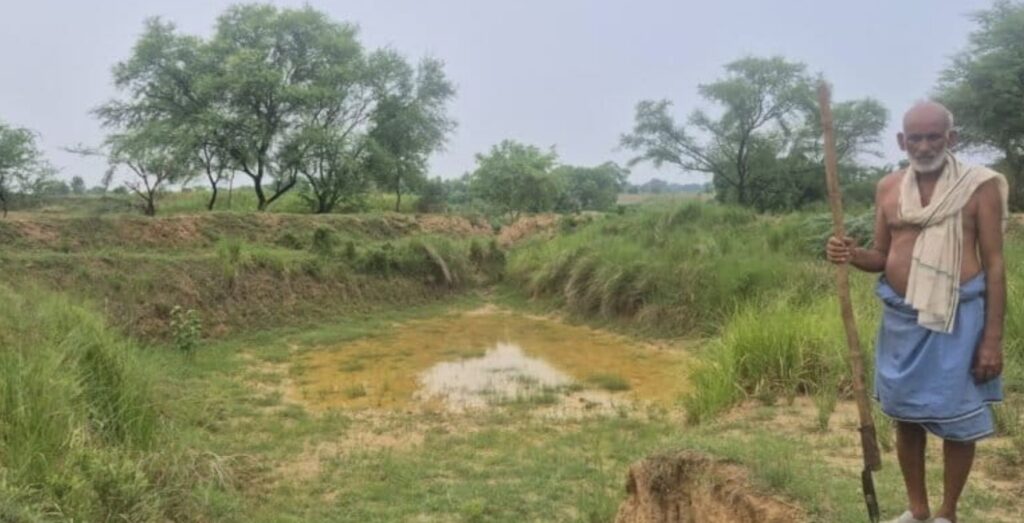
With its embankment breached and the basin choked with silt, Keshav Yadav’s farm pond remains dry, leaving him without any means to irrigate his Rabi crops after erratic rainfall (Image by Shivam Bharadwaj)
- A strengthening El Niño has raised concerns over rainfall and agriculture, prompting the government to prioritise farm ponds and other water conservation measures.
- Bundelkhand’s experience shows farm ponds can support irrigation, but seepage, siltation, poor construction, unsuitable sites and inadequate maintenance limit their effectiveness.
- Experts recommend scientific site selection, crop-specific pond design, seepage control, regular desiltation, maintenance funding and stronger community involvement to improve outcomes.
A strengthening El Niño and below-normal monsoon rainfall have renewed concerns over agriculture and water availability in Bundelkhand, where farming remains heavily dependent on rain. The government is responding by prioritising farm ponds, check dams and other water-conservation measures. But experiences from Uttar Pradesh’s Banda, Chitrakoot and Mahoba districts show that farm ponds can succeed only when they are scientifically designed, properly located and maintained.
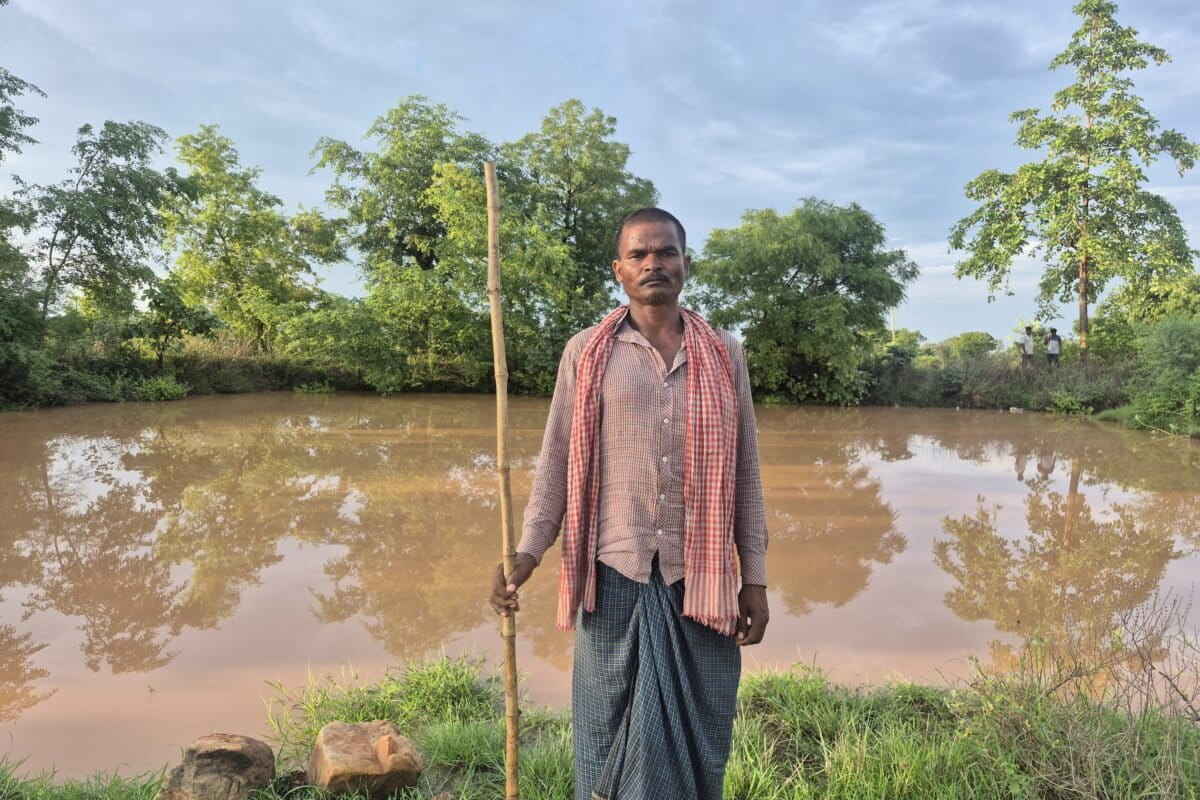
“Very low rain this year; only one rain in this season till now,” said 35-year-old farmer Vipin Kumar Yadav from Manipur village in Banda district’s Mahua block in July. Pointing to the farm pond on his land, he said, “Look at this, how little water is in my pond this time. Last year around this time, the entire pond was full.”
Yadav’s pond was dug in May 2024. Last year, he used its stored water to irrigate four acres of wheat twice, increasing his yield from around 3.5-4.5 quintals per acre to 9-10 quintals. This year, however, the 10-foot-deep pond had filled to less than five feet.
“I am worried: how will the wheat and mustard crops get water this year?” he said.
The concern is significant. By August 1, Banda had received 26% less rainfall than normal for the monsoon season. Government officials have also warned that El Niño conditions could strengthen, raising concerns over rainfall and agricultural production.
Agriculture Minister Shivraj Singh Chouhan has directed authorities to repair and strengthen ponds, farm ponds and check dams and prioritise water-harvesting work under rural development programmes.
An old solution with new challenges
Bundelkhand has a long history of rainwater harvesting. Historically, rulers developed interconnected systems of ponds, tanks, lakes and wells to manage scarce water. Today, however, recurrent droughts, rising temperatures and erratic monsoons have made farming increasingly uncertain.
Farm ponds have consequently become a major policy intervention. A special Bundelkhand package approved in 2009 targeted the construction of 30,000 farm ponds across Uttar Pradesh and Madhya Pradesh. Uttar Pradesh later launched the Khet-Talab Yojana, under which the government provides financial assistance for individual ponds.
But the experiences of farmers reveal serious limitations.
Yadav’s elder brother, Keshav, had a pond dug alongside his. Within a year, part of its embankment broke and silt reduced its depth. “Water doesn’t stay in my pond at all,” he said. “If water remained in it, I would have irrigated the mustard crop this year.”
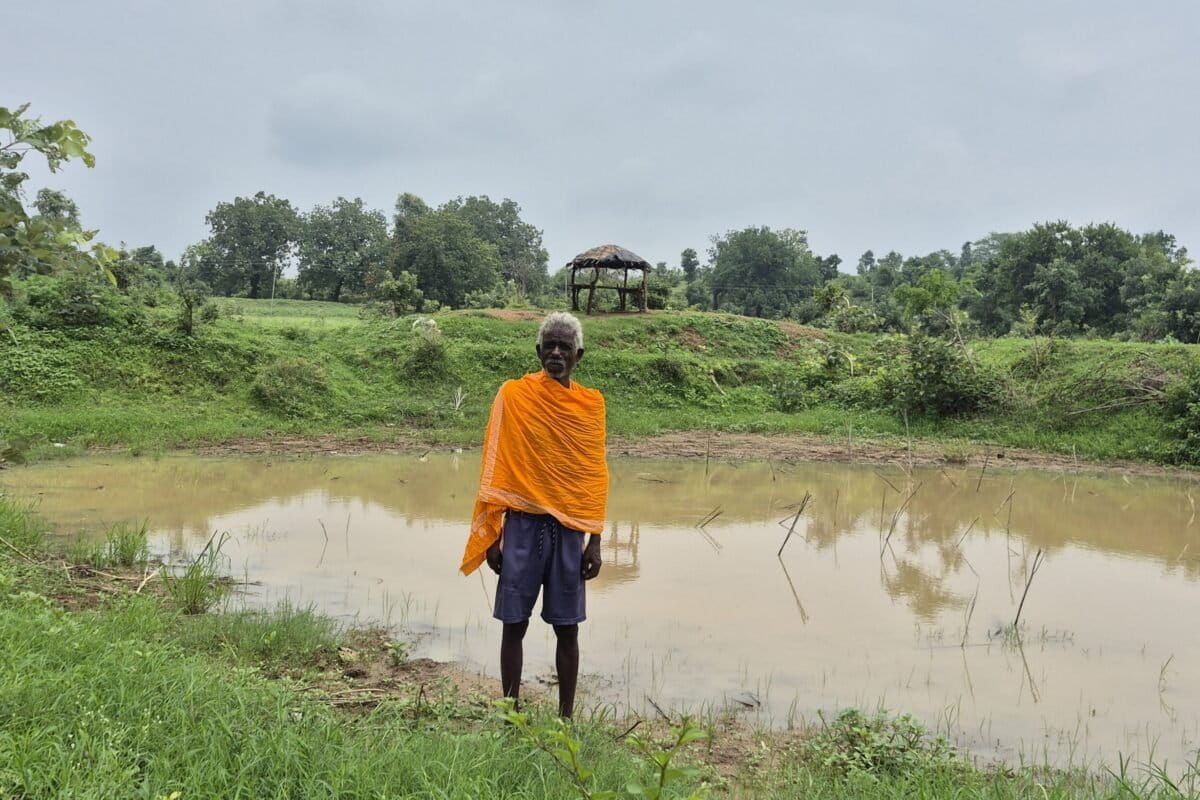
In Chitrakoot, 65-year-old farmer Sunder Kol said sandy soil prevented his pond from retaining water. “I haven’t received any benefit from the pond,” he said. The pond also took 0.25 acres of his land.
Siltation has similarly reduced the effectiveness of ponds. In Mangawan panchayat, farmer Mullu Kol said his pond’s depth had fallen from six feet to about three feet. It once irrigated two acres but now covers only one. Since wheat requires multiple rounds of irrigation, he has shifted towards mustard.
For Bulli Mawasi, the pond has delivered no irrigation benefit at all. Constructed under the Bundelkhand Package in 2009-10, it was intended to be 10 feet deep but was dug only five feet. “In the last 15 years, I haven’t been able to do a single drop of irrigation from this pond,” he said.
Hydrogeology expert Shashikant Tripathi identified poor site selection as a major reason for failure. “The failure to choose the right site is a major reason why the ponds fail,” he said, adding that site selection should consider rock type, slope, drainage, soil and land use.
Experts also point to inadequate maintenance. Chitrakoot Soil Conservation Officer Baljeet Bahadur said, “There is no budget for seepage control, desiltation or maintenance.”
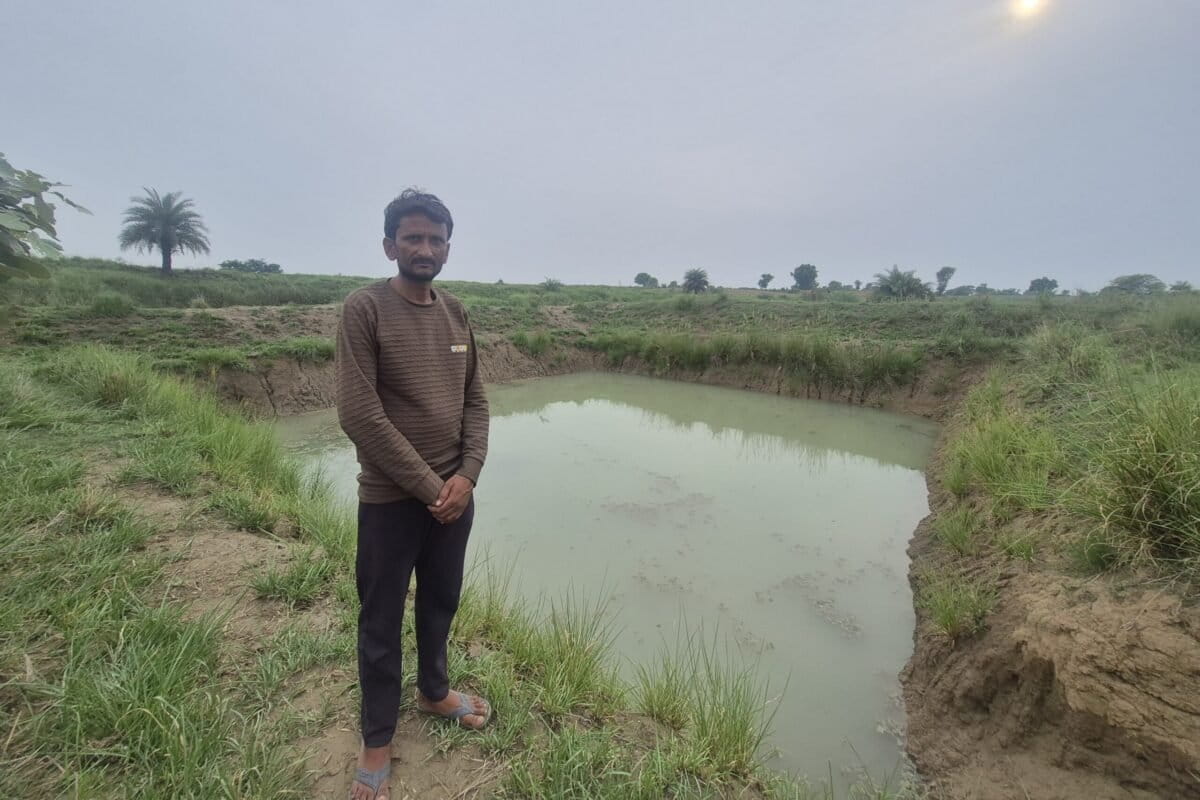
The problems extend to newer ponds. In Mahoba, farmer Mukesh Kumar said his pond, dug in 2023, had lost up to three feet of depth because of siltation. He suggested that drip and sprinkler irrigation could help farmers use stored water more efficiently.
Experts say the solution is not to abandon farm ponds but to make them more responsive to local conditions. Gaya Prasad Gopal of Akhil Bhartiya Samaj Seva Sansthan said seepage can be reduced by lining pond beds and walls with suitable materials and clay soil.
Mahoba soil conservation officer P. C. Vishwakarma said a standard pond can hold about 1.15 million litres of water and potentially provide three rounds of irrigation for a hectare of wheat. But he acknowledged that ponds may not provide enough water during years of poor rainfall.
Tripathi said pond dimensions should be based on cultivable area, crops and irrigation needs rather than fixed designs. He also called for financial support for desiltation and repairs.
Kaushal Garg, senior hydrology scientist at ICRISAT, said Gram Panchayats should share responsibility for maintenance through programmes such as VB-GRAM-G. “Such initiatives will only remain sustainable if local community participation is ensured,” he said.
Ultimately, farm ponds can provide an important buffer against erratic rainfall, but construction alone is not enough. As Garg put it, “These interventions must be science-led.” Scientific site selection, crop-specific design, seepage control, regular desiltation, maintenance funding and community ownership will determine whether Bundelkhand’s ponds become durable sources of water or expensive structures that fail when farmers need them most.