Climate Extremes In Bihar Affect Its People, But Not Its Politics
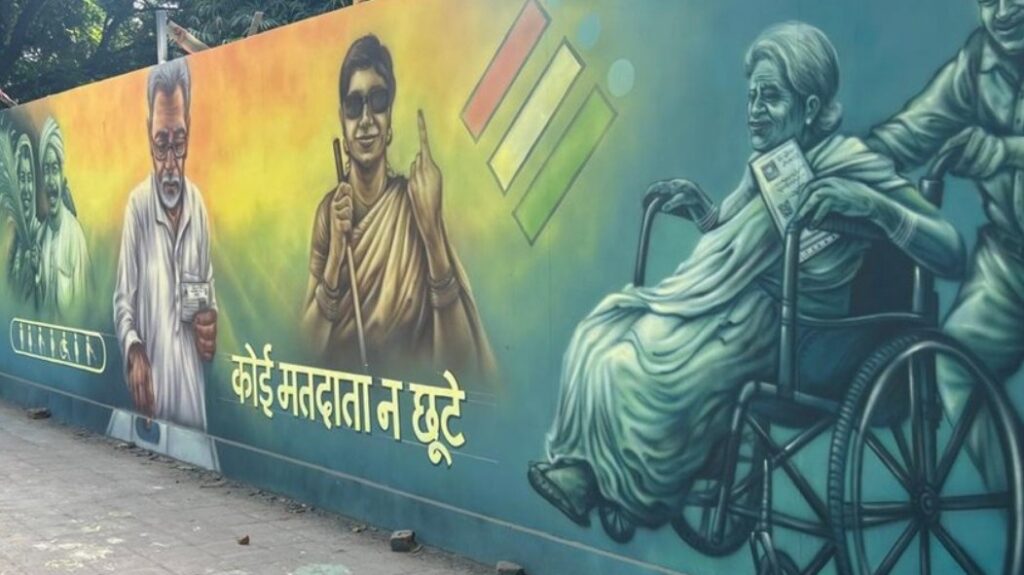
Graffiti outside the Chief Electoral Officer’s office in Patna urges people to vote (Image by Srish Prakash)
- Although Bihar faces recurring floods and droughts, these disasters exacerbated by climate change don’t feature as a dominant discussion in the ongoing election campaign.
- While climate issues shape politics indirectly, they seldom become standalone topics. Responses tend to be reactive, not systemic, say experts.
- Voters prioritise employment and basic needs, although growing awareness hints that climate impacts may gradually move from the margins to the mainstream of Bihar’s political narrative.
Bihar, among India’s most climate-vulnerable states, lives through floods and droughts almost every year. Yet as the state heads into the assembly election, its deepening ecological crisis finds little space in the political discourse.
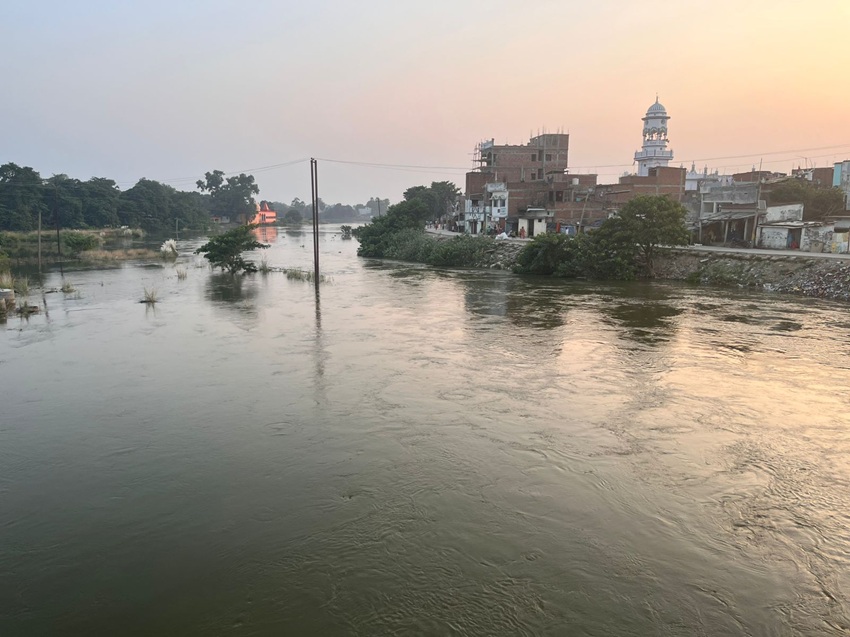
As Bihar approaches its two-phased assembly election on November 6 and 11, political debates centre on caste, crime, corruption, and leadership, despite studies spotlighting increasing climate risks.
A study by the Indian Institute of Technology (IIT) Mandi and IIT Guwahati has found that 14 of India’s most climate-vulnerable districts are in Bihar. In 2021, the Council on Energy, Environment and Water (CEEW), a New Delhi-based think-tank, ranked Bihar as the 5th most vulnerable state in its report that mapped India’s climate vulnerability. According to the report, the northern districts face recurring floods, while southern Bihar struggles with drought.
CEEW identifies Darbhanga, Madhubani and Samastipur in Bihar among India’s most flood-exposed districts, and Arwal, Begusarai, Bhagalpur, Bhojpur, Buxar, Darbhanga, Saharsa and Sheohar as drought hotspots.
Abinash Mohanty, one of the authors of the report, who currently works with IPE Global, defines Bihar’s climate challenge as “a mix of floods, droughts, cyclones, and heat waves.” He notes a new pattern of “swapping trends where flood-prone areas experience drought and vice versa.” The CEEW analysis used the 2011 Census data, and he warns that vulnerability is likely higher now due to population growth. “Bihar remains an agricultural state; climate change can reduce agricultural productivity and lead to out-migration,” he says.
Another analysis by the Center for Study of Science, Technology and Policy (CSTEP), a Bengaluru-based think-tank, projects how Bihar’s climate may evolve. It models two development pathways — the first pathway is a business-as-usual scenario and the second pathway reflects higher greenhouse gas emissions. It predicts temperatures rising by up to 1.5°C in a business-as-usual scenario and up to 2°C under the higher-emission pathway.
Indu K. Murthy, one of the authors of the CSTEP study, says, “We usually think of human health when talking about this issue. However, increasing heat has multiple dimensions; livestock health and agricultural production will also suffer. Crop cycles rely on temperature. A classic example is wheat. It is sensitive to winter temperatures. Rising heat could reduce production or even alter the crop cycle.”
The study also projects changes in rainfall. The total number of very high-intensity rainfall events increases from 7 to 61 days during the historical period (1990–2019), to 22 to 80 days during 2021–2050, under the business-as-usual scenario and 47 to 98 days under the high emission scenario.
Murthy notes that such changes are complex. “This can disrupt the natural crop cycle, a critical issue in an agriculturally-dominant state. An increase in high-intensity rainfall events can further exacerbate floods and cripple infrastructure.”
“Extended dry spells might not qualify as droughts, but they can still disrupt crop cycles and affect yields,” she adds.
Climate vulnerability in the political space
Despite mounting evidence, climate remains on the political sidelines, as strategists and leaders show varying degrees of understanding.
Ritwick Shrivastav, the CEO of Ground Zero, a political consultancy firm, says, “Having worked on the last three Bihar elections, I can say that climate change is an important issue. It may not be central, as people have other pressing problems. But climate disasters are politically significant. People out-migrate because they know their farms face droughts. A bridge may crumble after heavy rains. These are all voting levers. People may not say climate change is an issue, but they will point to outcomes, like floods, as an issue. Likewise, a leader may not mention this in their campaign, but once elected, they will demand better flood control. So, they too see it as an issue.”
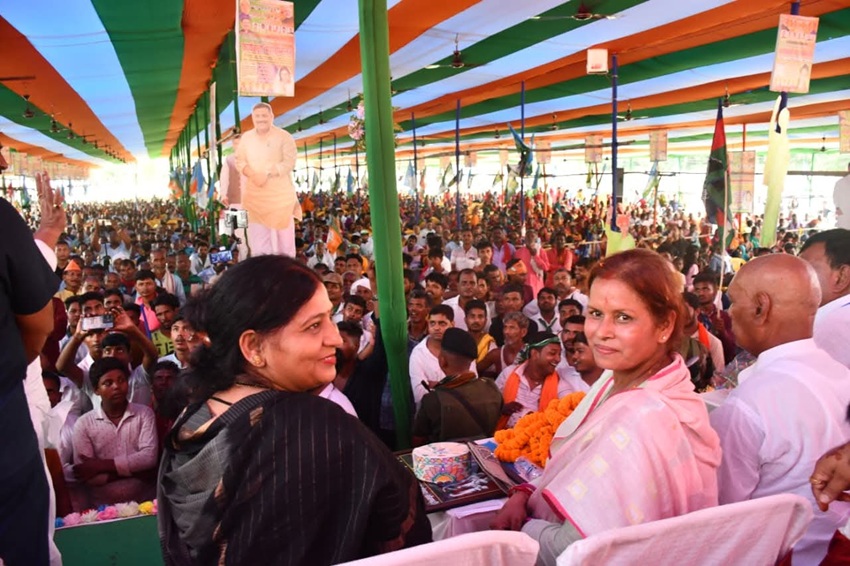
Manjeet Kumar, founder of Electioneering Consulting, another political consulting organisation, agrees with Shrivastav. “This is an important issue. Bihar’s large farming population faces floods and droughts, and leaders are aware of these concerns,” he says.
“On my field visits, people express a need for better disaster response, so voters also recognise this as an important issue. I often suggest climate adaptation measures to leaders, as it wins votes. I have noticed that the Nitish Kumar government is working on water and soil conservation; this is a recognition of public demand. Yet, climate remains a reactive issue; it must become proactive. Media and civil society can help create that shift,” Kumar adds.
Ranju Geeta, a Janata Dal United (JDU) leader and a former minister, has represented Bajpatti assembly constituency, part of the flood-prone Sitamarhi district, which saw drought this year. Geeta from the ruling party tells Mongabay India, “Floods and droughts are political issues. People demand relief, on an individual case-by-case basis, but not as a persistent social problem, and we do the needful. The state government dug borewells for drought relief this year. River-linking and the ‘Har Ghar Nal Jal’ scheme also support climate adaptation. Rainfall in Nepal contributes to flooding here.”
She also said that she has urged the government to improve and build new barrages. “Dams along the India-Nepal border are an international issue. Climate change is political, even if not electoral.”
Geeta adds, “Education is increasing in Bihar. More students stay here instead of migrating. Rising literacy will only increase the focus on climate change and motivate us, as representatives, to act on it.”
Voters’ perspective
On the ground, climate vulnerability rarely emerges as a campaign issue. At a tea stall on Patna’s Boring Road, students preparing for government exams say employment matters most.
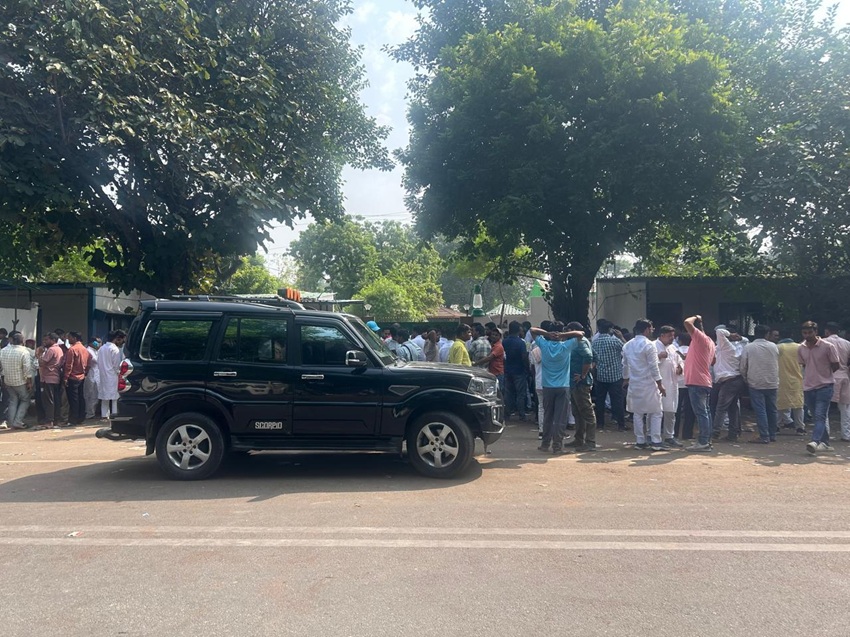
They are aware of Bihar’s climate challenges as they are aspirants of the Union Public Service Commission (UPSC) and have studied these challenges as part of their syllabus, but financial strain keeps jobs as their top priority.
Tea stall owner Pappu Kumar agrees with the students and says, “My metal stall becomes unbearable in summer and freezing in winter, but I keep it open so my children can study. Education and jobs matter the most.”
Sriansh Prakash, an advocate at the Patna High Court, says, “Environmental rights are third-generation rights. People here still fight for basic rights.”
He continues, “Disaster response becomes political as it directly affects victims’ rights. Seeking relief and government action is a political process.”
Yet some see change. Diksha Singh, a Bengaluru-based writer visiting her home in Patna for Diwali, says, “The poorest face the harshest impacts of climate change. Awareness is growing. Look at Patna — more concrete, fewer trees, rising heat, dropping water tables. These are now part of everyday conversations. It shows that climate is becoming a political issue.”