Jamia Protests: Union Elections, Hunger Strikes & Campus Tensions
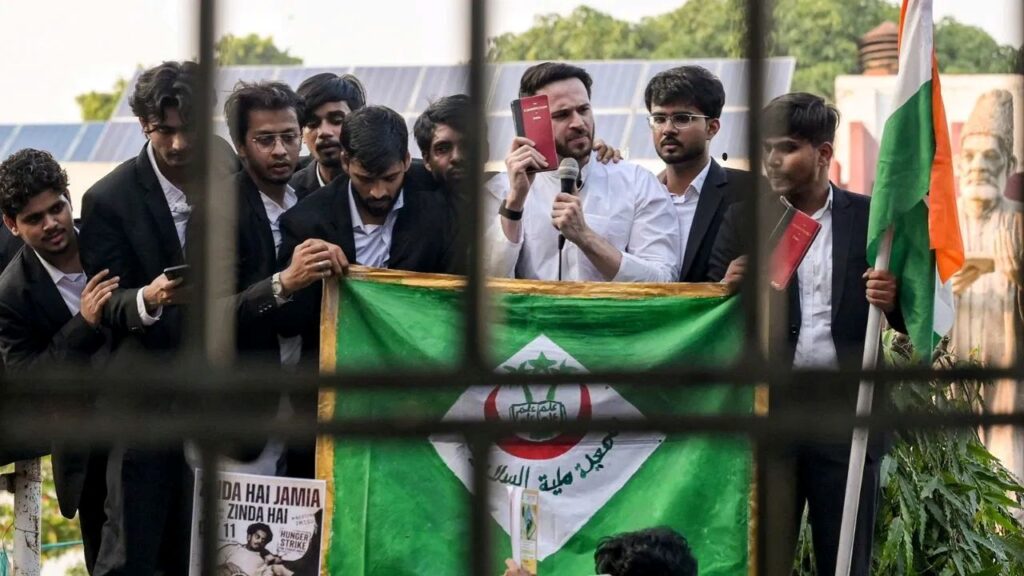
As of October 26, 2026, the future of the protests at Jamia Millia Islamia remains uncertain despite the election announcement. The central issue is no longer simply whether the university will hold elections, but when the process will begin and whether students will accept the conditions attached to the administration’s decision (Image: news9live.com)
The student protests at Jamia Millia Islamia (JMI) in New Delhi have emerged as a major campus dispute in October 2026, with students demanding the restoration of an elected students’ union after nearly two decades. What began as a hunger strike on October 12 has developed into a wider agitation involving demonstrations, confrontations with security personnel, police deployment and disruption of academic activities. Although the university announced on October 26 that elections would be held following approval of the union’s constitution, disagreement over the conditions and timeline has prevented a clear resolution.
Reasons behind the protests and escalating tensions
The central demand of the agitation is the restoration of the Jamia Millia Islamia Students’ Union (JMISU), which has remained dissolved since 2006. Students argue that an elected union is necessary to represent their concerns, communicate grievances to university authorities and ensure greater participation in decisions affecting campus life. The absence of elections has become a longstanding point of contention, particularly as students compare their situation with universities where elected student bodies operate.
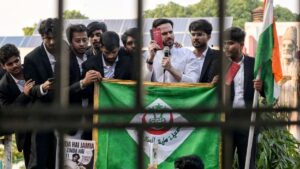
The latest agitation began on October 12, when students launched a hunger strike demanding the restoration of student union elections. The movement subsequently expanded, attracting support from other students, former students and sympathisers. Protesters demanded a formal notification announcing the elections, the withdrawal of disciplinary action against demonstrators, and accountability for the conduct of university security personnel. Some also called for the removal of senior officials responsible for campus discipline and security.
As the hunger strike continued, tensions between protesters and the university administration intensified. Reports described confrontations between students and security staff, restrictions on campus access and increased deployment of police personnel. On October 25, students and supporters gathered despite barricades and heightened security. On October 26, fresh demonstrations took place after the administration announced its decision on elections, and some protesters were detained by Delhi Police. Students argued that the announcement did not provide a sufficiently definite timeline for the electoral process.
The university administration, meanwhile, sought to persuade protesters to end their agitation and allow academic activities to resume. University officials held discussions with student representatives, but the negotiations initially failed to resolve the disagreement. The prolonged confrontation has raised broader concerns about communication between students and administrators, the handling of peaceful demonstrations and the importance of maintaining a safe campus environment.
The disruption has also affected teaching and student facilities. On October 24, Jamia shifted all classes online until further notice, citing safety and security concerns. The Dr Zakir Husain Library and the Old Library were also closed. These measures have affected students who rely on campus classrooms, libraries and other academic resources, particularly those preparing for examinations or conducting research. The university’s decision to move teaching online demonstrates how the dispute has extended beyond the immediate group of protesters to the wider student community.
University’s response, election announcement and the road ahead
A significant development came on October 26, when Jamia Millia Islamia issued a written order agreeing to conduct students’ union elections within 15 days of approval of the union’s constitution. The administration also announced the withdrawal of suspension and show-cause notices issued to students during the protests and promised to establish a committee to investigate the conduct of security personnel during the agitation. These measures addressed several demands raised by the hunger strikers.
However, the order contained conditions that became another source of disagreement. The administration stated that protesting students should issue a public apology for any defamatory statements, actions or social media posts directed against university officials and remove the relevant posts. The order also instructed students to end their protest immediately. While the administration presented the announcement as a resolution, protesters questioned the absence of a deadline for approving the union constitution, which determines when the 15-day election period can begin.
Reports on October 26 gave differing accounts of whether the agitation had ended. The university said its order required the protest to be called off, but protesting students rejected the announcement as insufficient and insisted that their demands had not been fully addressed. They continued to seek a definite election schedule and the appointment of a chief election officer. Further confrontations and detentions were reported as demonstrations continued. The distinction between the administration’s announcement and the protesters’ position is important: an agreement on the principle of holding elections does not necessarily mean that the dispute has been resolved.
The dispute has broader implications for higher education in India. Student unions can provide a formal mechanism for discussing campus facilities, academic policies, student welfare and administrative accountability. At the same time, universities have a responsibility to maintain safety, protect academic activities and ensure that disagreements are addressed through dialogue rather than escalating confrontation. Balancing these responsibilities requires clear communication and respect for students’ ability to express grievances peacefully.
For students, the restoration of an elected union represents more than an opportunity to choose representatives; it is also a demand for a recognised voice in campus governance. For the administration, implementing its announcement while restoring normal academic functioning will be a major test of its ability to resolve the crisis.
As of October 26, 2026, the future of the Jamia protests remains uncertain despite the election announcement. The central issue is no longer simply whether the university will hold elections, but when the process will begin and whether students will accept the conditions attached to the administration’s decision. A clear timeline, constructive dialogue and a transparent investigation into the reported confrontations could help end the impasse and return the university to normal academic life.