Kuttanad’s Ecological Crisis: When Human Intrusion Disrupts Nature
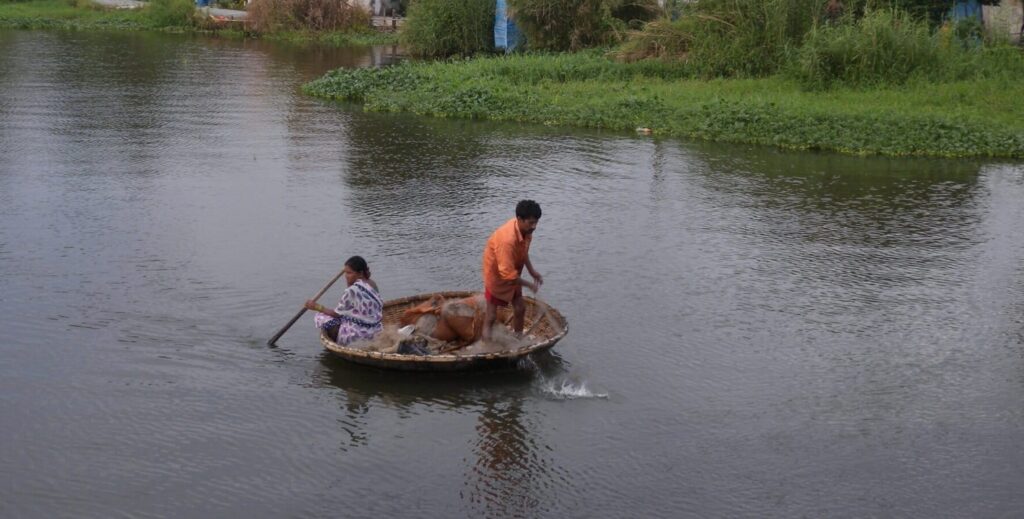
Fishers at work in Vembanad lake, Kerala, while invasive water hyacinth plants float on the surface of water in the backdrop (Image courtesy of India Water Portal via Flickr)
- Kuttanad’s ecological crisis is the result of decades of human interventions that have disrupted the region’s natural hydrology, fisheries, flood regulation and wetland ecology.
- Restoring Kuttanad requires a shift from controlling nature to living in harmony with it, including an evidence-based reassessment of major engineering structures and stronger protection of the Vembanad wetland ecosystem.
- It also calls for community-led restoration, from tackling water hyacinth and pollution to implementing long-pending recommendations for sustainable farming and wetland management.
Kuttanad, Kerala’s famous “rice bowl”, is facing a serious ecological crisis. For decades, human interventions have changed the region’s natural water system, affecting its farms, fisheries, flood protection and wetlands.
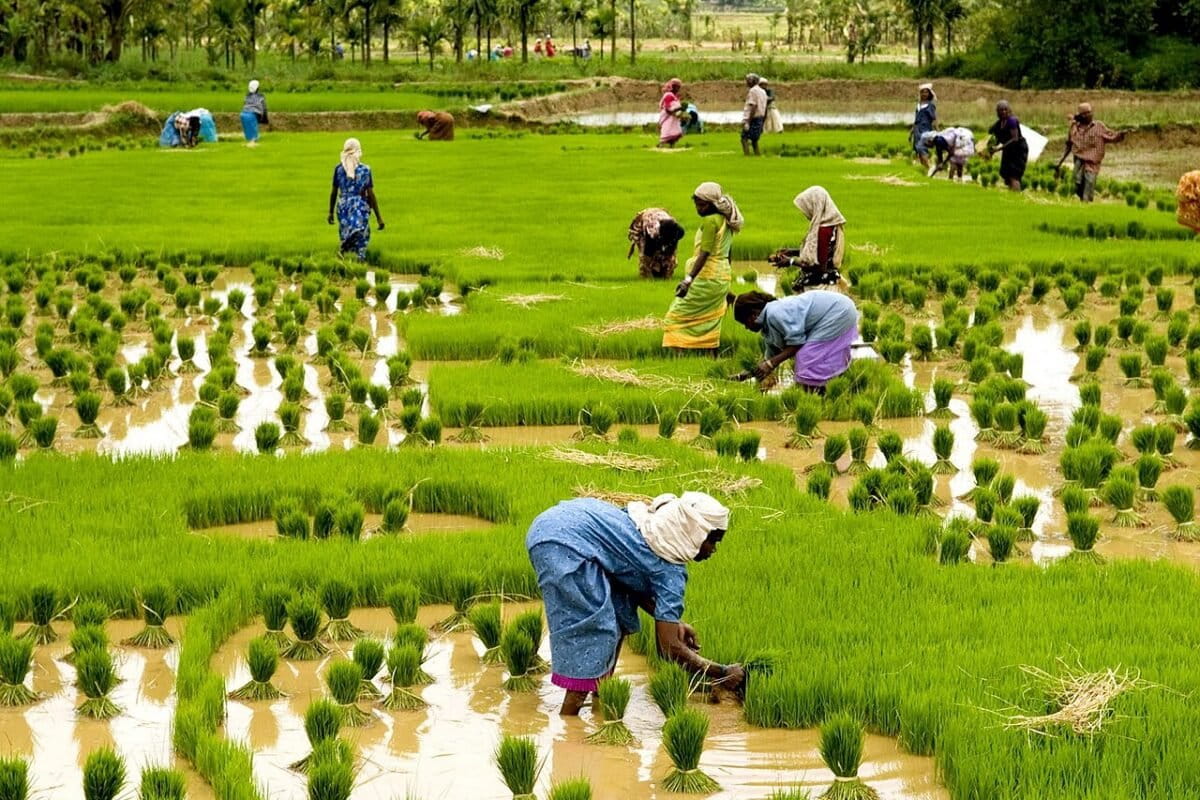
Kuttanad is known around the world for its unique below-sea-level rice farming. Its paddy fields, canals and the Vembanad lake form a rich wetland ecosystem that supports thousands of farming and fishing families. The Food and Agriculture Organization (FAO) has recognised Kuttanad as a Globally Important Agricultural Heritage System (GIAHS), highlighting its importance as a traditional agricultural landscape.
The region was naturally shaped by water. Rivers such as the Pampa, Achankovil and Manimala carried soil and sediment from the Western Ghats towards the coast, gradually creating the low-lying landscape. Much of Kuttanad’s 524 sq km of paddy fields lies below sea level, while its waterways remain closely connected to the Vembanad estuary.
This system once followed a natural rhythm. During the monsoon, rivers brought large amounts of freshwater into Kuttanad, causing seasonal floods that also renewed the soil with nutrients. During the dry months, seawater moved inland through the Kochi bar mouth, making the waters brackish. This changing mix of fresh and salt water supported a rich variety of fish, prawns and other aquatic life.
That balance began to change after Independence. Under the “Grow More Food” campaign, large areas of Vembanad lake were reclaimed for rice cultivation. Bunds were built and water was pumped out to create polders, or reclaimed rice fields. These efforts increased agricultural production but reduced the lake’s original area by an estimated 65%.
At the same time, deforestation and plantation farming in the Western Ghats increased soil erosion. More sediment entered the rivers and eventually settled in the Vembanad estuary, making it shallower and reducing its ability to carry floodwater.
Today, Kuttanad faces three major problems: pollution, flooding and saltwater intrusion. Agricultural chemicals pollute waterways, while plastic waste has also become a serious concern. Studies have found microplastics in the lake sediments, including plastics from fishing nets, packaging and laundry fibres. These particles can enter organisms such as black clams and potentially move through the food chain.
When flood control damaged the ecosystem
Two major engineering projects have played a central role in changing Kuttanad’s ecology.
The Thottapally Spillway was built to carry excess floodwater directly to the Arabian Sea. But its ability to handle extreme floods has been questioned, particularly after the devastating floods of 2018. Mining and dredging around the spillway may also be changing water flow and increasing coastal erosion.
The Thanneermukkom Saltwater Regulator, built in 1974, was designed to prevent seawater from entering Kuttanad and allow farmers to grow a second rice crop. While it helped protect farmland from salinity, it also divided the Vembanad ecosystem and disrupted the natural movement of fish and other aquatic species.
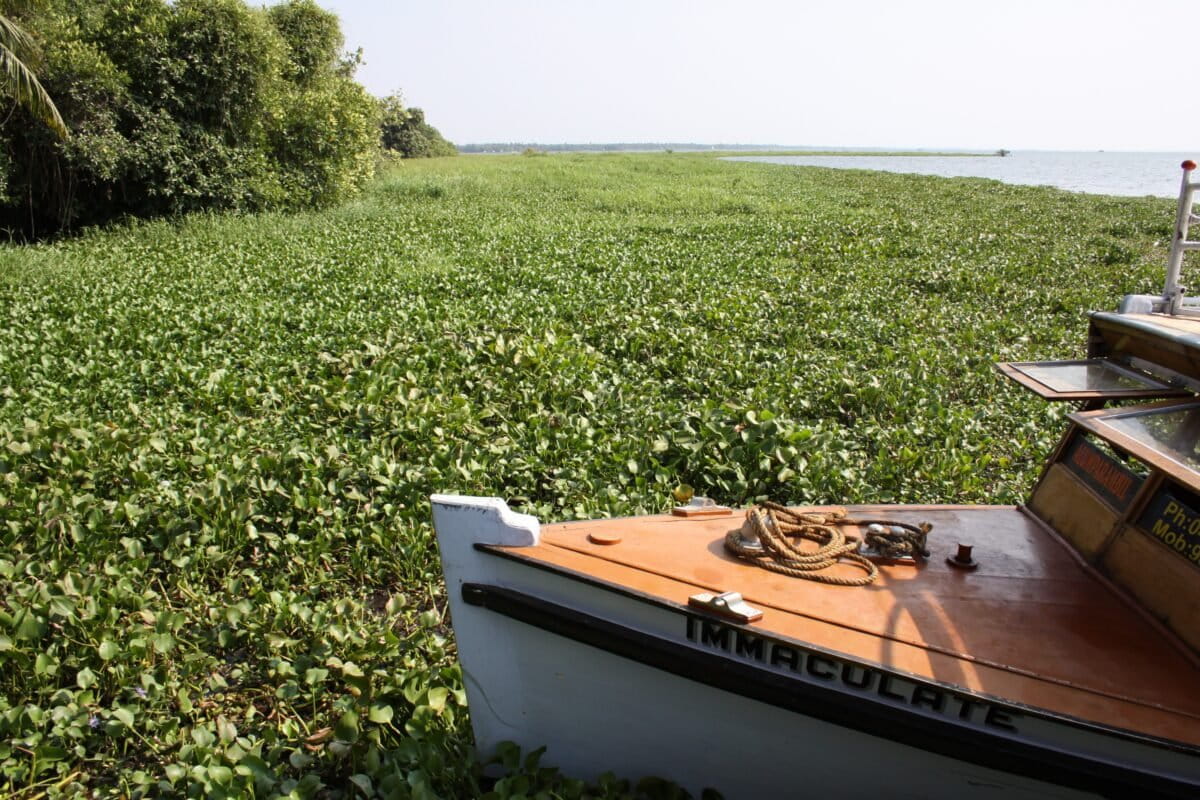
The change in salinity also encouraged the rapid spread of water hyacinth. The invasive plant now covers many waterways, blocking sunlight, reducing oxygen and obstructing navigation. As it decays, it further reduces water quality and can create areas where aquatic life struggles to survive.
Kuttanad’s growing tourism industry is adding another layer of pressure. Houseboats, resorts and other tourism activities can increase sewage, plastic waste, noise and disturbance along the fragile wetland.
The solution, therefore, cannot simply be another engineering project. “Restoring Kuttanad requires a shift from controlling nature to living in harmony with it.”
One immediate step should be a permanent, community-led programme to remove water hyacinth. Local fishing communities could be employed to collect the weed, which could then be converted into compost, manure, biogas and other useful products. This would turn an environmental problem into an opportunity for local jobs and income.
There is also an important plan that has remained largely unimplemented. In 2007, the M.S. Swaminathan Research Foundation submitted recommendations for protecting Kuttanad, including declaring it a Special Agricultural Zone, stopping further wetland reclamation, restoring water-spread areas and improving the Thottapally and Thanneermukkom structures. It also recommended short-duration rice varieties, rice-fish farming and roads built on pillars to allow floodwater to move freely.
These recommendations became the basis of the ₹1,840-crore Kuttanad Package approved in 2008. However, poor coordination among agencies has meant that much of the package remains unfinished.
Kuttanad now needs a comprehensive ecological restoration plan. The future of the region depends on protecting its wetlands, restoring natural water flows, reducing pollution and involving local communities in decision-making.
As the crisis deepens, the central lesson is clear: “True public order” for Kuttanad cannot come from trying to control nature. Its survival depends on learning to live with the water, rivers and wetlands that created it in the first place.