Farming Systems In India Reward Output, Not Sustainability
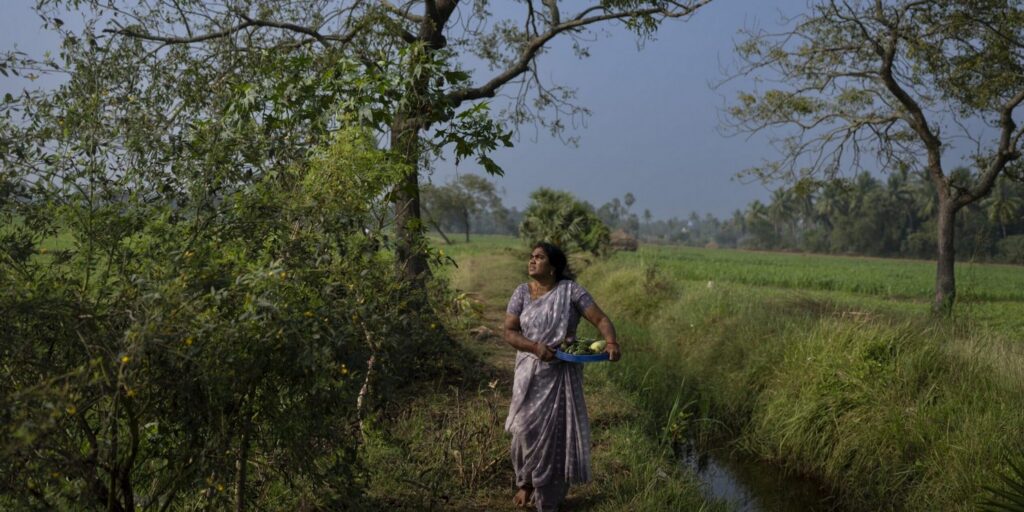
A natural farming practitioner works at her farm in Guntur district, Andhra Pradesh (Representative image; AP Photo/Altaf Qadri)
India’s farm support system was built during the Green Revolution of the 1960s. At that time, the country faced food shortages. The goal was simple: grow more grain. Policies like the Minimum Support Price (MSP) and subsidised inputs helped farmers produce more rice and wheat. This approach worked. India became food secure.
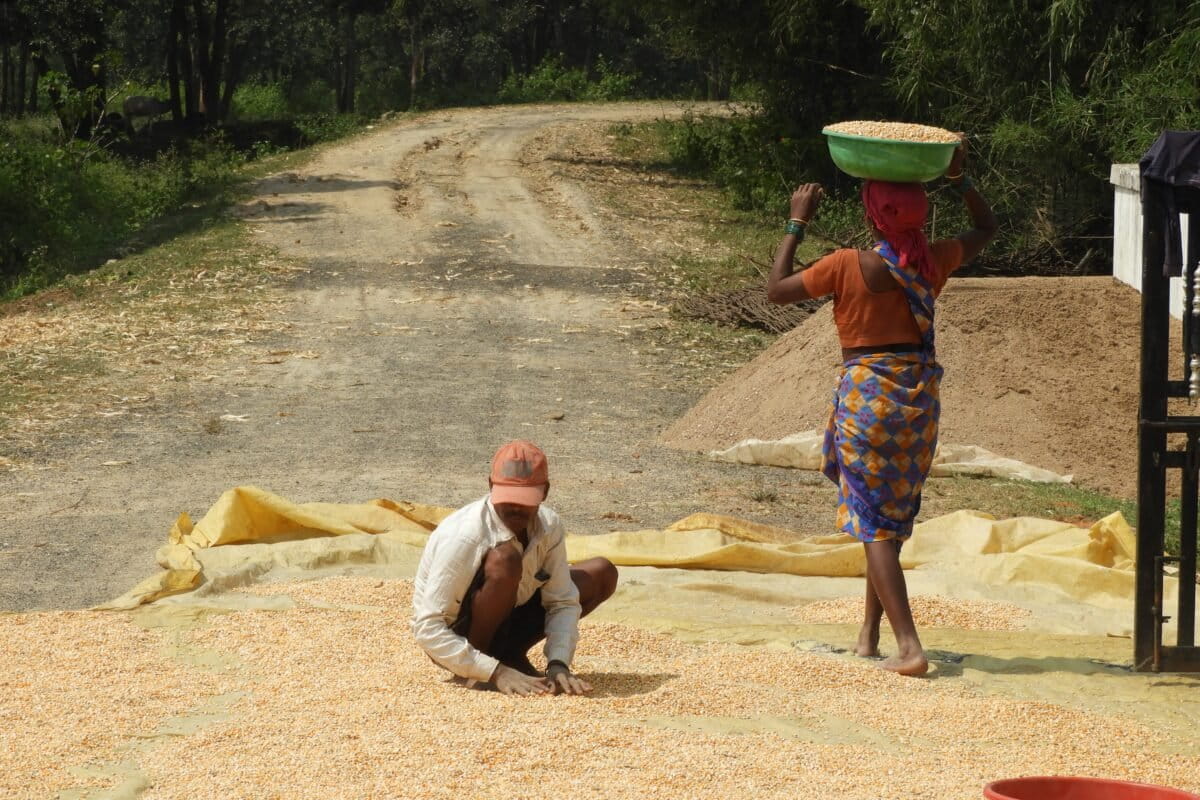
But the system has not changed much since then. It still rewards how much farmers produce, not how they produce it. This has created problems over time.
Today, many farmers in North India grow only rice and wheat. This is because these crops are backed by MSP and assured government procurement. But this cycle has serious ecological costs. It reduces soil quality, drains groundwater, and harms biodiversity.
A farm that protects soil, saves water, and supports pollinators is treated the same as one that damages all three. There is no reward for good ecological practices.
This is not because policymakers are unaware. Terms like “ecosystem services” are already used in policy. Programmes like the National Mission for Sustainable Agriculture (NMSA) talk about soil health, water efficiency, and biodiversity. Government think tank NITI Aayog also mentions sustainability in its plans to increase farmer incomes. The PM-PRANAM scheme, launched in 2023, even recognises the value of reducing chemical inputs.
The real issue is design. The systems that decide farmer income have not been updated. They do not reflect these ecological goals.
The MSP system started in 1966–67. It now covers 23 crops. MSP is calculated based on costs like seeds, fertiliser, labour, and land. These are measured using formulas such as A2, A2+FL, and C2. However, none of these include environmental impact. Whether farming improves soil or damages it does not matter in MSP calculations.
This means the system ignores the natural processes that make farming possible. Soil health, water cycles, pollination, and pest control are essential for crops. But they are not counted in pricing or support.
Hidden Environmental Costs Are Rising
The effects of this system are now visible. Soil organic carbon is a key factor in farming. It helps soil retain water and supports plant growth. Fields with more organic matter perform better during droughts and need fewer inputs.
In the rice-wheat belt of Punjab and Haryana, soil quality has declined. Growing paddy in unsuitable conditions has reduced soil carbon levels.

Groundwater depletion is another major issue. In Punjab, water levels have dropped sharply. Between 2000 and 2019, the average decline was 8.91 metres. In some areas like Barnala, it fell by over 20 metres. By 2017, most of the state had water tables deeper than 10 metres.
This has happened because farmers have no reason to save water. MSP encourages paddy cultivation. Free or cheap electricity allows unlimited groundwater pumping. Water use is not linked to cost.
A 2024 study suggests that MSP-backed rice farming may be responsible for about half of Punjab’s groundwater decline. This shows how policy choices affect natural resources.
Crop residue burning is another example. A popular rice variety called PUSA 44 gives high yields. But it takes a long time to grow. This leaves very little time between harvesting rice and planting wheat.
Farmers often burn leftover straw to clear fields quickly. In Punjab alone, about 20 million tonnes of paddy straw are burned each year. This releases harmful pollutants into the air and reduces soil quality over time.
Biodiversity loss is also a concern. Natural pest control depends on birds, insects, and other organisms. These species need diverse farm environments to survive.
Monocropping reduces this diversity. It creates conditions where pests can spread easily. Farmers then rely more on chemical pesticides, which further harm beneficial organisms.
Pollination is affected too. Many crops depend on insects for pollination. But when farms lack plant diversity, pollinators decline. This affects crop yields, especially for fruits, vegetables, and pulses.
These environmental services are essential. But they are not measured or rewarded.
What Needs to Change in Policy
India already recognises the importance of ecological farming in theory. The challenge is turning this into action.
The first step is measurement. It is not easy to track things like soil carbon, pollinator numbers, or pest control. These vary across regions and seasons. India currently lacks the systems needed to monitor these at scale.
Remote sensing can help with some data. But it cannot replace ground-level observations. There is a gap between large-scale data and farm-level reality.
The second challenge is verification. If farmers are to be rewarded for ecological practices, there must be proof. Different government departments do not share data effectively. Their goals and methods also differ. This makes coordination difficult.
The third issue is oversimplification. If policies focus on just one factor, like soil carbon, they may ignore others. A farm optimised for one metric may fail in other areas like biodiversity or water use.
There is also a risk of tokenism. Policies may use environmental language without real action. India is currently at this stage in many areas.
However, change is possible. Some practical steps can be taken within existing systems.
One option is to offer higher MSP for organic or low-input farming. Farmers who follow such practices currently get no extra benefit. A 10–20% premium could make a difference. Certification systems like Participatory Guarantee Systems (PGS) already exist and could be used for this purpose.
Another idea is to include ecological factors in MSP calculations. The Commission for Agricultural Costs and Prices (CACP) reviews MSP every year. It could add environmental performance as a factor. This could use data from soil health cards, groundwater records, and crop residue practices.
India’s Carbon Credit Trading Scheme, introduced in 2023, also offers opportunities. Farmers who reduce emissions or adopt better practices could earn credits. These could be linked to MSP bonuses.
For example, farmers who avoid stubble burning provide a clear environmental benefit. This could be measured and rewarded directly.
Pilot projects could help test these ideas. Some districts under schemes like PKVY could be selected for Payment for Ecosystem Services (PES) programmes. These would measure and reward ecological outcomes.
Coordination between ministries is essential. Data sharing between agriculture, water, and environment departments must improve.
India has successfully tested policies at the district level before scaling them up. The Soil Health Card scheme and price deficiency payments are examples. Similar pilots could work for ecological incentives.
The Green Revolution solved the problem of food shortage. But it ignored environmental costs. Today, those costs are clear. Water is running out. Soil is degrading. Biodiversity is shrinking.
Fixing this requires more than new ideas. It needs better systems. Monitoring, data sharing, and incentive structures must change. Farming should reward not just production, but also the protection of nature.
Only then can agriculture remain productive in the long run.