After The Youthquake: Nepal’s Fragile Path To Democratic Renewal
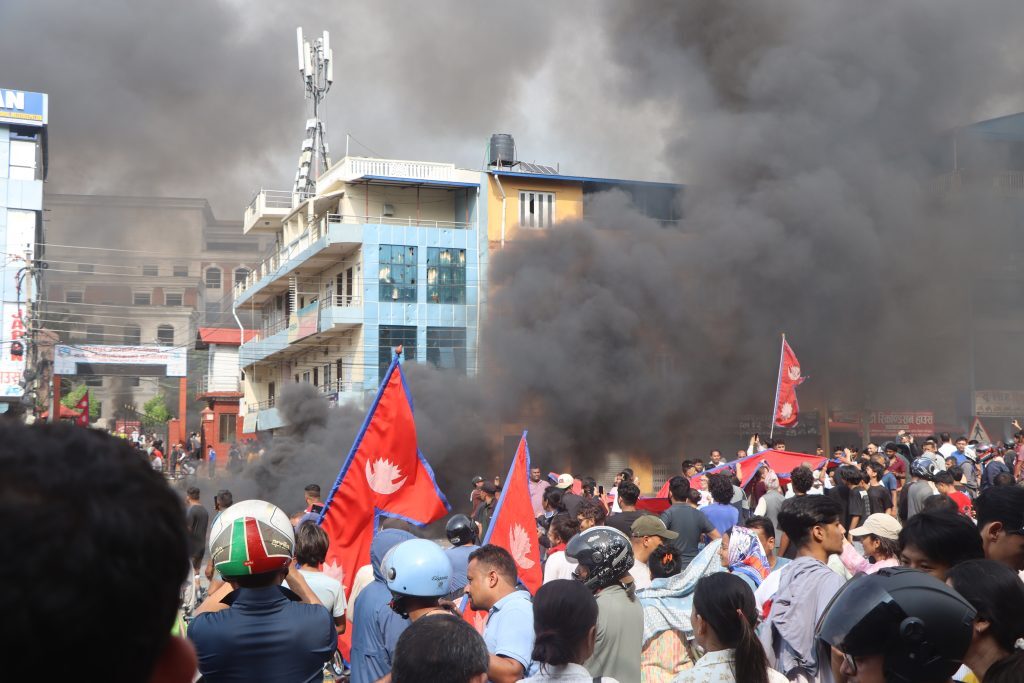
Nepalese youth is divided on the issue of political participation. While some are advocating reforms within the existing political parties, others are demanding constitutional amendments and a directly elected Prime Minister (Photo by Himal Suvedi/Wikimedia Commons/CC by 4.0)
The unexpected violent movement of Gen-Z that lasted barely 48 hours brought tremendous upheaval in Nepal.
Nepal was plunged into a period of profound grief, anger, and collective uncertainty. It has barely begun to pick up the pieces.
The Gen-Z movement against corruption, mismanagement, and social media regulation on September 8 and 9, 2025, left 75 people dead and over 2,000 injured in its wake.
The Federation of Nepalese Chambers of Commerce and Industry has estimated that arson and looting resulted in losses of about US $571 million to private property. The private sector contributes about 81 percent to the national economy and generates 86 percent jobs in the private sectors.
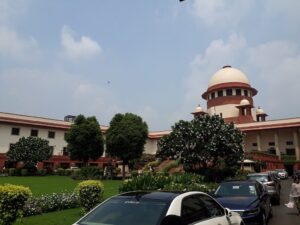
The loss of public property and historic buildings is still being estimated. The government has not revealed the cost of the destruction of public buildings, including the Office of the Prime Minister at Singh Durbar, the historic parliament building, the Supreme Court and the office of the President at Rashtrapati Bhawan.
The agitation led to the formation of an interim government under the leadership of former Chief Justice Sushila Karki on September 12. She has expanded her cabinet twice, appointing a total of eight ministers.
The mandate of the interim government is to conduct free, fair and credible elections in the country within the next six months.
The government has formed a three-member commission headed by former Justice Gauri Bahadur Karki to investigate human rights violations during the protest, and to document the loss and destruction of public and private properties within three months.
The Home Minister issued a press statement declaring that the government will not entertain any complaints of arson or theft, as the commission has already begun its work. This undermines the role of the regular criminal justice process in addressing crimes such as theft and arson.
Numerous commissions were formed to investigate gross human rights violations, such as those during Jana Andolan-I in 1990 and Jana Andolan-II in 2006/2007, but their recommendations were never implemented.
The legacy of violence and the culture of impunity have continued.
Now, the major tasks before the interim government are to conduct general elections and to promulgate an ordinance allowing new voter registration so that the youth who participated in the protest can vote. Voter enrollment is open for 90 days.
The Prime Minister has held consultations with the Election Commission and directed it to prepare for the election in March 2026. Political parties have also held meetings with the President, who has advised them to participate in the election.
The political parties are under pressure from both the public and their members to reform and develop a stronger democratic culture. They are holding internal consultations and discussing possible reforms.
The people would like to see the leadership of the Nepali Congress, Nepal Communist Party of United Marxist and Leninist (CPN-UML) and Maoist Center step down. This is also the time for the political parties to accommodate younger leaders and develop an intra-party democratic culture.
Uncertainty and confusion
Despite the Prime Minister’s firm commitment to holding an election, expressed in her speech to the nation, youth groups remain divided on the issue.
The Gen-Z movement lacks strong leadership and several unorganised groups have emerged on social media platforms such as Discord. Following the protests, some groups initially approached the Chief of Army Staff for dialogue and later sought engagement with the President as well.
Opinions among youth remain divided on participating in politics. Some advocate reforms within the existing political parties to address corruption, mismanagement, and support for victims of human rights violations. Others demand constitutional amendments and a directly elected Prime Minister.
However, no formal agreement has been reached between the youth and the government on these issues.
Recently, a youth coalition was formed with the aim of negotiating with different stakeholders. The Mayor of Kathmandu, Balendra Shah, who indirectly engaged with the youth uprising and called for calm during the protests, has since chosen to remain silent.
If divisions among the youth persist, the likelihood of further violence and uncertainty surrounding the polls may increase. However, the youth are also exploring the registration of a political party of their own rather than some of them contesting as independent candidates.
The government has imposed travel restrictions on five individuals, including former Prime Minister K. P. Oli and former Home Minister Ramesh Lekhak. The CPN-UML objected to these restrictions, indicating that if investigations are perceived as politically targeted, parties may retaliate, further fueling uncertainty.
Security lapses
Following the recent violent incidents, fear and a sense of insecurity in society persists. The mob attacked 486 police units and looted 1,247 arms. While local communities have helped in restoring some of the police posts, the police may still face challenges in getting back to normal work and regaining the trust of the locals because of their failure to prevent incidents of theft and looting.
The department of prison management has claimed that 15,000 prisoners escaped from 28 prisons all over Nepal and only half of them have returned. The escaped prisoners also pose security challenges. Some of the escaped prisoners crossed the border into India and were arrested in New Delhi.
It has been clearly observed that there is no coordination among security agencies to maintain peace and security. There are three formal wings of security in Nepal – the Police, the Nepal Armed Force and the Nepal Army. The Nepal Police took a proactive role during the protest, and the Nepal Armed Force and Nepal Army took a long time to show up in the field during the youth agitation. It is essential for security agencies to coordinate and regain public trust.
In these difficult circumstances, the interim government also has to win the confidence of the youth, political parties and civil society to accomplish the task of holding elections.
To accomplish this, the interim government needs to follow the due process of law to curb impunity and corruption. Nepal also needs international solidarity, especially the support of its neighbours, to stabilise the young republic.
(Published under Creative Commons from 360info.org)