Climate Change Threatens Labour Productivity In India: Study
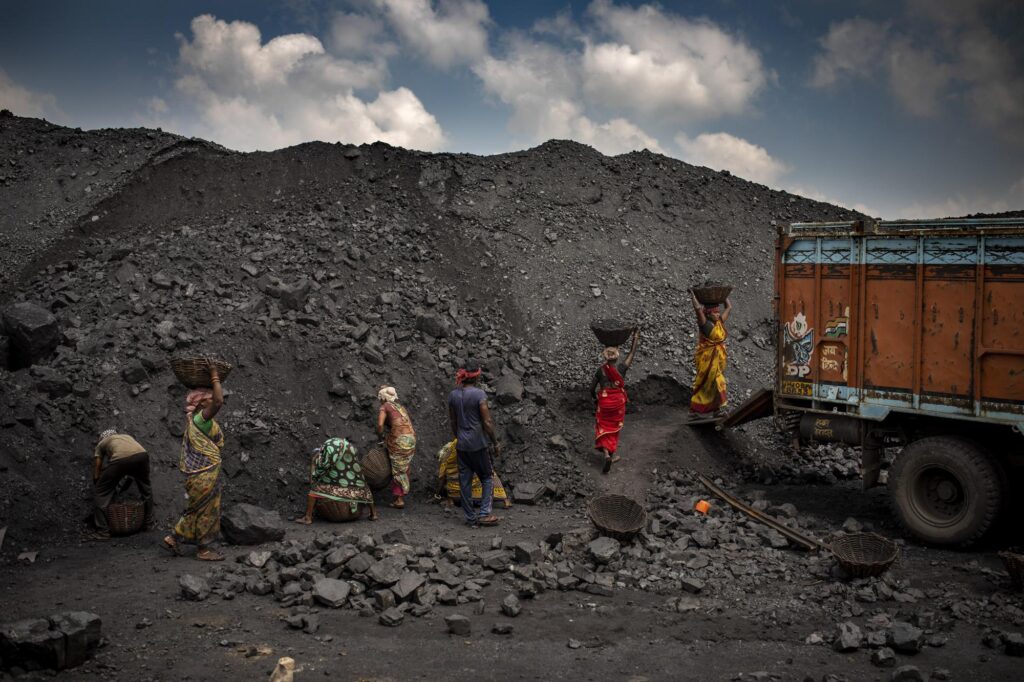
Labourers load coal into a truck (Representational Image: AP)
Climate change could significantly impact labour productivity in countries like India and Pakistan by the end of the century. A recent study published in the journal Global Change Biology predicts that these nations may experience a drastic reduction in labour productivity, with levels potentially falling as low as 40 percent. This alarming decline in productivity poses a threat to global food production and exacerbates existing food security challenges.
The study, led by Professor Gerald Nelson from the University of Illinois, highlights the far-reaching consequences of climate change on agricultural workers. It emphasizes that the adverse effects of climate change extend beyond crops and livestock, directly impacting the ability of agricultural workers to perform their tasks due to increased heat exposure. This reduced capacity for physical work in the field further compounds the challenges faced by the agricultural sector.
To assess the potential impact of climate change on labour productivity, the researchers employed computational models developed by Loughborough University in the UK. These models utilized data from over 700 heat stress trials, which involved observing individuals working in various temperatures, humidities, and weather conditions. The maximum work capacity achievable in a cool climate served as the benchmark for the study, representing 100 percent physical work capacity.
The study’s findings indicate that agricultural workers are already experiencing the effects of heat stress. In “recent past” climate conditions (1991-2010), approximately half of the world’s cropland farmers were estimated to be working below 86 percent of their capacity. This suggests that the impact of climate change on labour productivity is already being felt.
The researchers also explored potential adaptations and mitigation strategies to alleviate the impact of climate change on agricultural workers. One option identified was the implementation of nighttime or shade work to reduce direct solar radiation. This approach demonstrated a significant improvement in worker productivity, with potential gains of 5-10 percent.
Another strategy involves increasing the use of mechanical machinery and equipment in agriculture, particularly in Sub-Saharan Africa. This region heavily relies on labor-intensive agricultural practices, making it particularly vulnerable to the adverse effects of climate change. The adoption of mechanization could help reduce the physical strain on workers and enhance overall productivity.
Economic Implications
The study’s findings align with other research that highlights the potential economic consequences of climate change in India. According to an analysis, India’s GDP could decline by as much as 90 percent by 2100 due to climate change. This projection is based on the historical relationship between GDP and temperature, indicating that rising temperatures could have a severe impact on economic growth.
Furthermore, rising CO2 emissions and climate change pose a significant threat to labour productivity in developing countries. Sectors such as agriculture, mining and quarrying, manufacturing, and construction, which account for a substantial portion of output in low-income countries, are particularly vulnerable to heat exposure. This vulnerability further underscores the urgent need for effective climate change mitigation and adaptation measures.
(Source: PTI)