Exodus Of Surat’s Textile Workers Exposes Growing Labour Unrest

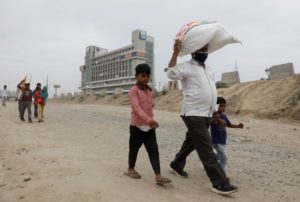
Thousands of migrant workers have reportedly started returning to their home states, with the unrest exposing the difficult working conditions faced by labourers who sustain Surat’s vast textile industry (Representative Image)
A crackdown by Gujarat Police on textile workers demanding higher wages, weekly holidays and better working conditions has intensified labour unrest in Surat, one of India’s largest textile manufacturing centres. The protests have reportedly triggered a large-scale departure of migrant workers ahead of Diwali and Chhath Puja, raising concerns about labour shortages during the crucial festive season.
Last week, police detained around 70 workers from embroidery units who had gathered outside the Surat collector’s office to press their demands. Authorities said the workers had not obtained permission to hold the protest. However, video footage cited in a report by The New Indian Express showed police using lathis while detaining and allegedly assaulting workers, further escalating tensions.
The crackdown comes amid mounting grievances among textile workers over long working hours, wage deductions, denial of weekly holidays and alleged intimidation by employers. Thousands of migrant workers have reportedly started returning to their home states, with the unrest exposing the difficult working conditions faced by labourers who sustain Surat’s vast textile industry.
According to BBC Hindi, nearly 10 lakh workers have left Surat, although the scale of the reported exodus has not been independently verified. The departure has raised concerns among industry employers about the availability of workers during the festive period, when demand for garments and other textile products typically increases.
Surat, widely known as the Manchester of India, relies heavily on migrant labour from Bihar, Uttar Pradesh, Odisha and other states. These workers form the backbone of its textile mills, embroidery units, processing facilities and garment businesses.
The ongoing protests began on Independence Day, August 15, and gathered momentum during Navratri through the ‘Gaon Chalo Abhiyan’, or Return to Your Village campaign. The movement reflects growing frustration among workers who say their demands for basic workplace rights have gone unanswered.
Wage disputes, denial of leave fuel workers’ exodus
Workers have alleged that many textile units require them to work shifts lasting up to 12 hours, deny them statutory weekly holidays and impose wage deductions when they seek leave. Some also claim they have faced threats of dismissal for raising concerns about their working conditions.
According to Dainik Bhaskar, textile mill owners have dismissed between 250 and 300 workers for demanding one weekly day off, further fuelling anger within the workforce. Several labourers have reportedly decided to return home before Diwali and Chhath Puja after employers allegedly refused leave or threatened to deduct wages.
Ajay, a young textile worker interviewed by Bhaskar, said his employer had refused to grant him leave and warned that his wages would be deducted if he took time off.
For migrant workers, the dispute extends beyond the question of holidays. Many say extended shifts, withheld wages and pressure to work throughout the month leave them with little time to rest or visit their families. The festive season, when workers traditionally travel home to celebrate with relatives, has brought these grievances into sharper focus.
Labour unions have supported workers returning to their home states and accused employers of harassment and retaliatory dismissals. Ajay D. Dubey, a union representative, said many labourers were leaving Surat as part of the ongoing ‘Gaon Chalo’ movement.
Dubey alleged that employers were using intimidation to discourage workers from participating in protests. He said the union had collected videos documenting incidents involving workers and employers.
The developments have placed Surat’s textile industry in a difficult position. Its production network depends on a large, mobile workforce, and a substantial reduction in available labour could disrupt operations at a time when businesses typically prepare for heightened festive demand.
On October 9, Union Textiles Minister Giriraj Singh visited Surat and appealed to workers and employers to resolve their differences through dialogue. Urging both sides to settle the dispute “like a family”, he described employers and workers as “two sides of the same coin”.
However, his appeal has yet to bring the unrest to an end, with workers’ demands for fair wages, weekly holidays and better treatment remaining central to the dispute.
The crisis has also become a point of political contention. Opposition leaders have criticised the Gujarat government’s handling of the protests, arguing that the treatment of workers raises questions about labour welfare amid the state’s economic growth.
Congress Rajya Sabha MP Syed Naseer Hussain criticised the government, saying, “This is the BJP’s Gujarat model: exploiting workers, crushing dissent, and protecting the wealthy at the expense of those who keep the economy running.”
The allegations and political criticism have intensified scrutiny of the relationship between industrial growth and workers’ rights in Gujarat. While Surat’s textile sector has developed into a major manufacturing and employment hub, the current unrest highlights the dependence of that growth on migrant workers whose demands for basic workplace protections remain contested.
As Diwali and Chhath Puja approach, the reported exodus presents an immediate challenge for textile businesses. It also raises a broader question about the sustainability of an industrial model that relies heavily on migrant labour without adequately addressing concerns over wages, working hours and leave.
The outcome of the dispute could shape not only the availability of workers during the festive season but also the wider debate over labour rights, industrial relations and the distribution of economic gains in one of India’s most important textile centres.