The Economy Doesn’t Have To Only Benefit The Rich. Here’s How
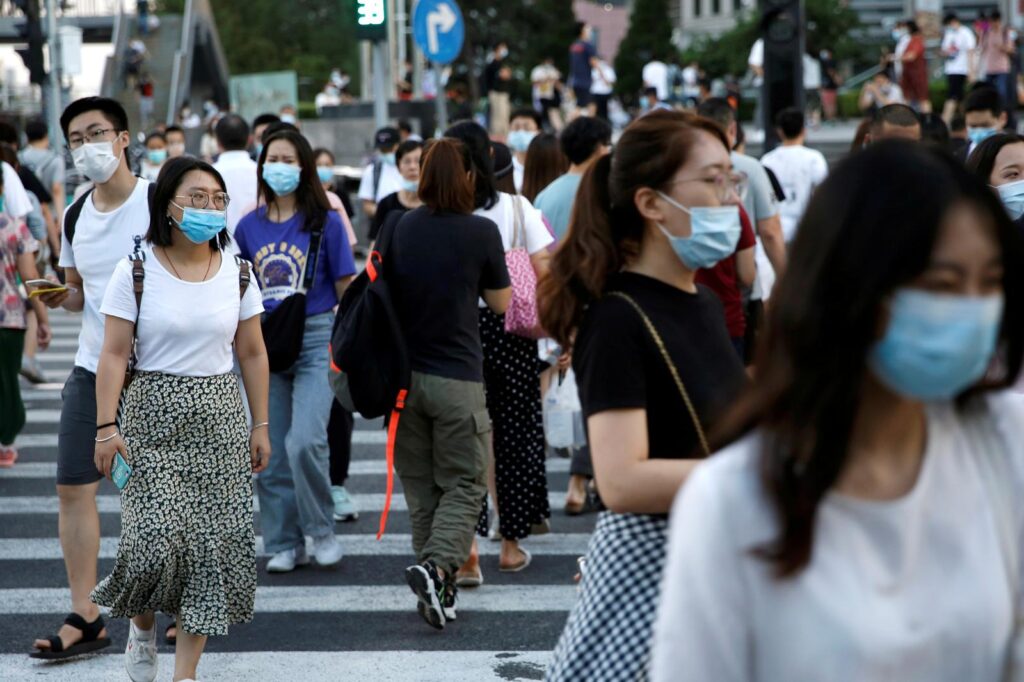
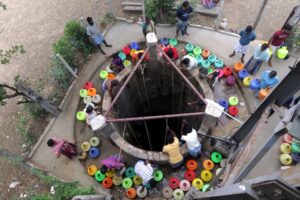
Introducing a wellbeing economy that considers the changes needed to deliver equitable benefits can help shift beyond an economy that benefits the few to an economy that can benefit us all, while cherishing our planet (Representational Image)
We live in a wasteful society — many of us consume heavily in ways that exploit people at the end of the supply chain. Those with more resources hold more power, and it is those same people who have caused much of the destruction of our environment.
Introducing a wellbeing economy that considers the changes needed to deliver equitable benefits can help shift beyond an economy that benefits the few to an economy that can benefit us all, while cherishing our planet.
A 2022 Guardian poll found 58 percent of respondents believed Australia’s economic system is “broken” and “the government needs to make fundamental changes to sort it out”.
But government corrective action that comes from trying to fix an issue, rather than addressing the root of the problem, can be a huge strain on public resources which can be better allocated.
Instead of attending to crises in isolation, creating positive policies and decisions through a wellbeing lens can prevent repetition of the same issue.
This more humane and sustainable economy can be judged by several factors. The policies to get there may or may not be referred to as ‘wellbeing policies’ — what matters is whether a policy or practice helps build an economy that provides everyone with what’s needed to live with dignity and purpose. Also that it restores and protects the natural environment, ensures a just distribution of income, wealth and power, and that it’s shaped and determined by people’s active voices.
The changes needed are like pieces of a jigsaw puzzle — each matter and none on its own is sufficient. As with any jigsaw, you start with the corners.
In a wellbeing economy, the corners are the ‘4Ps‘. Purpose — to realign the goal of the economy (and its components) with the needs of people and the planet. Prevention — tackling things at their root cause rather than putting band-aids on once the damage is done. Predistribution — getting the economy to do more of the heavy lifting in delivering a more balanced distribution of resources. People-powered — putting people and communities at the forefront of decisions that shape how our economy runs.
Involving the community in decision-making can help ensure fairness, but can also sustain the longevity of a project or policy.
It emphasises ‘participatory and equitable design‘: the need to consult more widely before rolling out a policy that will disproportionately affect a section of society, but also includes communities in the development and implementation.
Rash and rushed changes bring risks of backlash. Change can be confusing and concerning for those affected unless they feel in control — communities that feel ambushed by changes have often shown resistance.
For example, the Scottish Government proposed a deposit return scheme where people pay a small fee when buying a drink in a single-use can or bottle, then receive the money back when it’s returned. An important step to help make the economy more circular. But the scheme is under threat as there are arguments it will negatively affect smaller retailers with tighter profit margins and claims of inadequate consultation.
The French ‘yellow vests’ movement which began in 2018 was attended by hundreds of thousands of people. It began as a protest against French President Emmanuel Macron’s introduction of a green tax on diesel, impacting people on lower incomes who need to commute long distances the most.
Positive examples of community consultation in areas that need to move away from reliance on fossil fuels include the Hunter Valley region of New South Wales, Australia, where 130 residents were consulted to contribute to a ‘community blueprint‘ for how to best deploy funds to suit the needs and priorities of residents. In the city of Gladstone, Queensland, local government, industry energy workers, Indigenous groups, environmental groups and education institutions were all invited to be involved in the transition to becoming a renewable energy hub in the next decade.
And change is possible. The Australian Government recently announced the Net Zero Authority will help retrain workers whose livelihoods once depended on fossil fuels to find new jobs during the country’s transition. There are also grassroots groups like the Earthworker Cooperative that bring people, groups and businesses together to help support them in their move from fossil fuels to renewable energy sources.
The demand is also there. UK think tank IPPR found 97 percent of workers across different high-carbon industries would consider moving into a low-carbon sector job “with the right support”. Environmental NGO Friends of the Earth Scotland reported more than half of 1,383 oil and gas workers in the UK Continental Shelf would be interested in renewables and offshore wind, given the option of re-training.
Ensuring the transition to a wellbeing economy is just — guided by justice, equity and inclusivity — is necessary to “achieve revolution without revolt”. Change is hard, it takes time and the implementation will likely be staggered. People will need support to adjust, even to grieve. Many of the component parts of a wellbeing economy, including community wealth building and re-industrialisation of local communities via circular economy enterprises, can bring tangible benefits for those who are currently most disadvantaged.
Business as usual cannot carry on continuing to benefit only a selected few. First Nations communities around the world have kept ties to the land they live on for generations — recognising how people, our planet and the economy are all connected. And we can do the same.
The question is whether societies sit on their hands — and face worse upheaval — or proactively seek to transform the economy and the environment around them.
(Originally published under Creative Commons by 360info™. Read the original article here)