Skip to content
Hindi News, हिंदी समाचार, Samachar, Breaking News, Latest Khabar – Pratirodh

Hindi News, हिंदी समाचार, Samachar, Breaking News, Latest Khabar – Pratirodh

Primary Menu Hindi News, हिंदी समाचार, Samachar, Breaking News, Latest Khabar – Pratirodh

Hindi News, हिंदी समाचार, Samachar, Breaking News, Latest Khabar – Pratirodh

  • Home
  • Newswires
  • Politics & Society
  • The New Feudals
  • World View
  • Arts And Aesthetics
  • For The Record
  • About Us
  • Featured

Poor Nations Need More Cash To Adapt To Climate Change: U.N.
Jan 15, 2021 | Pratirodh Bureau

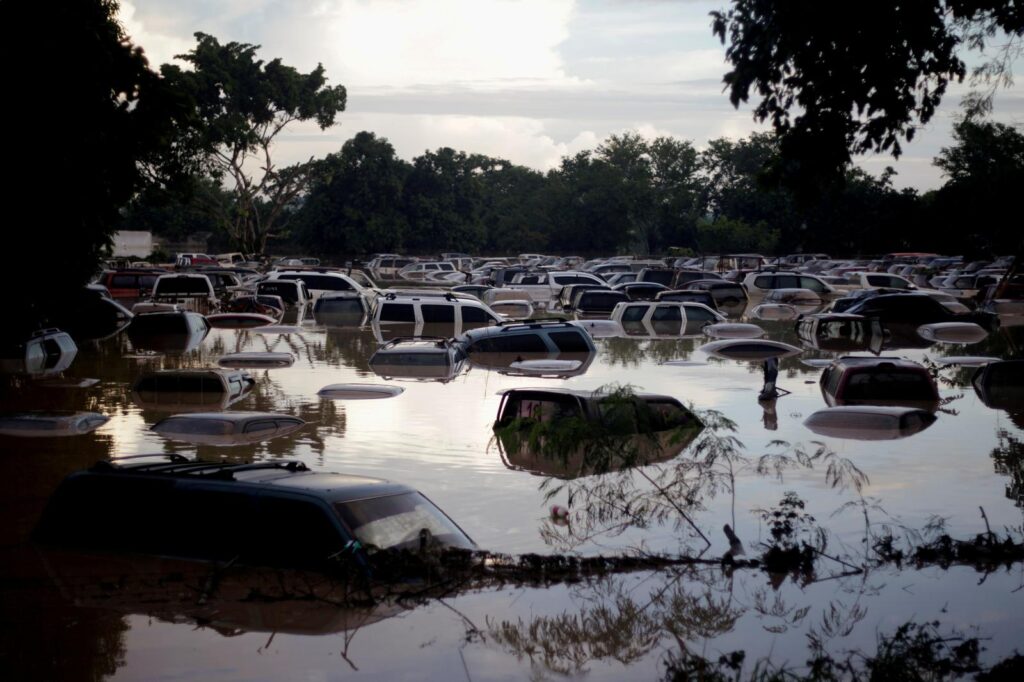
FILE PHOTO: Vehicles are submerged at a plot flooded by the Chamelecon River due to heavy rain caused by Storm Iota, in La Lima, Honduras on November 19, 2020. REUTERS/Jorge Cabrera

Half of the world’s climate change financing should go to helping poorer nations adapt to the effects of global warming, such as droughts, rising seas and floods, the U.N. Environment Programme (UNEP) said on Thursday.

Extreme weather last year such as torrential rains in Africa, record heat waves and warmer temperatures on tropical oceans is consistent with climate change, scientists say.

Last year was one of the warmest on record and as impacts intensify, governments around the world must adapt better or face serious costs, damages and losses, the UNEP Adaptation Gap Report 2020 said.

The 2015 Paris Agreement aims to curb warming to below 2 degrees Celsius, preferably 1.5C, this century.

Under the pact, governments also agreed to implement adaptation measures such as flood defences, greener homes and drought-resilient crops, with financial aid for poorer nations.

“As the U.N. Secretary-General has said, we need a global commitment to put half of all global climate finance towards adaptation in the next year,” said Inger Andersen, Executive Director of UNEP.

“This will allow a huge step up in adaptation – in everything from early warning systems to resilient water resources to nature-based solutions.”

The UNEP annual report on progress towards adaptation revealed that 72% of countries have adopted at least one national-level adaptation planning instrument.

However, huge financing gaps remain to help developing countries adapt to the worst effects.

More progress is also needed bringing adaptation projects to the stage where they bring real protection.

International finance for adaptation is slowly rising from $30 billion, or 5% of tracked climate funds, annually.

But adaptation costs in developing countries are estimated at $70 billion per year, the report said. This is expected to reach $140-300 billion in 2030 and $280-500 billion in 2050.

According to the report, cutting greenhouse gas emissions will reduce the impacts and costs of climate change. Achieving the 2C target could limit losses in annual growth to up to 1.6%, compared to 2.2% for a 3C trajectory.

The Global Commission on Adaptation, launched in 2018 by the United Nations, in 2019 estimated that a $1.8 trillion investment in adaptation measures from 2020 to 2030 would bring a return of $7.1 trillion in cost-saving and other benefits by 2030.

by Nina Chestney/Reuters

Tags: Climate Change, environment, global warming, Pratirodh, U.N. Environment Programme, UNEP, United Nations

Continue Reading

Previous Protesting Farmers, Govt To Hold New Round Of Talks
Next ‘World’s Largest’ Vaccination Campaign Starts Today

More Stories

  • Featured

Global Biodiversity Assessment Counters SC’s Clean Chit To Vantara

2 days ago Pratirodh Bureau
  • Featured

Architects Use Comics And Humour To Rethink Sustainable Cities

2 days ago Pratirodh Bureau
  • Featured

Decoding The Next American Financial Crisis

2 days ago Pratirodh Bureau

Recent Posts

  • Global Biodiversity Assessment Counters SC’s Clean Chit To Vantara
  • Architects Use Comics And Humour To Rethink Sustainable Cities
  • Decoding The Next American Financial Crisis
  • Uncertainty Around Future Of Mumbai’s Last Green Lung
  • Finger-Lickin’ Food And The Civilising Mission
  • Expectations From COP30, The Global Climate Change Summit
  • Zohran Mamdani’s Last Name Reflects Eons Of Migration And Cultural Exchange
  • What Makes The Indian Women’s Cricket World Cup Win Epochal
  • Dealing With Discrimination In India’s Pvt Unis
  • ‘PM Modi Wants Youth Busy Making Reels, Not Asking Questions’
  • How Warming Temperature & Humidity Expand Dengue’s Reach
  • India’s Tryst With Strategic Experimentation
  • ‘Umar Khalid Is Completely Innocent, Victim Of Grave Injustice’
  • Climate Justice Is No Longer An Aspiration But A Legal Duty
  • Local Economies In Odisha Hit By Closure Of Thermal Power Plants
  • Kharge Calls For Ban On RSS, Accuses Modi Of Insulting Patel’s Legacy
  • ‘My Gender Is Like An Empty Lot’ − The People Who Reject Gender Labels
  • The Environmental Cost Of A Tunnel Road
  • Congress Slams Modi Govt’s Labour Policy For Manusmriti Reference
  • How Excess Rains And Poor Wastewater Mgmt Send Microplastics Into City Lakes

Search

Main Links

  • Home
  • Newswires
  • Politics & Society
  • The New Feudals
  • World View
  • Arts And Aesthetics
  • For The Record
  • About Us

Related Stroy

  • Featured

Global Biodiversity Assessment Counters SC’s Clean Chit To Vantara

2 days ago Pratirodh Bureau
  • Featured

Architects Use Comics And Humour To Rethink Sustainable Cities

2 days ago Pratirodh Bureau
  • Featured

Decoding The Next American Financial Crisis

2 days ago Pratirodh Bureau
  • Featured

Uncertainty Around Future Of Mumbai’s Last Green Lung

3 days ago Pratirodh Bureau
  • Featured

Finger-Lickin’ Food And The Civilising Mission

3 days ago Pratirodh Bureau

Recent Posts

  • Global Biodiversity Assessment Counters SC’s Clean Chit To Vantara
  • Architects Use Comics And Humour To Rethink Sustainable Cities
  • Decoding The Next American Financial Crisis
  • Uncertainty Around Future Of Mumbai’s Last Green Lung
  • Finger-Lickin’ Food And The Civilising Mission
Copyright © All rights reserved. | CoverNews by AF themes.