
Night Skies Get 9.6% Brighter Each Yr As Light Pollution Erases Stars
Feb 27, 2023 | Pratirodh Bureau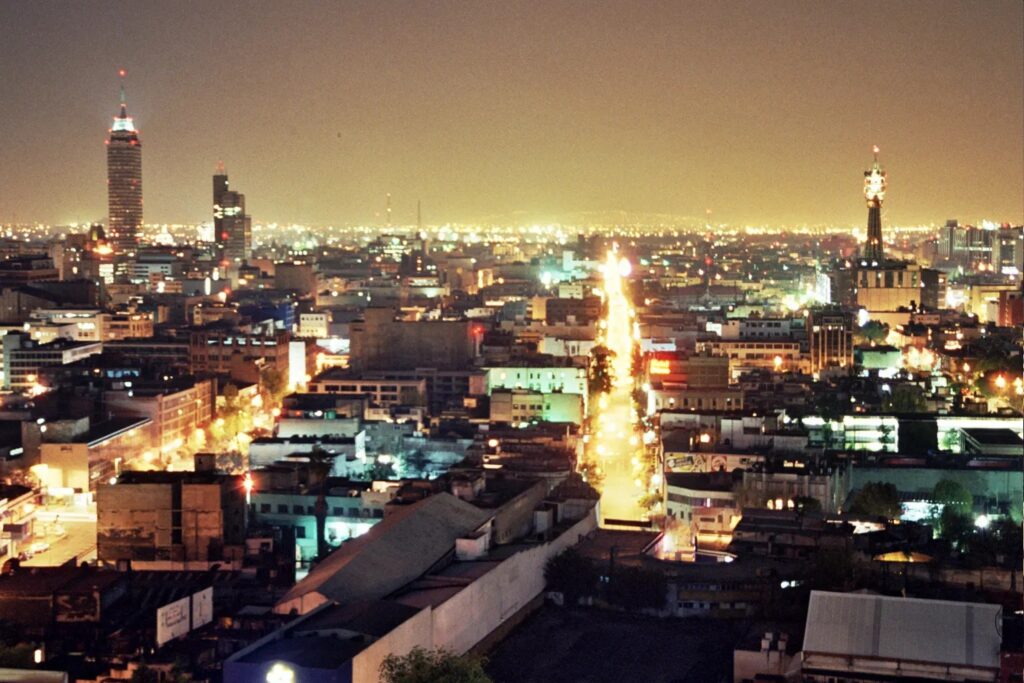
Starting around the Industrial Revolution, as artificial light increasingly lit cities and towns at night, the stars began to disappear (Image: Fernando Tomás/Flickr, CC BY)
For most of human history, the stars blazed in an otherwise dark night sky. But starting around the Industrial Revolution, as artificial light increasingly lit cities and towns at night, the stars began to disappear.
We are two astronomers who depend on dark night skies to do our research. For decades, astronomers have been building telescopes in the darkest places on Earth to avoid light pollution.
Today, most people live in cities or suburbs that needlessly shine light into the sky at night, dramatically reducing the visibility of stars. Satellite data suggests that light pollution over North America and Europe has remained constant or has slightly decreased over the last decade, while increasing in other parts of the world, such as Africa, Asia and South America. However, satellites miss the blue light of LEDs, which are commonly used for outdoor lighting – resulting in an underestimate of light pollution.
An international citizen science project called Globe at Night aims to measure how everyday people’s view of the sky is changing.
Measuring Light Pollution Over Time
Relying on citizen scientists makes it much easier to take multiple measurements of the night sky over time from many different places.
To provide data to the project, volunteers enter the date and time, their location and local weather conditions into an online reporting page anytime an hour or more after sunset on certain nights each month. The page then shows eight panels, each displaying a constellation visible at that time of year – like Orion in January and February, for example. The first panel, representing a light-polluted night sky, only shows the few brightest stars. Each panel shows progressively more and fainter stars, representing darker and darker skies. The participant then matches what they see in the sky with one of the panels.
The Globe at Night team launched the report page as an online app in 2011, just at the beginning of widespread adoption of LEDs. In the recent paper, the team filtered out data points taken during twilight, when the Moon was out, when it was cloudy or when the data was unreliable for any other reason. This left around 51,000 data points, mostly taken in North America and Europe.
The data shows that the night sky got, on average, 9.6% brighter every year. For many people, the night sky today is twice as bright as it was eight years ago. The brighter the sky, the fewer stars you can see.
If this trend continues, a child born today in a place where 250 stars are visible now would only be able to see 100 stars on their 18th birthday.
Causes, Impacts And Solutions
The main culprits driving increasing brightness of the night sky are urbanization and the growing use of LEDs for outdoor lighting.
The loss of dark skies, both from light pollution and also from increasing numbers of satellites orbiting Earth, threatens our ability as astronomers to do good science. But everyday people feel this loss too, as the degradation of dark skies is also a loss of human cultural heritage. Starry night skies have inspired artists, writers, musicians and philosophers for thousands of years. For many, a star-filled sky provides an irreplaceable sense of awe.
Light pollution also interferes with the daily cycle of light and dark that plants and animals use to regulate sleep, nourishment and reproduction. Two-thirds of the world’s key biodiversity areas are affected by light pollution.
Individuals and their communities can make simple changes to reduce light pollution. The secret is using the right amount of light, in the right place and at the right time. Shielding outdoor light fixtures so they shine downward, using bulbs that emit more yellow-colored light instead of white light and putting lights on timers or motion sensors can all help reduce light pollution.
The next time you are far away from a major city or another source of light pollution, look up at the night sky. A view of the roughly 2,500 stars you can see with the naked eye in a truly dark sky might convince you that dark skies are a resource worth saving.
(This article is republished from The Conversation under a Creative Commons license. Read the original article)