Congress Says Israel Used Modi’s Visit As Shield For Khamenei Assassination
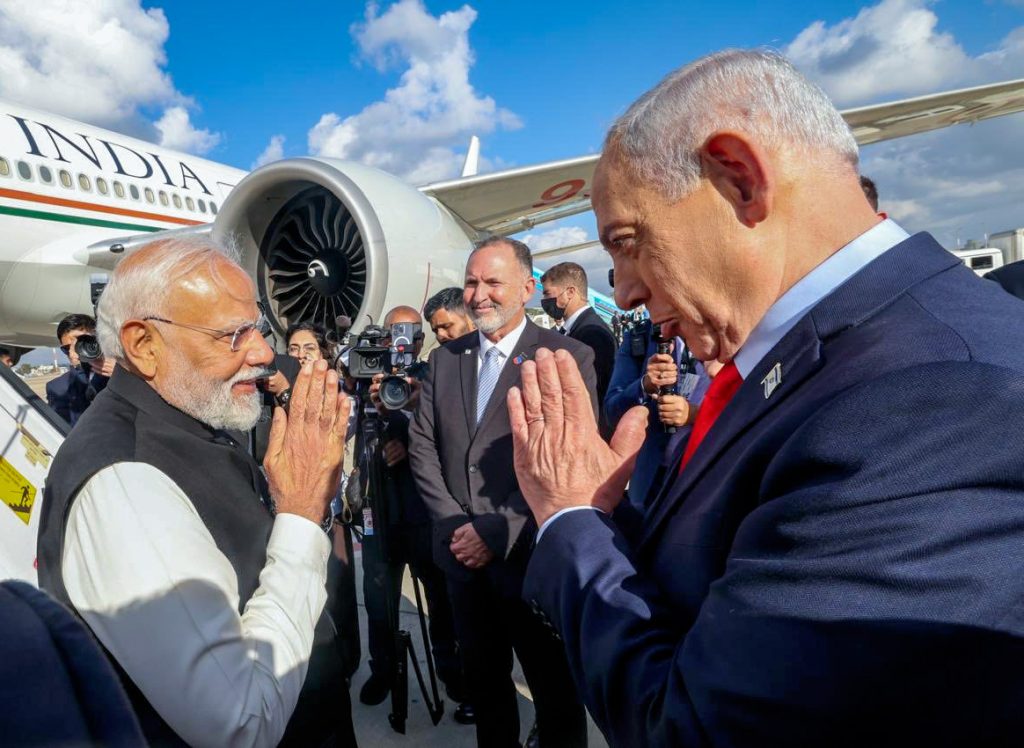
Congress leader Pawan Khera alleged that “while Israel used his visit as a cover to plan the assassination of Iran’s Supreme Leader,” the Indian Prime Minister remained publicly aligned with Benjamin Netanyahu
“Modi stood in the Knesset, giggling, accepting a non-existent fake award, and expressing his unconditional loyalty to his ‘friend’ and war criminal, Benjamin Netanyahu…”
With that sharply worded charge, Congress media and publicity department chief Pawan Khera launched a fierce political attack on Prime Minister Narendra Modi and his government’s West Asia policy. His remarks come at a time of extraordinary geopolitical upheaval following the reported assassination of Iran’s Supreme Leader, Ali Khamenei.
According to Iranian authorities, Khamenei was killed on 28 February in what has been described as a coordinated US–Israeli strike on Tehran that targeted the highest levels of Iran’s leadership. Confirmation of his death the following day sent shockwaves across the region and beyond. Unlike previous targeted operations against military commanders or non-state actors, this strike allegedly eliminated a sitting sovereign leader — and did so without any formal declaration of war.
Analysts say that distinction carries enormous weight. For decades, even bitter adversaries largely refrained from assassinating national leaders, recognising such an act as a dangerous red line. Leadership decapitation outside declared war was widely understood to risk uncontrollable escalation. Khamenei’s killing marks a dramatic shift, signalling that the targeted elimination of heads of state may now be entering the strategic playbook of powerful nations.
It is against this volatile backdrop that Khera’s comments acquire political resonance in India.
During Modi’s late-February visit to Israel, he addressed the Israeli parliament, the Knesset. At that event, Israeli officials presented him with what they described as a “special honour.” Critics, including members of the Congress party, have argued that the recognition — reportedly styled as the “Medal of the Knesset” — was created specifically for Modi, making him its first recipient.
Khera seized on the imagery of that ceremony. “Modi stood in the Knesset, giggling, accepting a non-existent fake award,” he wrote, accusing the Prime Minister of projecting personal warmth toward Israeli Prime Minister Benjamin Netanyahu at a moment of deep regional tension. He further alleged that “while Israel used his visit as a cover to plan the assassination of Iran’s Supreme Leader,” the Indian Prime Minister remained publicly aligned with Netanyahu.
The Congress leader characterised Khamenei as “the spiritual guide of millions of Shia Muslims across the world” and referred to him as “‘India’s friend,’ Imam Khamenei.” His remarks sought to frame the episode not merely as a matter of diplomatic optics but as a moral test for India’s foreign policy posture.
The claim that Modi’s visit was used as “cover” is political in nature and has not been substantiated by independent evidence. However, the broader reality — that a head of state has reportedly been assassinated in a coordinated foreign strike — has triggered alarm internationally. Governments and strategic experts have warned that killing a national leader outside the framework of declared war risks eroding longstanding norms that underpin the international system.
Such an act, analysts argue, blurs the line between open warfare and targeted political killing. It raises questions about sovereignty, proportionality, and precedent. If leadership elimination becomes normalised, the threshold for escalation between rival states could be dramatically lowered.
Iran has declared national mourning and vowed that the killing will not go unanswered. The strike has heightened fears of retaliation, proxy escalation, and a broader regional conflict that could draw in multiple powers. Energy markets, security establishments, and diplomatic channels across West Asia are bracing for aftershocks.
Amid this turbulence, Khera criticised what he described as Modi’s silence. “And now, Modi doesn’t even have the decency to condemn the attack that has plunged West Asia — and the entire world — into darkness,” he said. For the Congress, the issue has become emblematic of what it views as an overly personalised foreign policy, anchored in leader-to-leader relationships rather than institutional balance.
“There can be no clearer proof that Modi has no free will. He is a puppet of America and Israel — the PM is compromised,” Khera added, escalating the rhetoric. “We don’t know who will win this war. But Modi has already lost.”
The government has not publicly responded to Khera’s latest remarks. India has historically maintained a careful balancing act in West Asia, cultivating strong ties with Israel while also preserving relations with Iran and the wider Gulf region. That equilibrium is now under strain in a rapidly shifting geopolitical landscape.
Whether Khamenei’s reported assassination becomes a watershed moment in international relations remains to be seen. What is clear is that the event — and the political debate it has ignited within India — reflects a world in which long-assumed red lines may no longer hold, and where the consequences of state action reverberate far beyond national borders.