What SWAT Commando Kajal Chaudhary’s Death Reveals About Women In India
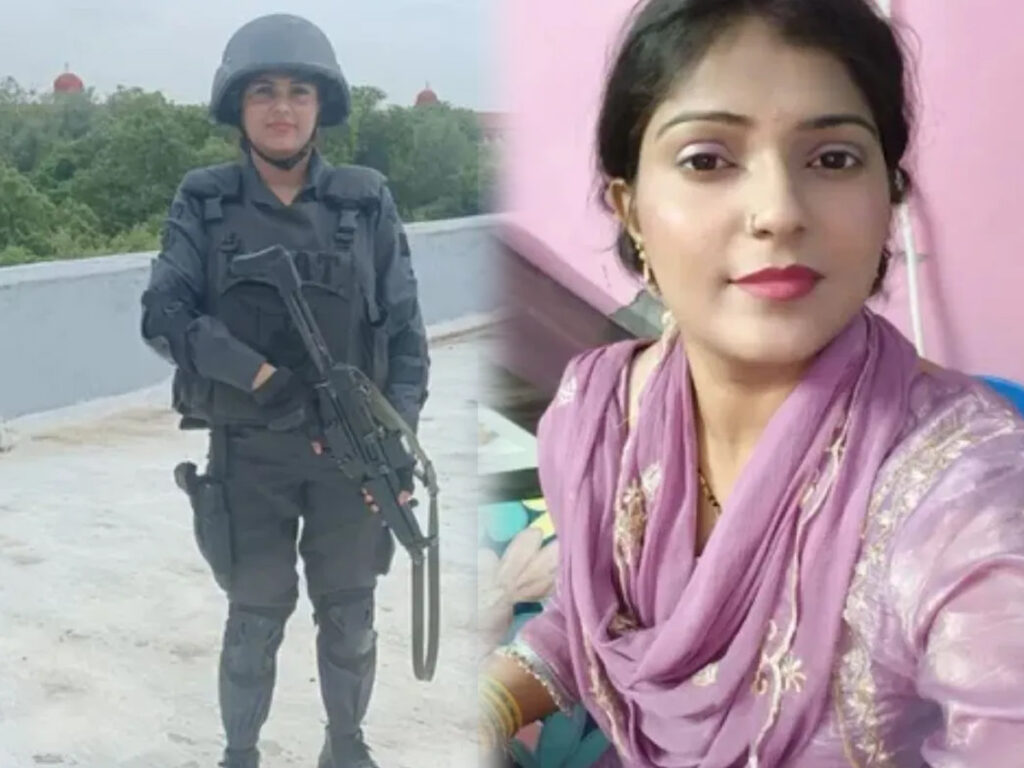
Till such time as cases like that of Kajal Chuadhary keep happening, women’s real condition in India – stripped of the veneer of faux agency – will remain trapped in the quagmire of misogyny, toxic masculinity and historic servitude
Earlier this week, Kajal Chaudhary, a SWAT commando posted in the Special Cell of the Delhi Police, died due to injuries sustained during an assault by her husband Ankur. The couple have a one-and-a-half-year old child.
Kajal was four months pregnant; she was just 27. She was killed after an altercation with Ankur escalated while she was on phone with her brother Nikhil, who is also a policeman. During the assault, Ankur first banged Kajal’s head against a door frame and then hit her with a heavy dumbbell.
Later, Ankur reportedly told Nikhil, “Is call ko recording pe rakh, police evidence me kaam aayega. Main maar raha hoon teri behen ko. Police mera kuch nahi kar payegi.” (Put this call on recording, it will be useful as police evidence. I am killing your sister. Police won’t be able to do anything).
Within five minutes, Nikhil’s phone rang again. “He (Ankur) said, ‘Ye mar gayi hai. Hospital aajao.’ (She is dead. Come to the hospital). We rushed there with police personnel. He and his family were already present. When I saw my sister… not even an enemy kills someone like this,” Nikhil said.
This incident is shocking in its brutality and callousness, starting with the perpetrator flagrantly asking his wife’s brother to record the call to use as evidence later.
More horrifying is the fact that the deceased was four months pregnant with her second child. But the most mind-numbing thing about this occurrence is that Kajal was a policewoman, employed as a SWAT commando, to boot.
She was no ordinary woman limited to her house, cooking and caring for her family (which, it has come to light, she would also do; coming home after duty, Kajal was made to do household chores, despite being in her pregnant state).
“She would cook, wash clothes and utensils despite being pregnant,” Nikhil claimed.
Kajal Chaudhary was not a woman without rights and agency, not existing merely to serve her husband and his family. She was a member of the Special Weapons and Tactics (SWAT) team of the Delhi Police; a woman trained to take care of herself and others in her team; to withstand adverse, sometimes life-threatening circumstances; to come out of dangerous places alive and well.
For her to then have succumbed to injuries sustained inside her own home, assaulted mercilessly by her own husband by with a heavy dumbbell, unable to protect herself from such atrocious violence in her pregnant state – all this is nauseating in its cruelty and ruthlessness.
It also begs the question – if a SWAT commando can face such brutality in India, what chance does an ordinary woman have in a similar situation?
Can anyone speak of women’s liberation and/or emancipation in India with any degree of conviction after reading about Kajal and her fate?
More disturbing details indicating the real condition of women – an overwhelming number of women – in India are coming to light in this case. Kajal did not only suffer physical abuse, she also faced dowry harassment from her in-laws, who asked her family to ‘gift’ their son a car.
“We gave them a Bullet bike, gold jewellery and cash at the wedding, but they said our son would have got a car (had he married someone else). Later, my daughter even arranged a car, but they didn’t stop harassing her. We couldn’t even speak freely to her,” her father, Rakesh said, alleging persistent dowry demands.
Kajal’s mother said the family had spent around ₹20 lakh on the marriage and taken loans. “He (Ankur) had also taken ₹5 lakh from her…She (Kajal) suffered a lot. I want justice. He is a monster,” she said.
A policewoman serving in the national capital – in normal course an example of women’s enfranchisement – faces dowry harassment, physical violence and mental abuse from the man she married for love (yes, it was a love marriage), and ultimately succumbs to her wounds after fighting for her life for four days.
Now imagine the condition of millions of Indian women stuck in abusive relationships because they do not have financial independence, and the support of their birth families and are chronically controlled by their husbands and in-laws.
This case highlights one ugly fact – women’s emancipation in India exists largely in theory and potentially makes for good Sunday reading in English language dailies. In India, women dressing up scantily and calling it freedom is fraught with danger; a recent incident reveals that even the wall paintings of women are ‘molested’ by sick minds; it is still not ‘safe’ for a woman alone (or with other women) to step out after dark; social media is rife with misogynistic posts, where women’s bodies are subjected to varying degrees of perversion and ridicule; where divorce is still a dirty word and a divorcee (woman) is seen as a vile opportunist; the list goes on.
The sad reality is till such time as cases like that of Kajal Chuadhary keep happening, women’s real condition in India – stripped of the veneer of faux agency – will remain trapped in the quagmire of misogyny, toxic masculinity and historic servitude.