Jamia Suspends Professor Over Exam Question On Atrocities Against Muslims
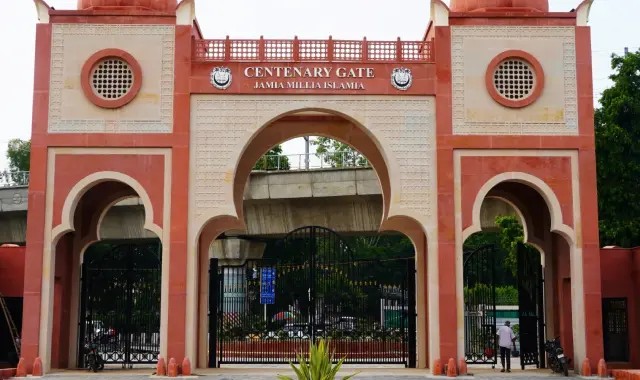
The question appeared in a BA (Hons) Social Work Semester I exam paper prepared by Prof. Virendra Balaji Shahare. The suspension has triggered a debate on academic freedom across the country
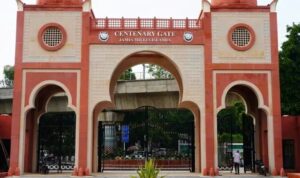
What began as a disciplinary action against a Jamia Millia Islamia professor has escalated into a heated debate on academic freedom and political sensitivities in India. Professor Virendra Balaji Shahare was suspended for including a question in the BA (Hons) Social Work Semester I exam paper titled ‘Social Problems in India’. The question asked students to “discuss the atrocities against Muslim minorities in India, giving suitable examples.”
Photographs of the exam paper circulated widely on social media, sparking outrage from right-wing critics who accused it of bias. Fears of an FIR against Shahare intensified, prompting the university to launch an inquiry. In an office order dated December 23, Jamia invoked Statute 37(1) and suspended the professor immediately, citing multiple complaints about the paper’s content for the 2025–26 session.
The Students’ Federation of India (SFI) condemned the move as an assault on academic integrity. “The suspension is not just a punitive act; it is a threat to Jamia’s core values of debate and dissent,” SFI stated. “We stand with Prof Shahare and demand immediate revocation of the suspension. Jamia will not become an RSS outpost. Academic freedom must be defended.”
The Delhi University Teachers’ Association (DUTA) echoed these concerns, circulating the question paper and labeling the incident a “serious concern.” DUTA alleged the question promoted a “one-sided narrative” in a centrally funded institution and called for a review of the paper and syllabus. They urged the Ministry of Education and University Grants Commission to intervene, warning that such actions stifle critical discourse.
This case highlights a persistent divide in Indian academia: the boundary between scholarly inquiry and political provocation. Critics argue the suspension chills free expression, especially in social sciences where probing societal issues is vital. “Uncomfortable questions about society are not just inevitable but essential,” one academic noted. Supporters of the suspension, however, contend that public universities must maintain neutrality to avoid communal bias.
Jamia, renowned for its tradition of debate, faces scrutiny as the inquiry unfolds. The outcome could signal the state of intellectual autonomy on campuses. As DUTA emphasized, “This episode has reopened an old fault line… where does academic inquiry end and political offence begin?” With elections approaching, the controversy may amplify broader tensions over education and ideology.