‘Authorities Relied On Irrelevant Material For Sonam Wangchuk’s Detention’
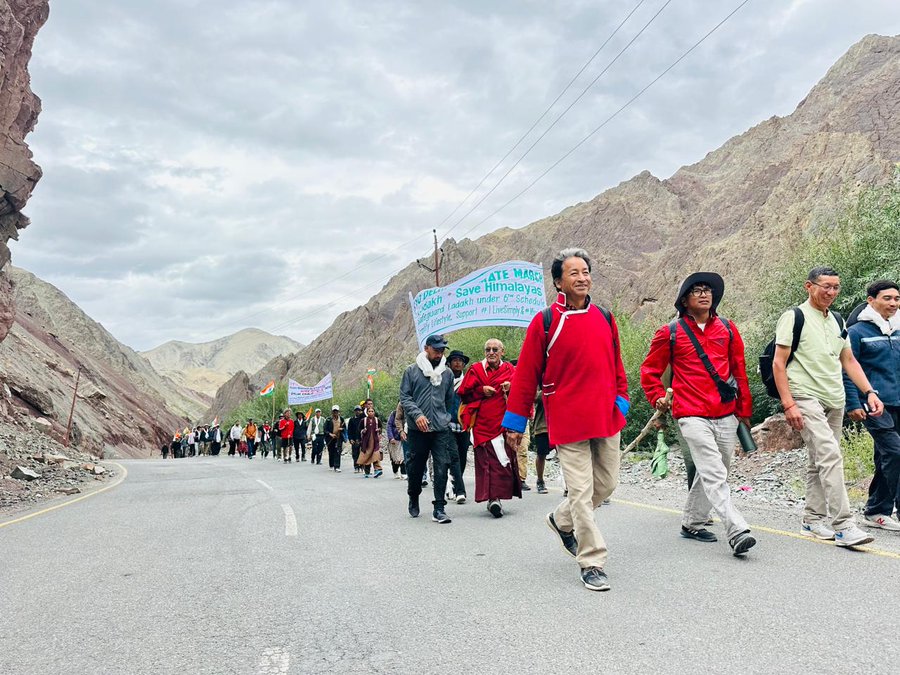
FILE PHOTO: Sonam Wangchuk and other 'padyatris' during their march from Ladakh to New Delhi in October 2024
In a significant legal challenge, Gitanjali J. Angmo, wife of jailed climate activist Sonam Wangchuk, appeared before the Supreme Court on January 12, arguing that the detaining authority failed to apply proper mind and relied on irrelevant material when ordering her husband’s detention under the National Security Act (NSA). Represented by senior advocate Kapil Sibal, Angmo contended that the detention process violated Wangchuk’s rights, particularly his access to evidence and fair representation.
Angmo informed the bench of Justices Aravind Kumar and Prasanna B. Varale that four videos cited by the detaining authority were not provided to Wangchuk, infringing on his right to effective representation. The detaining authority had failed to apply proper mind and also relied on irrelevant material when ordering her husband’s detention, Angmo stated, highlighting how this withholding prevented Wangchuk from making a proper representation before the advisory board and the government.
Sibal elaborated on the procedural flaws, arguing that the district magistrate did not independently assess the case. “The grounds of detention are merely a copy-paste of the recommendation. The material relied upon should have a direct link to the detention order. Irrelevant material was relied upon,” Sibal said. He emphasized that withholding the videos breached Wangchuk’s rights under the NSA, which allows detention for up to 12 months to prevent actions prejudicial to India’s defense.
Wangchuk was detained on September 26, 2025, two days after violent protests in Ladakh demanding statehood and Sixth Schedule status, which resulted in four deaths and 90 injuries. The government accuses him of inciting the violence, but Angmo has previously submitted that his speech in Leh aimed to quell unrest, not provoke it. “Facts have been distorted to depict him as a criminal,” she asserted, noting that Wangchuk was not furnished with complete grounds of detention nor given a fair opportunity to represent himself.
In her plea, Angmo maintained that the Leh violence was unrelated to Wangchuk’s conduct. Wangchuk himself condemned the events on social media, asserting that the violent events in Leh on 24 September were not due to his conduct or statements. Wangchuk stated that it undermined Ladakh’s peaceful efforts over the past five years and called it the saddest day of his life.
The NSA empowers authorities to detain individuals without trial, but Angmo’s challenge underscores concerns over due process. As the case progresses, it highlights tensions between national security measures and individual rights in India’s democratic framework, with Wangchuk’s detention sparking debates on activism and state response.