Why We Need Biodiversity In Our Cities

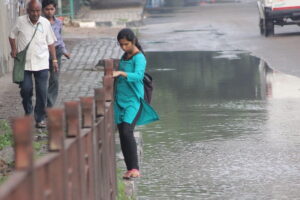
A street in Fort Kochi, Kerala. Biodiversity sensitive urban design requires developers, architects, and urban designers to think about the history of a site, its current condition and the potential to restore, or bring back nature — summarised as a site's past, present and potential (Photo by Priyanka Shankar/Mongabay)
Increasing the amount of nature in our cities can provide many benefits as long as it’s done with biodiversity in mind.
A tree-lined city boulevard on a hot summer’s day is often a welcome sight for the weary pedestrian.
But such streets, while cooler than their canopy-less counterparts, may provide little benefit for biodiversity or native wildlife if they’re filled with a single species of non-native canopy tree.
This is because many of the benefits of nature in cities are linked to biodiversity — not just greenery.
For example, native vegetation in parks has been linked to enhanced gut health in park visitors.
Nature in cities can play a mighty role in helping to address many of the unprecedented challenges to liveability, including adapting to extreme weather and helping with a mental wellbeing crisis.
Cities with nature enhance our mental and physical health, improve the cognitive development of our children, clean our air and water and lessen the impacts of storms and heatwaves.
Cities also have an important role to play in tackling the biodiversity extinction crisis, with a disproportionate number of threatened species living in, or on the edges of our cities.
Rather than leaving it to chance, intentional strategies that bring back and care for native plants and animals in our cities would benefit both nature and people.
To this end, biodiversity sensitive urban design is now a recommended approach for urban developers in several Australian states and has been legislated in South Australia, which also recently launched an urban greening strategy for metropolitan Adelaide.
This approach aligns with Target 12 of the Kunming-Montreal Global Biodiversity Framework, ratified by 196 countries, which focuses on the importance of finding space for nature within built landscapes.
Biodiversity sensitive urban design requires developers, architects, and urban designers to think about the history of a site, its current condition and the potential to restore, or bring back nature — summarised as a site’s past, present and potential.
For example, a site might currently be devoid of trees (present) but might have supported an endangered ecosystem in recent history (past) and could potentially be reconnected with nearby remnant vegetation providing an opportunity for wildlife to return (potential).
Setting clear objectives is the next step, for example, bringing back a locally extinct species, or making a local river ‘swimmable’ again.
Once objectives are established, designs can be developed to deliver resources to support target species, including vegetation, water and nesting habitat. Designs can mitigate threats, for example through wildlife-friendly lighting, bird-sensitive glass, road under- or over-passes; and create ecological connectivity to allow wildlife to move across a site.
An important additional step is to design for ‘cues to care’ — encouraging people to engage positively with nature in cities and be active biodiversity stewards.
There is great potential to use the urban renaturing agenda to create a sense of place and identity in cities, rather than accepting the homogenisation of urban areas around the world.
Further, highlighting biocultural diversity in urban renaturing — nature that emphasises the traditional use of plants or cultural significance of wildlife — can build knowledge of and respect for Indigenous or traditional land management and culture, including medicinal plants and cultural stories about wildlife.
In Surabaya, Indonesia, for example, urban greening using traditional foods and medicine plants can also provide a source of income for residents.
Another example is a nature playground in Melbourne, Australia, that celebrates the seven Wurundjeri seasons.
The motivations for designing for nature in cities have never been more compelling.
With the global urban population projected to increase by 2.5 billion people over the next 30 years, urbanisation is one of the defining transformations of the 21st century.
Biodiverse cities have the potential to reverse the fate of the many threatened species that depend on cities and deliver a remarkable array of benefits that will prove critical to the liveability and future habitability of cities.
(Published under Creative Commons by 360info™)