Nations Struggle To Quit Fossil Fuels, Despite 30 Years Of Climate Talks
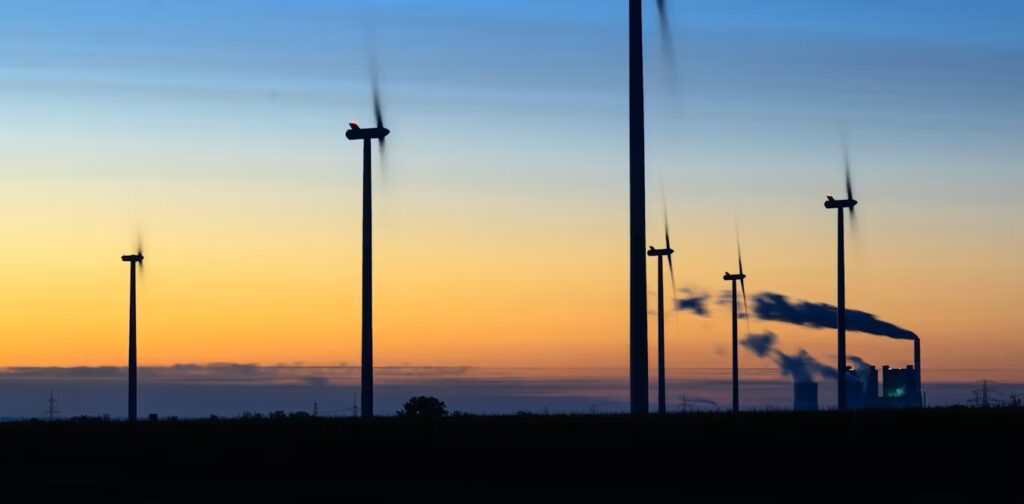
Renewable energy is expanding, but a fossil fuel phaseout appears to still be far in the future (Image: Hendrik Schmidt/picture alliance via Getty Images)
Fossil fuels still power much of the world, even though renewable energy has become cheaper in most places and avoids both pollution and the climate damage caused by burning coal, oil and natural gas.
To understand this paradox, it helps to look at how countries – particularly major greenhouse gas emitters, including the U.S., China and European nations – are balancing the pressures of rising electricity demand with the global need to reduce greenhouse gas emissions that are warming the planet.
US embraces fossil fuels
The United States makes no secret of its fossil fuel ambitions. It has a wealth of fossil fuel reserves and a politically powerful oil and gas industry.
Since President Donald Trump took office in January 2025, his administration has been promoting oil and gas drilling and coal production, pointing to rising electricity demand to justify its moves, particularly to power artificial intelligence data centers.
Reviving the “drill, baby, drill” mantra, the Trump administration has now embraced a “mine, baby, mine” agenda to try to revive U.S. coal production, which fell dramatically over the past two decades as cheaper natural gas and renewable energy rose.
The Department of Interior on Sept. 29 rolled out a plan to “unleash American coal power” by opening 13 million acres of federal land to mining. The Department of Energy also pledged US$625 million to try to make coal competitive. It includes lowering the royalty rates mining companies pay and extending the operating lifespans of coal-fired power plants.
However, these initiatives further lock communities with coal plants into a carbon-intensive fossil fuel. Coal’s resurgence would also have public health costs. Its pollution is linked to respiratory illness, heart disease and thousands of premature deaths each year from 1999 to 2020 in the United States.
The Trump administration is also ceding the clean energy technology race to China. The administration is ending many renewable energy tax credits and pulling federal support for energy research projects.
China’s clean energy push – and coal expansion
While the United States is cutting renewable energy funding, China is doubling down on clean energy technologies. Its large government subsidies and manufacturing capacity have helped China dominate global solar panel production and supply chains for wind turbines, batteries and electric vehicles.
Cheaper Chinese-manufactured clean energy technologies have enabled many emerging economies, such as Brazil and South Africa, to reduce fossil fuel use in their power grids. Brazil surged into the global top five for solar generation in 2024, producing 75 terawatt-hours (TWh) of electricity and surpassing Germany’s 71 TWh.
The International Energy Agency now expects global renewable energy capacity to double by 2030, even with a sharp drop expected in U.S. renewable energy growth.
However, while China expands clean energy access around the world, its production and emissions from coal continue to rise: In the first half of 2025, China commissioned 21 gigawatts (GW) of new coal power plants, with projections of over 80 GW for the full year. This would be the largest surge in new coal power capacity in a decade for China. Although China pledged to phase down its coal use between 2026 and 2030, rising energy demand may make the plan difficult to realize.
China’s paradox — leading in clean energy innovations while expanding coal — reflects the tension between ensuring energy security and reducing emissions and climate impact.
Europe’s scramble for reliable energy sources
The European Union is pursuing strategies to reduce its reliance on fossil fuels amid the ongoing geopolitical tensions with Russia.
Russia’s invasion of Ukraine exposed many countries to supply disruptions and geopolitical turmoil, and it triggered a global energy crisis as countries once reliant on Russian oil and gas scrambled to find alternatives.
In June 2025, the European Commission proposed a regulation to phase out Russian fossil fuel imports by the end of 2027, aiming to enhance energy security and stabilize prices. This initiative is part of the broader REPowerEU plan. The plan focuses on increasing clean energy production, improving energy efficiency and diversifying oil and gas supplies away from Russia.
Renewables are now the leading source of electric power in the EU, though natural gas and oil still account for more than half of Europe’s total energy supply.
The EU’s fossil energy phaseout plan also faces challenges. Slovakia and Hungary have expressed resistance to the proposed phaseout, citing concerns over energy affordability and the need for alternative supply sources. Hungarian Prime Minister Victor Orbán said Hungary would continue importing Russian oil and gas. Cutting off these supplies, he asserted, would be an economic “disaster” and immediately reduce Hungary’s economic output by 4%.
The path to reducing Europe’s dependence on fossil fuels thus involves navigating internal disagreements and incentivizing long-run sustainable development. Europe does appear to be gaining in one way from the U.S. pullback from clean energy. Global investment in renewable energy, which hit a record high in the first half of 2025, increased in the EU as it fell in the U.S., according to BloombergNEF’s analysis.
Brazil: Torn on fossil fuels as it hosts climate talks
In November 2025, representatives from countries around the world will gather in Brazil for the annual United Nations climate conference, COP30. The meeting marks three decades of international climate negotiations and a decade since nations signed the Paris Agreement to limit global temperature rise.
The conference’s setting in Belém, a city in the Amazon rainforest, reflects both the stakes and contradictions of climate commitments: a vital ecosystem at risk of collapse as the planet warms, in a nation that pledges climate leadership while expanding oil and gas production and exploring for oil in the Foz do Amazonas region, the mouth of the Amazon River.
Thirty years into global climate talks, the disconnect between promises and practices has never been so clear. The world is not on track to meet the Paris temperature goals, and the persistence of fossil fuels is a major reason why.
Negotiators are expected to debate measures to curb methane emissions and support the transition from fossil fuels. But whether the discussions can eventually translate into a concrete global phaseout plan remains to be seen. Without credible plans to actually reduce fossil fuel dependence, the annual climate talks risk becoming another point of geopolitical tension.
(Published under Creative Commons from The Conversation)