Why Cities May Heat Up Disproportionately Faster Than Rural Neighbours
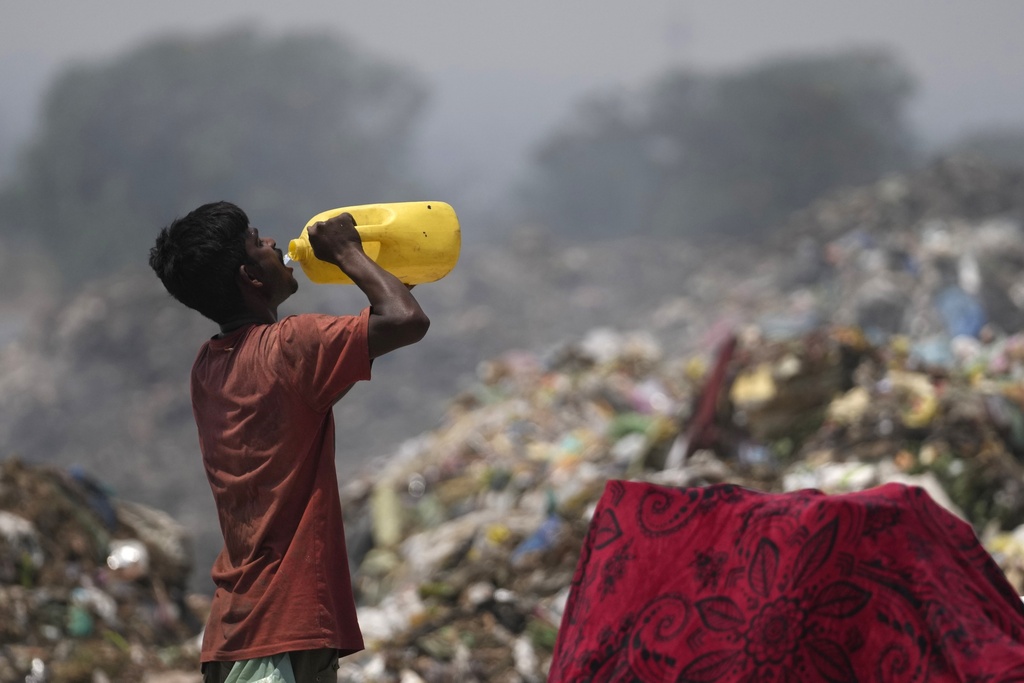
A waste picker drinks water while working during a heat wave at a garbage dump on the outskirts of Jammu (AP Photo/Channi Anand)
- Global analysis of 104 tropical cities shows 81% warm faster than nearby rural areas.
- India is a hotspot for urban warming increase, influenced by climate change.
- Medium-sized cities such as Patiala and others in north India show substantially higher warming than regional projections, raising concerns that conventional climate models may underestimate urban heat exposure.
Many medium-sized Indian cities could experience disproportionately higher temperature increases compared to surrounding rural areas, even under a 2°C global warming scenario, the upper limit for warming set under the Paris Agreement.
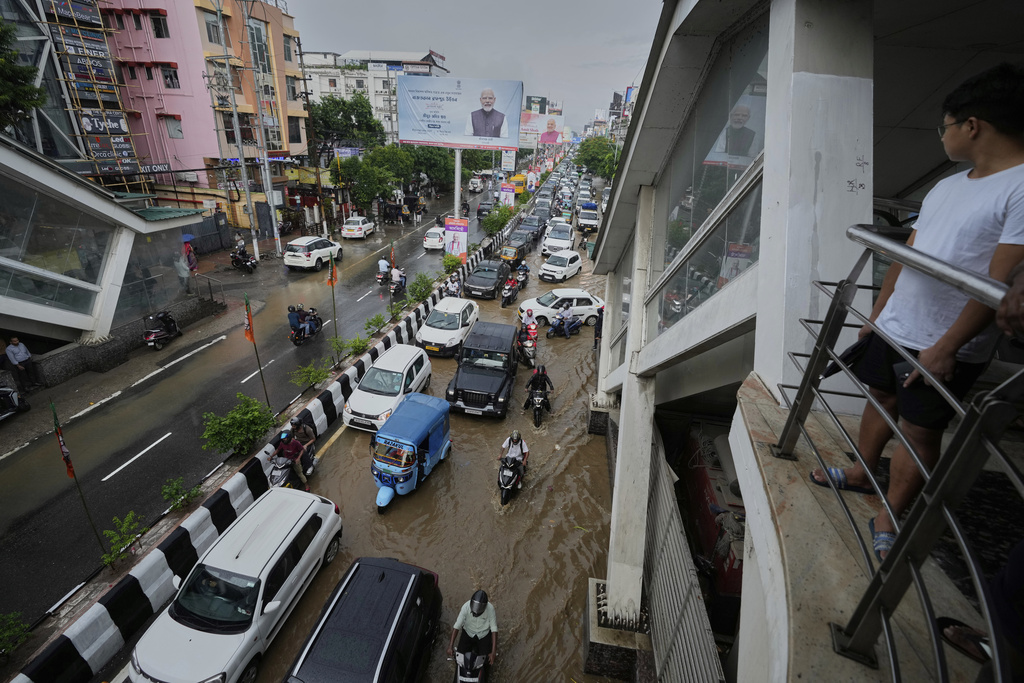
A new study published in Proceedings of the National Academy of Sciences analysed 104 cities, with a population between 300,000 and one million across Asia, Africa, the Middle East, and the Americas. It found that in 81% of these cities, the annual average land surface temperatures are projected to rise faster than those in surrounding rural areas under the 2°C scenario. Together, the 104 cities analysed are home to more than 50 million people, highlighting the scale of potential exposure.
Land surface temperature is not the same as air temperature, but it is closely linked to heat exposure. It often exceeds air temperatures during peak afternoon hours. The study focuses on daytime land surface temperature measured around 1:30 pm using satellite data. The authors note that while surface and air temperatures differ, surface heat strongly influences near-surface air temperatures that people experience.
By combining Earth System Model projections with a machine-learning approach trained on satellite data, the researchers identified urban heat changes that coarse-resolution models typically miss.
India stands out
Within this global pattern, India emerges as a hotspot.
The study estimates that Indian cities experience an additional 45% increase in average land surface temperature compared to surrounding rural areas under a 2°C global scenario. The research highlights cities in north India, such as Patiala, where urban warming nearly doubles the regional projection.
Manoj Joshi, a climate scientist at the University of East Anglia and co-author of the study, said the reason for this is the monsoon climate.
“Monsoonal or humid areas in general emerge because humid areas don’t warm as much as arid areas, as evaporation limits warming somewhat,” he said. “In urban areas, evaporation is limited, so warming is greater.”
In humid regions, rural landscapes benefit from moisture and vegetation that cool the surface through evaporation. Cities, dominated by concrete and asphalt, lack this cooling mechanism.
The study deliberately excluded coastal cities to remove the sea’s moderating influence. The findings, therefore, apply mainly to inland urban centres, many of which are expanding rapidly across northern India.
What does this mean for health?
The researchers did not calculate direct health impacts. But public health experts say the implications are serious. “Given their unique geography, Indian cities at the same latitude are hotter than other cities at the same latitudes,” said Dr. Gulrez Shah Azhar, a public health physician and heat-health researcher at the Indian Institute of Public Health, Gandhinagar. “That, coupled with higher vulnerability factors including a relative lack of water, power, and consequent air conditioning, makes Indian population more at risk of heat-related mortality and morbidity.”
“Even small temperature changes can have significant adverse effects at a population level, especially so in a more vulnerable population like ours,” he said.
The study finds that some cities could cross 3°C of total urban warming even under a 2°C global scenario. The projections are based on a medium-to-high emissions pathway (SSP3-7.0) and identify the point at which global mean temperatures rise 2°C above pre-industrial levels. The contrast with conventional projections is stark. When relying only on Earth System Models, just three cities in the sample exceed 3°C of warming. When urban heat amplification is included, that number rises to 26.
For vulnerable communities, that difference matters.
“People working in the sun and low-income communities lack adequate protection from heat,” Azhar said. “Heat exposure at worksites, per international standards, is above maximum allowable thresholds for the entire summer and even during some period in winter.”
He added that the risks are already visible. “We already see disproportionately higher direct mortality and morbidity at work sites. There are also indirect effects such as an increase in workplace injuries and accidents, when workers find it difficult to wear safety equipment, given the blistering heat.”
Are cities prepared?
Many heat action plans in India rely on district- or state-level projections derived from global climate models. These operate at coarse resolution and may not capture changing urban heat island effects.
“We haven’t extended the analysis to calculate risk or health,” Joshi said. “But it does suggest that for surface-temperature related hazards, changing urban heat islands are important.”
Azhar agrees that better local data can help, but says planning must go beyond forecasting. “Heat action plans are a small piece in the larger puzzle of adaptation strategies. Yes, there is some benefit from more granular data and forecasts. At the same time in the larger framework, a whole range of additional public health interventions ranging from the individual, neighbourhood, community to city and state level, addressing all stages of prevention — primary (risk factors), secondary (treatment) and tertiary (complications) are urgently needed.”
These measures span multiple levels of prevention, from reducing risk factors to improving treatment and managing complications. They include changes in city planning, building design, clothing and occupational standards, food practices, and broader behavioural adjustments.
Asked whether tier-2 cities are equipped to handle the projected scale of heat stress, Azhar was direct.
“Short answer is no,” he said.
He pointed to interventions already common in some developed countries that remain limited in India. “These include community cooling centers, emergency response measures, heat hotlines, public emergency alert systems, forecasting and early warning systems, heat buddies etc. We still have a long way to go.”
He paused, then added, “That’s both a problem or an opportunity.”