Wangchuk’s Release Signals Shift Toward Dialogue On Ladakh’s Future
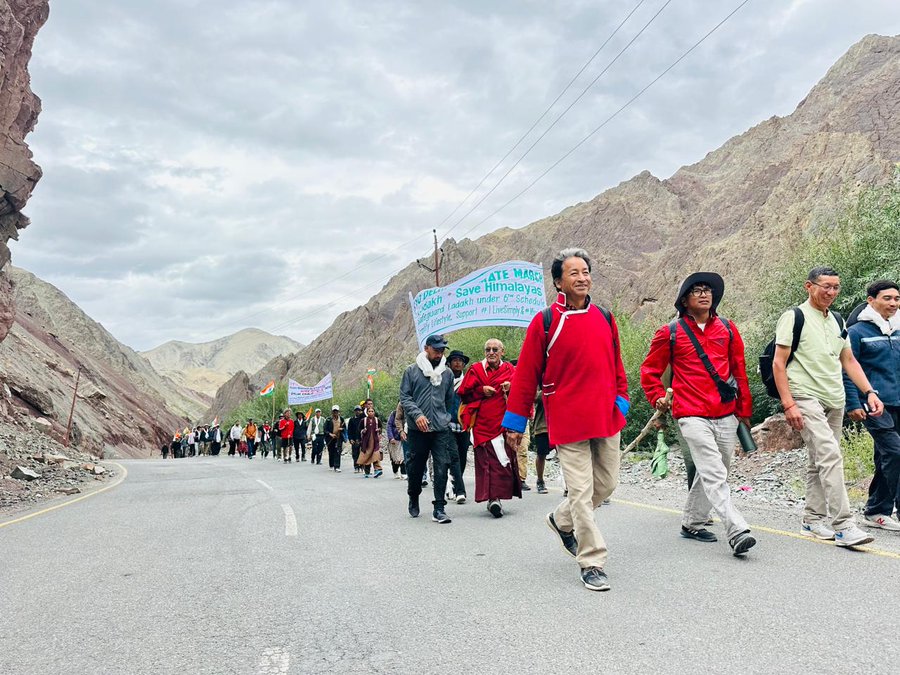
FILE PHOTO: Sonam Wangchuk and other 'padyatris' during their march from Ladakh to New Delhi in October 2024
Three days after his release from Jodhpur jail, climate activist and educationist Sonam Wangchuk struck a notably conciliatory tone, signaling a potential shift in the ongoing movement for Ladakh’s political demands. Addressing the press in Delhi on 17 March, Wangchuk reflected on his 170-day detention under the National Security Act (NSA) and emphasized that his struggle was never about personal vindication, but about securing a better future for the people of Ladakh.
Wangchuk had been arrested on 26 September last year following protests that turned violent, resulting in four deaths and multiple injuries. His detention, which he described as abrupt and isolating, included a period of nearly ten days without communication with his family or legal counsel. Despite the ordeal, he maintained that he was mentally prepared to remain in jail for up to a year if necessary.
His release, ordered with immediate effect by the Union Ministry of Home Affairs, came after sustained legal efforts. However, Wangchuk downplayed the idea of it being a personal triumph. “We were sure of a victory in court,” he said, “but a win was not enough. I wanted a win-win.” This framing underscored his broader commitment to achieving outcomes that benefit both Ladakh and the central government.
A Softer Stand on Key Demands
In a significant departure from earlier rigid positions within the movement, Wangchuk indicated a willingness to adopt a more flexible approach in negotiations. The core demands—statehood for Ladakh and inclusion under the Sixth Schedule of the Constitution—have long been considered non-negotiable by key regional groups such as the Leh Apex Body (LAB) and the Kargil Democratic Alliance (KDA). However, Wangchuk suggested that securing even one of these demands could be a meaningful step forward.
“Our main issues are Sixth Schedule status and statehood. If not both, then at least one,” he said, emphasizing a pragmatic “give-and-take” strategy. According to him, any resolution must involve mutual concessions rather than a one-sided outcome. This stance hints at a possible recalibration within the movement, potentially opening doors for renewed dialogue with the Centre.
Wangchuk also welcomed what he described as an “extended hand” from the government, interpreting his release as an opportunity to rebuild trust. He expressed a willingness to participate in any high-powered committee that may be formed to represent Ladakh in future negotiations. At the same time, he firmly rejected speculation that his release was the result of any backdoor deal, reiterating that his activism has always been rooted in public interest.
Looking Ahead: Rebuilding Trust and Unity
While recounting his detention as “nothing short of a thriller,” Wangchuk made it clear that he does not intend to dwell on past grievances. Instead, he is focused on creating a constructive path forward. “Talks are always about mutual accommodation,” he said, reinforcing his belief that dialogue remains the only viable route to resolving the impasse.
He plans to return to Ladakh soon to consult with key stakeholders, including the LAB and the KDA, before deciding on the next steps. This consultative approach reflects his intent to maintain unity within the movement while exploring new strategies.
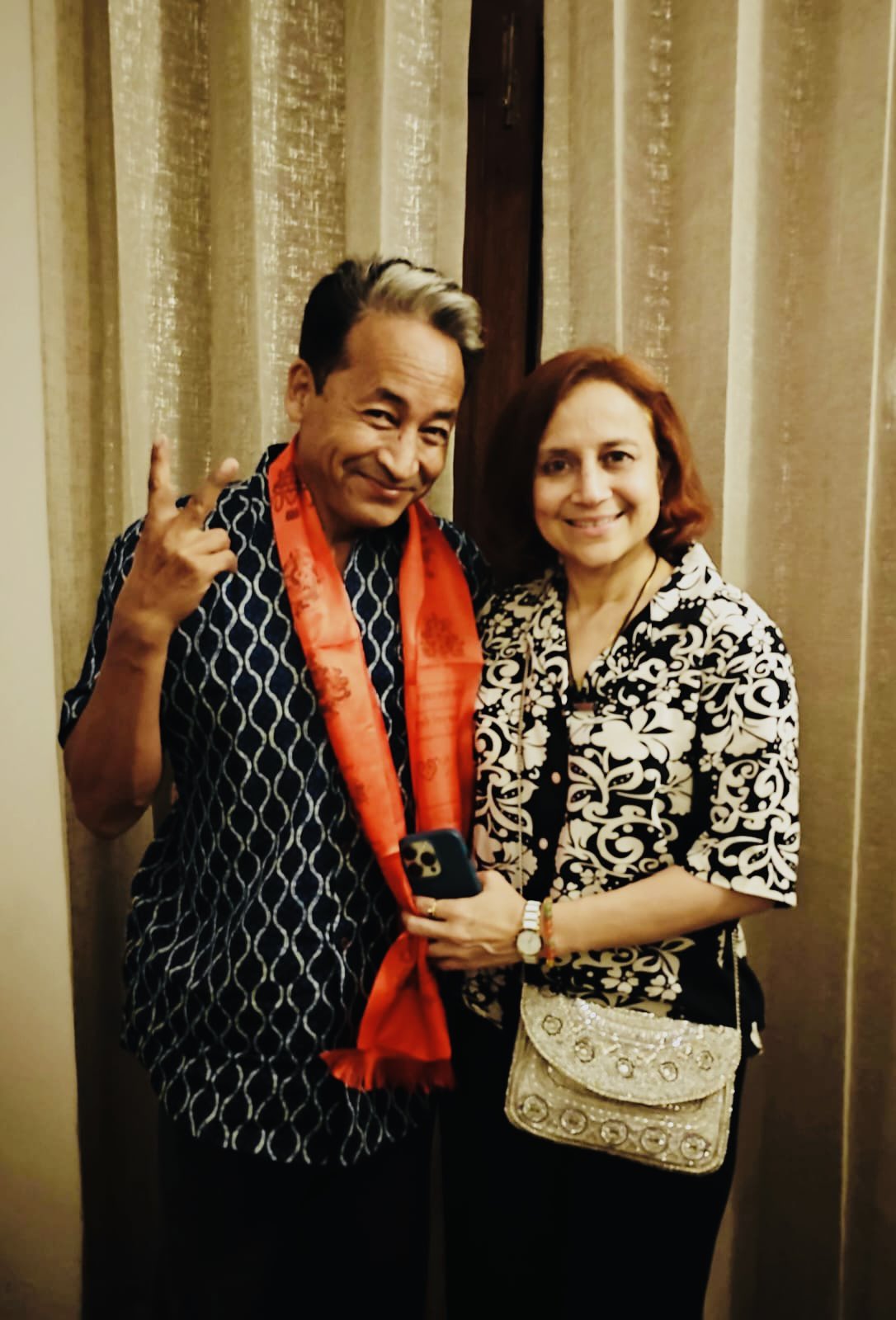
Adding a broader perspective, his wife Geetanjali Angmo outlined a vision for Ladakh that goes beyond political status. She emphasized the need for the region to evolve into a model of self-reliance, environmental sustainability, and grassroots empowerment, ideally in collaboration with the government rather than in opposition to it.
Wangchuk also addressed the emotional toll of being labeled anti-national during the course of the protests. “If I were a ‘deshdrohi’, I wouldn’t have been released,” he said, noting that such accusations have deeply hurt the people of Ladakh. His response highlighted the disconnect between local aspirations and national narratives, an issue that continues to complicate the movement.
Ultimately, Wangchuk’s release appears to mark more than just the end of a detention—it signals a potential turning point. By advocating for compromise, dialogue, and shared outcomes, he has introduced a more nuanced tone into a movement that has long been defined by firm demands.
Whether this approach will yield tangible results remains to be seen, but it undeniably opens a new chapter in Ladakh’s ongoing quest for political and environmental security.