‘Vishwaguru Exposed’: Congress Targets PM Modi’s Foreign Policy
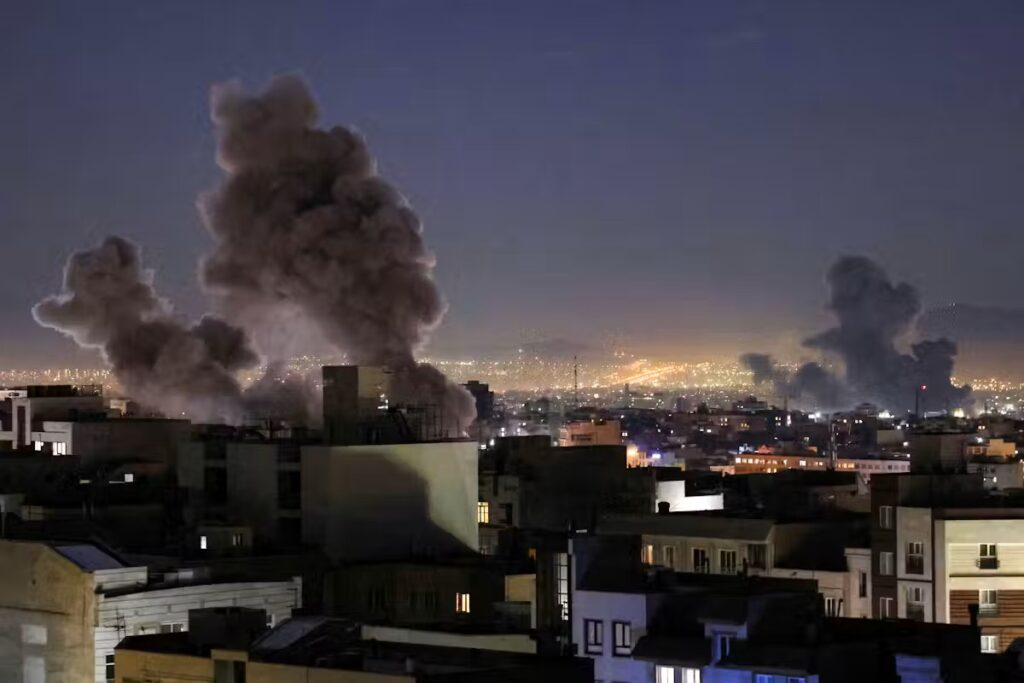
Smoke plumes rise from several locations across Tehran following U.S. missile strikes. Congress general secretary Jairam Ramesh has described reports of a ceasefire between the US and Iran, with Pakistan playing a facilitating role in it, as a “severe setback” to what he termed Modi’s “highly personalised diplomacy” (Image: Atta Kenare/AFP via Getty Images)
The Congress party has launched a sharp political attack on Prime Minister Narendra Modi, arguing that recent geopolitical developments have exposed weaknesses in his foreign policy approach. The criticism comes in the wake of a reported ceasefire between the United States and Iran, with Pakistan allegedly playing a role in facilitating the temporary truce.
Congress general secretary Jairam Ramesh described the development as a “severe setback” to what he termed Modi’s “highly personalised diplomacy.” Taking a pointed swipe, he remarked that the “self-styled Vishwaguru stands thoroughly exposed,” suggesting that India’s global positioning has been weakened.
While acknowledging that the international community may cautiously welcome the ceasefire, Ramesh argued that the circumstances surrounding it raise uncomfortable questions for India. He highlighted that Pakistan’s involvement in diplomatic efforts contradicts India’s long-standing objective of isolating Islamabad on the global stage due to terrorism concerns.
“The role played by Pakistan… calls into question both the substance and style of Mr Modi’s diplomacy,” Ramesh said. He contrasted this with the tenure of former Prime Minister Manmohan Singh, claiming that India had successfully isolated Pakistan diplomatically following the 2008 Mumbai attacks.
Ramesh also criticized Modi’s silence on ongoing conflicts in West Asia, particularly Israel’s military actions in Gaza and the West Bank. According to him, New Delhi’s reluctance to take a clear public stance has eroded India’s credibility as a balanced and principled global actor.
Ceasefire Dynamics and Political Fallout
The controversy is rooted in rapidly evolving developments in West Asia. Former US President Donald Trump had reportedly threatened military action against Iran but later announced a two-week pause just hours before a self-imposed deadline. The ceasefire arrangement, linked in part to the reopening of the strategically vital Strait of Hormuz, followed conversations with Pakistani Prime Minister Shehbaz Sharif and army chief Asim Munir.
Iran’s Supreme National Security Council confirmed its acceptance of the truce and indicated that negotiations with the United States would take place in Islamabad. However, uncertainty persists, as both sides have yet to clarify when the ceasefire will formally begin, and reports of continued strikes highlight the fragile nature of the arrangement.
Meanwhile, Benjamin Netanyahu has expressed support for the US-led ceasefire but clarified that it does not apply to Israel’s hostilities with Hezbollah in Lebanon, further complicating the regional situation.
Against this backdrop, Ramesh intensified his criticism of the Indian government, accusing Modi of “cowardice” for remaining silent on both Israel’s actions and Trump’s rhetoric. He also referenced “Op Sindoor,” alleging that its abrupt halt in May 2025 was never clearly explained to the public. Adding to the critique, he pointed to repeated claims by Trump taking credit for the decision, which, according to the Congress leader, undermines India’s strategic autonomy.
In a particularly sharp remark, Ramesh said that earlier dismissals of Pakistan by India’s external affairs leadership now appear inconsistent with its apparent diplomatic role. He added that Modi’s much-publicized “56-inch chest” had “shrunk and shrivelled,” underscoring the intensely personal tone of the political attack.
The Congress’ criticism reflects a broader attempt to frame the evolving geopolitical situation as a failure of the government’s foreign policy. By highlighting Pakistan’s unexpected role, the opposition aims to challenge the narrative that India has successfully isolated its neighbor on the global stage.
As of now, the government has not issued a formal response to these allegations. However, the episode underscores how international developments can quickly translate into domestic political debates in India. With global conflicts becoming increasingly interconnected, the pressure on governments to balance strategic interests with public messaging continues to grow.
Ultimately, the situation remains fluid, both diplomatically and politically. While the ceasefire offers a temporary pause in tensions, its long-term implications—and its impact on India’s foreign policy discourse—are likely to unfold in the days ahead.